







AI & Emerging Tech
Leading with Purpose and Precision: Zeiss India’s Santana Ramakrishnan on AI, talent, and transformation




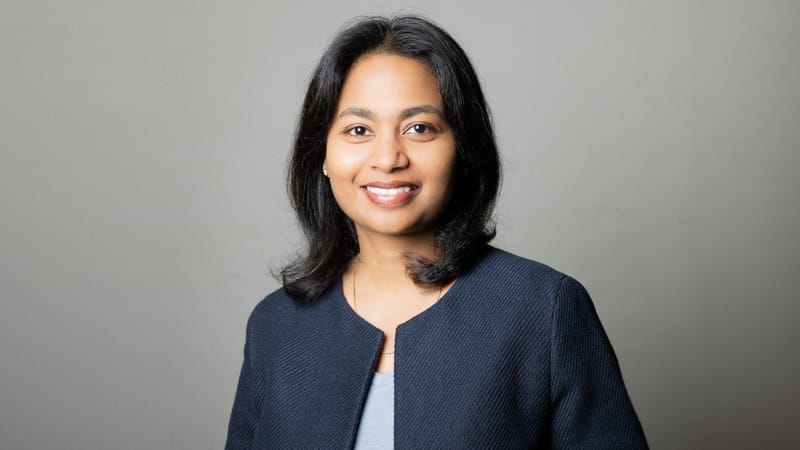
We are looking for AI tools to inform our decisions on identifying high-potential candidates with a higher degree of fitment to Zeiss culture and values, reduce time-to-hire, and reach talent pools that were previously difficult to access, said Ramakrishnan.
In a rapidly changing technological landscape, organisations must blend innovation with purpose to thrive. Santana Ramakrishnan, Chief Human Resources Officer at Zeiss India, is at the forefront of this transformation. Her leadership journey, grounded in trust and empowerment, has evolved alongside Zeiss India’s ambitious growth, particularly as artificial intelligence (AI) and digital technologies reshape talent and business strategy. In this People Matters interview, Santana shares her insights on leadership, AI adoption, talent development, and the future of work, offering a compelling glimpse into how Zeiss India is building a resilient, future-ready workforce. Edited excerpts:
How would you describe your leadership style, and how has it evolved throughout your career, especially in your role at Zeiss India?
I am a firm believer in leading with trust, clarity, and empowerment. Over the years, my leadership style has evolved from being largely execution-driven to becoming more purpose-led - focused on enabling teams to think long-term, collaborate across boundaries, and truly take ownership. At Zeiss India, where we operate in a knowledge- and innovation-intensive environment, my focus is on creating a culture where diverse expertise can thrive, decisions are informed by data, and people feel confident to experiment, learn, and innovate while staying firmly anchored to our values.
How is Zeiss India leveraging AI in talent acquisition, and what impact has this had on attracting candidates for niche roles?
These are still early days, and we are selectively leveraging AI to enhance efficiency and precision. There is greater awareness of deploying AI-enabled tools to support the talent-attraction process. We have begun with a pilot in resume screening and are looking to extend the capabilities into more nuanced areas, including a better understanding and improvement of the candidate experience.
We are looking for AI tools to inform our decisions on identifying high-potential candidates with a higher degree of fitment to Zeiss culture and values, reduce time-to-hire, and reach talent pools that were previously difficult to access. All this while ensuring human judgment remains central to final decisions.
What programmes or partnerships has Zeiss India launched to upskill employees in AI and data analytics, especially given the convergence of optics, healthcare, and digital technology?
Internally, there is a strong focus on incorporating AI into our R&D and product development lifecycle, and on enhancing customer intelligence. Equally, there is a push to explore partnerships that refine and further our understanding of the topic. The technology functions are at the forefront of this learning. We are building access to structured learning journeys in AI, data analytics, automation, and digital tools, supported by internal and external trainers and certifications.
What strategies are in place to build a robust talent pipeline for AI and emerging technologies, given intense industry competition?
Our strategy focuses on three pillars: early talent engagement, continuous capability building, and strong employer branding. We actively engage with campuses, research institutions, and tech ecosystems, while also reskilling and upskilling our existing workforce. At the same time, we position Zeiss India as a technology and innovation-led organisation where talent can work on meaningful, high-impact technologies with global relevance - this differentiation is critical in a competitive market.
What impact do you foresee AI and automation having on jobs and the workplace in the coming years?
AI and automation will fundamentally reshape roles but not eliminate the need for human expertise. Routine tasks are increasingly being automated, allowing employees to focus on higher-value activities such as problem-solving, innovation, and customer engagement. In my opinion, with increased use of AI and automation, the workplace will become more hybrid, digital, and skills-centric, with a strong emphasis on continuous learning and adaptability.
How are AI specialists and traditional optics experts encouraged to collaborate at Zeiss India?
Collaboration is embedded into how we work - through cross-functional project teams, shared goals, and integrated innovation forums. AI specialists work closely with optics, engineering, and healthcare experts to co-create solutions. One of the most successful examples can be seen in advanced imaging and quality solutions for Medical Technology and Vision Care devices at Zeiss India, where deep optics expertise, combined with AI-driven analytics, has significantly enhanced precision, accelerated processes, and ultimately delivered superior end-customer experiences and better patient outcomes.
How do you see AI transforming talent management and the employee experience at Zeiss India over the next five years?
AI will enable more personalised, data-driven talent management - from learning recommendations and career pathways to performance insights and workforce planning. For employees, this means a more seamless, transparent, and engaging experience, where development opportunities are aligned with both individual aspirations and organisational needs.
How do you anticipate Zeiss India’s talent needs changing over the next 3–5 years, and what roles or skills will be most in demand?
The core talent requirements for running and building the business will grow incrementally to support the expanding business footprint. Newer skill cohorts will emerge to cater to evolving customer segments. A strong technology base, while foundational, will also anchor the niche and innovation skill set that will support the business and product organisations in building a competitive advantage. What is obvious, of course, is a new generation entering the workforce that will demand grounding in our Zeiss values as we architect our future workforce culture.
What are your plans for enhancing employee retention and internal mobility, and how will you support career development for high-potential talent?
At Zeiss India, internal mobility has always been a strong focus for us. Over the years, we have clarified career paths and established processes that encourage employees to explore opportunities across roles, functions, and businesses. This allows people to grow within the organisation while helping us retain critical skills and institutional knowledge.
On this strong foundation, we are continuing to further strengthen our approach by making career frameworks even more transparent, expanding internal job marketplaces, and offering more structured development programs for high-potential talent. Ultimately, retention for us comes from providing meaningful work, continuous learning opportunities, strong leadership development, and a culture that values performance while genuinely supporting well-being and work-life balance.
How do you define the “future of work”, and what are the major forces shaping it?
The future of work at Zeiss India is digital, flexible, inclusive, and skills-driven. Key forces shaping it include rapid technological advancement, evolving employee expectations, flexible work models, and the need for continuous innovation. Our focus is on building resilience, agility, and continuous learning into the organisation.
What new skills and mindsets will be critical for the Zeiss India workforce to thrive in the coming decade?
Beyond technical expertise, the most critical skills will be learning agility, digital fluency, systems thinking, and collaboration across disciplines. Equally important are mindsets - curiosity, adaptability, ethical responsibility, and a strong sense of purpose - which will enable our workforce to thrive in an increasingly complex and interconnected world.
Author
Loading...