







Business
TechHR India 2025: HR is a driver of workforce transformation: David Green



|
Updated on


By embracing AI with ethics, building a skills-based future, HR leaders have the opportunity and responsibility to put the human back at the center of work.
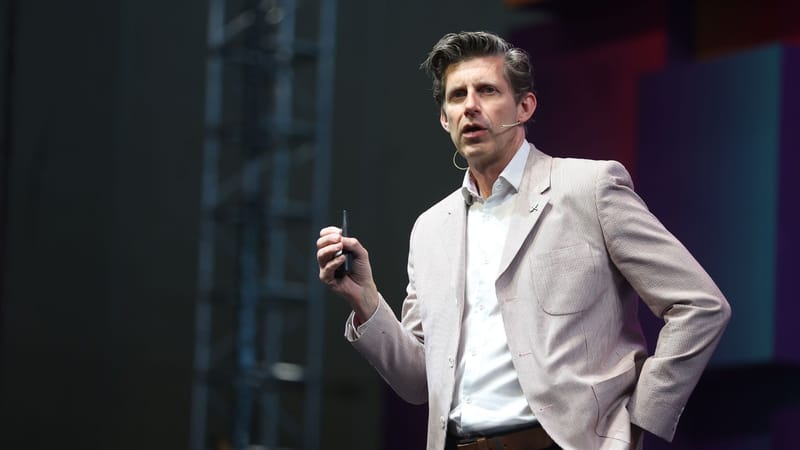
HR is no longer just a function; it's a driver of workforce transformation, said David Green during his keynote address on the opening day at TechHR India 25, Asia's largest HR and Work Tech conference.
By embracing AI with ethics, building a skills-based future, and shaping thriving cultures through data and empathy, HR leaders have the opportunity and responsibility to put the human back at the center of work.
The role of chief people officer has revolutionised from being more than a people leader, said Green.
According to him, they have become the change enabler and face of the organisation. With this changing environment and role evolution, CEOs' expectations of them have also changed.
“They want more from their HR function. Thanks to tech innovation, data, and AI enabling the transformation of HR into a more value-adding and insight-driven function, chief people officers have a unique opportunity to elevate HR into a true strategic partner.”
Green shared insights on the evolving landscape of HR, shaped by rapid technological advancements and shifting organisational priorities.
A keynote speaker at the TecHR India 2025, Green stated that technology has never moved this fast before, underscoring the relentless pace of change. He highlighted the “huge opportunity” for HR professionals to be at the heart of this transformation, particularly as CEOs are "reinventing their companies."
The AI Revolution in HR: Guiding, not deciding
Green emphasised the catalytic role of generative AI, noting that 62% of organisations surveyed by Insight222 were in their first year of an AI journey, roughly 18 months after ChatGPT's launch.
He challenged the common narrative of job displacement, asserting, "AI can replace certain repetitive tasks, think of it as a high-performing intern, but as yet it can't make judgment, it can't make decisions."
He advocated for a nuanced approach: "Our role, I think, in HR is to yes let AI guide but let's create a culture where humans decide and let's try and make sure that we emphasise the H in HR in all that we do."
Green shared insights from Insight222's global study of 348 organisations, revealing a significant focus on building robust data foundations (60% of companies investing) and establishing strong governance around AI (34% investing in HR councils for strategic direction).
He cited IBM's successful pilot of an AI-powered promotion process, which reduced the time from 10 to 5 weeks and saved 12,500 hours per quarter, freeing up HR business partners and line managers for more strategic work. This, he noted, "had an impact on revenue as well."
Skills: The new currency of business transformation
Shifting to the critical area of skills, Green highlighted the urgent need for organisations to adapt. "63% of companies view skills gap as the biggest barrier to business transformation," he revealed, citing the World Economic Forum's "Future of Jobs Report." The report also predicts a net creation of 78 million jobs by 2030, but with nearly two-fifths of workers' skills evolving by then.
Green showcased Standard Chartered's proactive approach to skills-based transformation. Faced with 14,000 "sunset jobs" and a need to create 9,000 new roles, the bank chose to reskill existing employees rather than solely hire externally. This strategy, championed by then-CHRO Tanuj Kapilashrami, resulted in a saving of $49,000 per role compared to external hiring. “Suddenly the CFO was quite happy to provide the money and the investment that they needed to make to become skills-based," Green quoted Kapilashrami. Standard Chartered's talent marketplace pilot in India not only successfully reskilled employees but also delivered value to the business by creating new products.
Cultivating Thriving Organisations
Green delved into the cultural aspect of HR, stressing the potential of technology to foster "fairer, healthier, and more humane workplaces." He presented compelling data from a joint study by the University of Oxford and Indeed, demonstrating that "companies that invest in well-being outperform their competitors on the stock market."
He recalled Lina Nair's (former CHRO at Unilever, now CEO at Chanel) revelation that "for every dollar that they invested at Unilever in workplace well-being, they got a $2.5 return."
Green pointed to Microsoft as an exemplar of effective employee listening, moving from a "know-it-all to a learn-it-all culture." Microsoft's approach integrates traditional surveys with ambient data analysis (without compromising individual privacy), helping them answer crucial questions about hybrid work. Their findings indicated three key moments when in-person interaction truly matters: starting a new job, kicking off a new project, and intentional regular gatherings for social inclusion.
Green concluded by reiterating the immense opportunity for HR to lead these transformations, emphasising the need to leverage data and technology to create both economic value and a more humane future of work.
Topics
Author
Loading...