







Business
The woman leading India’s food tech revolution, and her global ambitions





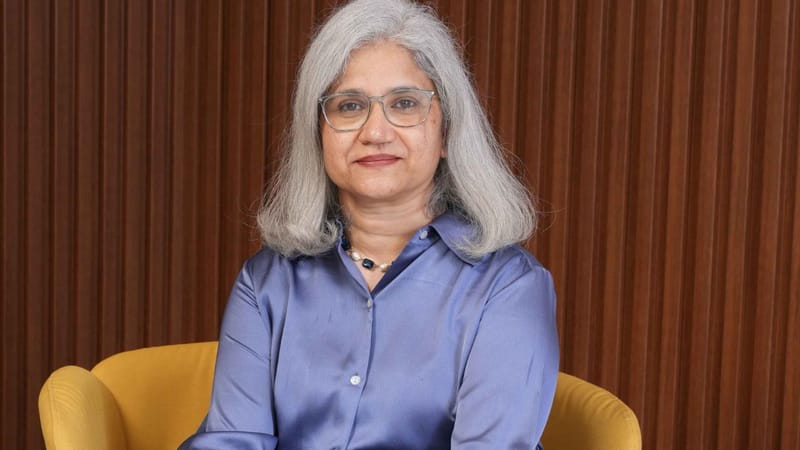
India, Banerjee believes, is still in the early stages of the health and wellness food revolution that has matured in the West. “There’s a massive headroom for growth,” she says, pointing to rising consumer awareness and label literacy. “People are actually reading what they’re buying now.”
When Rinka Banerjee started Thinking Forks in 2014, she had a vision as ambitious as it was transformative: to democratise food research and development in India by providing end-to-end R&D infrastructure for companies of all sizes. Eleven years later, her 42-member team is at the epicenter of India’s food innovation ecosystem, developing products for both nimble startups and multinational giants, and steadily expanding its footprint to international markets.
In a detailed conversation with People Matters, Banerjee, Founder and Managing Partner - whose own career spans over three decades, including 16 years at Unilever—shared insights into the evolution of food R&D, the challenges and opportunities in the sector, and why she believes India is poised to become the world’s food tech hub.
Bridging the R&D gap
Banerjee’s journey into entrepreneurship was seeded during her time at Unilever, where she led R&D for South Asia. She noticed a persistent gap: major FMCGs like Unilever and Nestlé had their own sophisticated R&D centers, while academic institutions excelled in theoretical research but fell short in market applications. “What was missing,” she recalls, “was an end-to-end, external R&D partner who could take an idea from the lab all the way to supermarket shelves.”
With a mix of seasoned industry veterans and young talent—food scientists, chefs, packaging technologists, nutritionists, and engineers—Thinking Forks was born to fill that void.
A portfolio of disruptive products
Thinking Forks’ client roster reads like a who’s who of India’s new-age food brands: Yoga Bar’s 20-gram protein bars, Licious’ gourmet spreads, Wicked Good’s air-fried noodles and pastas, Too Yum’s snack range, and a host of beverage brands like Sleepy Owl and 4700 BC. The company has also served industry behemoths such as Tata Sampann, Amazon, and PepsiCo.
“Most of the brands we work with come to us with a single-minded ambition: to create healthier, ‘better for you’ products,” says Banerjee. Whether it’s developing baked, not fried, snacks or formulating clean-label, high-protein foods, health and wellness are at the core of their innovation engine.
The new landscape of food innovation
India, Banerjee believes, is still in the early stages of the health and wellness food revolution that has matured in the West. “There’s a massive headroom for growth,” she says, pointing to rising consumer awareness and label literacy. “People are actually reading what they’re buying now.”
Yet, taste remains king. “Indulgence isn’t going away; people want portion-controlled, affordable treats alongside healthy options,” she observes. The future, she predicts, lies in the coexistence of both trends: mindful eating and affordable indulgence.
Sustainability is another frontier, though Banerjee admits India still has some distance to cover compared to Western markets. She cites brands using upcycled ingredients as early but important signs of change. “Sustainable food choices will come, and as scale builds, costs will fall. It won’t always be a premium proposition.”
Tech-Driven, People-Powered: The role of AI in food R&D
Perhaps the most striking development at Thinking Forks is its embrace of digital R&D and artificial intelligence. “Two to three years ago, we started building our own AI platform,” Banerjee explains. Today, what once took three months to prototype—a protein bar, for example—can be done in two weeks.
“We’ve created models where you can input your requirements—protein, fiber, ingredients—and receive several viable recipes instantly. But the human touch remains crucial: interpreting which recipes will work for the target consumer, ensuring sensory profiles align with local tastes.”
Banerjee calls this interplay “RI—real intelligence—built on AI.” The company’s digital knowledge base means developers start 80 percent of the way toward a finished product, dramatically accelerating innovation cycles.
Talent: The secret sauce
Thinking Forks draws talent from across India, including tier 2 and tier 3 towns, and runs robust internship and graduate trainee programs. Banerjee is particularly proud of the high representation of women, about 70 percent, in her workforce. She notes, however, that while the country produces large numbers of food science graduates, practical, hands-on industry experience is often lacking. Bridging this gap through closer collaboration with academia is a key focus.
“We want to be the food tech capability center for the world, just as India became a global IT powerhouse,” she says. To this end, she advocates for more industry-academia partnerships, sponsored projects, and a culture of continuous learning.
Culture and Leadership: Building a purpose-driven company
Banerjee is clear: Thinking Forks is not a consulting shop, but a business partner to its clients. She seeks out hires who are creative, entrepreneurial, and collaborative. “Most briefs we get seem impossible at first, so we need people who can think laterally, connect dots, and stay agile.”
Internally, everyone is a “partner,” not an employee, a reflection of the flat, purpose-driven culture Banerjee and her co-founder have cultivated. “We can’t afford to hire only highly-paid senior managers, so we invest in growing talent from within. Many who leave come back; they value the learning and the sense of belonging.”
Scaling Up: The global ambition
About half of Thinking Forks’ business already comes from outside India, with the US as its largest overseas market. “The mega-trends—protein, clean label, value—are converging globally,” Banerjee notes, “but the consumer context and willingness to pay still vary widely.” For now, the company serves clients remotely from India, leveraging its talent and cost advantage, but is open to setting up international offices as volume grows.
Banerjee’s vision for the next five years is bold: to make Thinking Forks the world’s “food tech hub,” much as Indian IT services companies transformed the technology landscape. “We want to be the global center of excellence for food R&D, delivering not just to Indian companies or those entering India, but solving product challenges for companies in their own markets.”
As India’s food industry navigates rapid change driven by shifting consumer preferences, technological disruption, and global ambitions, Banerjee and Thinking Forks stand out for blending scientific rigour with entrepreneurial agility. With an eye on global expansion and a heart rooted in nurturing Indian talent, Banerjee is not just shaping the future of food; she’s redefining what’s possible for an entire industry.
Topics
Author

Loading...