







Business
Big interview with Pramod Bhasin, Founder, Genpact





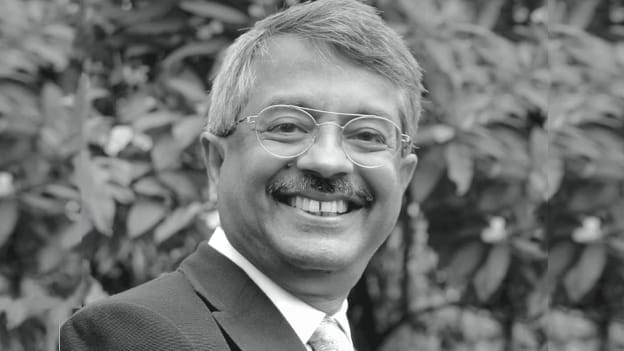
In an exclusive conversation with Pramod Bhasin, the Founder of Genpact, we ask him about building Genpact from scratch, the power of conviction, achieving competitive advantage and HRs role in architecting a culture of risk-taking.
It was his vision that established an industry in India. Pramod Bhasin founded Genpact (formerly known as GE Capital International Services, GECIS) in 1997 and is considered the founder and pioneer of the Business Process Management industry in India – an industry that employs over a million people directly & indirectly. What started as an idea to handle GE’s back office processes, has now become a USD 2.46 billion revenue-making company. He served as Genpact’s President till 2011 and is currently the non-executive Vice Chairman of the company.
In this candid interaction, he talks about the vulnerabilities of running a business, venturing into an uncharted territory, perils of building an infrastructure, handling fast-paced growth, the belief in ideas and capabilities, and the role HR plays in creating a culture of meritocracy and risk-taking.
You started Genpact in 1997 in India, at a time when handling business processes remotely wasn’t even heard of. What gave you the belief that it was a good idea?
You need to have the power of conviction in a good idea. Most good ideas which are forward-looking do not look like obvious solutions and always come with a big set of constraints. If they were obvious solutions, they wouldn’t be such good ideas because a hundred other people would have executed those ideas. By the very definition, a new idea is something which requires a new solution. I think it is less about knowing whether it will work or not and more about the conviction to try something new and not worry about failure.
Did I ever think Genpact would grow to the scale it has today? Absolutely not! But if we hadn’t tried, we wouldn’t have been where we are today. That’s how we started this journey.
The HR needs to start defining and improving the competitive advantage of companies for the future in a very specific and systematic way
You practically ventured into a completely unchartered territory. Tell us about it. What were the challenges you faced and how did you trounce them?
I went to GE with the idea that we could do world-class business processing from India – even when there were no mobile phones, telephone lines, no employees, no trainable people, no office space, and even Gurgaon wasn’t known as the millennium city of India. Other than that, the idea was a good one. When GE agreed to give us their back-office processes, they asked us to find 20 people who would do their business processing from India. I said yes, and came back to India but wondered how and from where I would get these people. But we had to try and find these people. We were the pioneers of the idea, and we had to invent everything. So we started with advertising for 20 positions and got 8000 applications. And that’s the time we realized that we were onto something big.
Hiring and training were our core competencies, and without them, we couldn’t have survived. Every day, we would need a whole new set of people with brand new skills and that’s how we started looking for surrogate solutions. For customer service, we went to the hotel industry; for English speakers, we went to schools; for finance and accounting, we went to banks; for supply chain, we went to local logistics people. All the people we chose knew something or the other about the work they were supposed to do and could be groomed — and that’s where we put our efforts. So, we took bets with surrogates – on people who didn’t have the experience or expertise but only had raw talent. We groomed that raw talent and innovated.
While setting up, what was your biggest support system?
We were a team of great people. We still are. My best armament was that I had great people who had worked with me back at GE Capital. We ventured out to other industries and our hiring programs were very successful in terms of the acquisition of senior leadership and management. I hired people who were willing to take risks, who were willing to try something new, who were enthusiastic about taking up the challenge of a brand new idea.
The advice I will give to young entrepreneurs today would be that they should be passionate about their ideas and never give up
What do you think are the reasons for the talent struggles in organizations today?
I feel organizations today do not leverage the raw talent that India has. We stand at the peak of the biggest asset than almost any country. India will own 35 percent of the entire world’s workforce in the next 10 years, which is truly remarkable.
However, in India, a significant percentage of the people we onboard in our businesses want to join only the government sector and PSUs. And the question that arises is that why does the private sector disillusion them so much? The future talent is going to come from rural India. We are a country of incredible diversity, and I wonder if we adequately celebrate that diversity.
Today, talent has evolved and so have the behaviors. More and more people are hopping jobs and they wear it as a badge of honor. This defies every thesis we have in HR as to how to build a company, how to nurture talent and how to build capabilities in that talent. There is a need to ask ourselves – Are we ready for the performance and behavioral changes required? Are we ready to motivate the way people want to be inspired today?
Do you think HR today is ready for the behavioral changes in talent that you mentioned? What should the HR do to build that readiness?
I often say, ‘If you don’t have a competitive advantage, don’t compete’. And that is something HR professionals should also contemplate on. The HR needs to start defining and improving the competitive advantage of companies for the future in a very specific and systematic way.
HR, along with finance, is a department that typically subdues innovation and boldness because of compliance and operational challenges. But, HR needs to start by creating an environment that allows people to innovate and gives them room to experiment. I would like to ask HR professionals – Do you encourage people to take real risks, get them over the fear of failure? Are you giving people the incentive and motivation to come out with new products all the time? Or is it all something you and I talk about in a big speech, forget about it, and go back to perform based on short-term targets?
HR needs to build leaders for every quarter, every year. And this needs to be measured periodically. The HR today needs to break rules, question the status quo, promote someone out of turn, congratulate people for their ideas, take the risk of executing their ideas, and even reward someone for taking personal risks.
How do you reflect on risk-taking? Do you agree that there are people out there willing to take risks?
My observation is that in India, we don’t take risks. We don’t take real risks with careers, with individuals, with ourselves. When I started Genpact, I didn’t expect US companies to send us processes from all over the US into India, however, they did; but I feel that people here are unwilling to move. I feel that India Inc. generally plays it safe. Yet the best careers are built by people who take the toughest jobs, the tough roads, who try something new and different; but we often reward people who display opposite behaviors.
I feel an environment where room is given to people to experiment and fail is what encourages mavericks and success. Businesses should take risks with their people. It always sends a very strong message to the workforce and does wonders to their motivation levels. And talent matters more than experience. It is about giving power to people. And this is where HR has a role to play – to architect that culture.
What are the core attributes that HR should build for attaining competitive advantage?
To begin with – speed, action and impatience are the essentials that HR needs to have. One needs to get impatient every morning one wakes up, and say that ‘I want to do things differently’. Don’t have a fear of failure. The impact of fear, of not taking a bet is often greater than the fear of failure. Have a crystal clear idea of your core competitive advantage. For India, it is the talent it has. If organizations are able to harness it well, thinking of ways to enable them to be successful and get the best out of them, HR can take this country to be a truly great power in the world. We never gave up at Genpact and there were many instances when it could have ended. We made mistakes but we bounced back. And this is what the HR needs to have – to take risks and leap ahead.
What, today, do you think is the untapped space, where something like a Genpact can emerge?
There are tons of spaces. One is virtual business models, arising out of India, wherein we run business based on the talent base here, but they are full-scale businesses in the US. As of today, we serve other customers; tomorrow, we should be doing their business for them. We could do it in banking, marketing companies, consulting companies, analytics companies. So you would have a sales and marketing front there, backed by talent here.
What is the advice you would want to give to entrepreneurs? How can they take real risks?
The easiest thing to say in this world is that it won’t work and very few people will have the ability to say it will. That’s the core difference between trying something new vs. incremental improvements in something that has already been done. The advice I will give to young entrepreneurs today would be that they should be passionate about their ideas and never give up.
Author
Loading...