







Business
I like to dream big


 ||
||

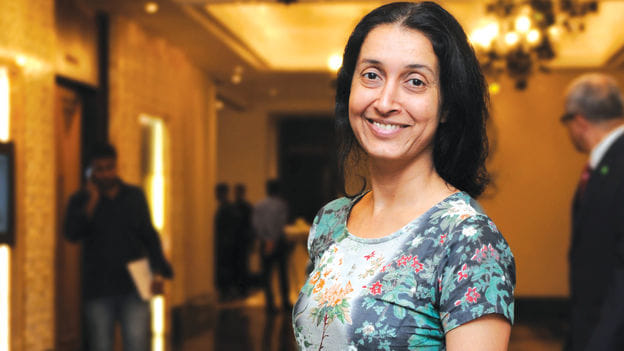
Shaheen Mistri, CEO of Teach For India on dreaming big, the importance of an education and more
Q. What shaped you to become the person you are today? Any interesting anecdotes you would like to share.
A. My mother started the first school for the hearing impaired in Mumbai when we were very young. So we always had children with some disabilities in and out of our home and we grew up seeing our mother work with them. That was definitely an influence that shaped my perspective.
Secondly, from a very early age my parents encouraged me to volunteer. So I spent every summer since the age of 12 with kids, all of whom had some kind of special need. Spending so much time made me realize that I loved being with kids.
The third influence was the very strong education that I received. I started out in the French school system. From there, I went to the British School system and then the US school system. I never went to an Indian school. I had the opportunity to experience different forms of education with some really good teachers. So, from a very early age, I realized that I had been very lucky with the education I got. In contrast to that, we would do a number of trips to India and I would meet children who did not have the same opportunities. So the idea that something is unequal in the world was planted very early on. And it was a combination of all these things that led to eventually what I did.
Q. So when did you decide that this was what you wanted to do and how did you get started?
A. At 18, I moved back to India and that was a big impetus as this was the time I started to explore my own identity and my country as I had not lived in India before. The second was the realization that I loved being with kids. It was a combination of these two things that prompted me to go out in the community and teach and that eventually went on to become the Akanksha Foundation and later my starting Teach For India.
On how it all started: I was 18 and had just completed my first year of college in the US. However, I did not want to go back so I enrolled and started going to college here in India. Even with college, I would spend all my free time with a particular community in Cuffe Parade and teach the children there. After six months, we decided that the children needed a place outside of the community to study. There are children who need education, there are volunteers who want to teach and there is both space and funding available. So we thought that lets bring it all together. So that became the first formal Akanksha center.
This idea was really easy to replicate and we expanded to 60 Akanksha centers. Ten years down the line, we decided to shift this model dramatically. So from being an after-school supplement model, we moved to a partnership with the government and we started running full schools for kids. That was the Akanksha journey. After 17 years into that work, a number of those children had grown up and gone to college and made incredible changes to their own lives. This is when a group of us went back to the drawing board to see what it would take to move a small subset of kids and scale them across the system. This lead to the founding of Teach for India.
Q. Tell us about your vision for Teach For India
A. India has close to 7 million teachers in classrooms. So the idea is not to put a teacher in every classroom who is a Teach For India fellow but to have a stream of leaders across sectors who are focused on equity and education. These people will be part of different sectors and work to make opportunities for a much wider group of children wherever they are. Our vision for Teach For India is about finding the line that would lead to all children in the country in giving them an excellent education. It seems like this vision is so great and daunting that the only way to do it is to spark a much wider movement than Teach For India where every Indian is involved.
Q. Tell us something about your leadership style
A. I have asked myself this question a number of times and the answer is always evolving. I think the biggest role I play is inducing excitement in my team about a vision that is really big and ambitious. By nature, it is very easy for me to dream and come up with ideas. My team often reminds me that it is harder for me to know what it takes to make those ideas come true. So, I think my value add is on the dream side and in inspiring people to achieve more than they think they are capable of. I am very creative in my approach to things but I really need the help of my team in execution and seeing the reality of where we are. Fundamentally, I am a learner. And very early on I realized that I have passion and nothing else. So I needed to learn everything from building a team to raising funds. Correspondingly, I am very actively involved in learning. I never felt bad about asking for help and I have always surrounded myself with people who I think understood the vision. I think we are a nice blend of what we can take from the corporate sector, while keeping the mission and drive of an NGO. Even though we are in year six, we have the passion of a start-up and the people feel like they are working for a mission rather than a job.
Q. How do you attract and retain your people?
A. We believe a lot in our mission and vision. We think if we spread the message enough, people who are interested, will gravitate to us. This will also work as a process of self-selection. Consequently, we do a lot of awareness building and storytelling to get our message across.
When it comes to choosing our Fellows, we have a very elaborate process which extends over eight months of the year. We go to over 300 colleges and make presentations about the mission, what educational equity looks like and how they can be a part of the campaign. We also do a huge follow-up process with calls to potential applicants and sometimes even their parents. So this is a very big media/ recruitment plan on the ground to actually find our people. Rather than focusing on what people say, we have made it a very aspirational program where we hope to have the brightest people from top colleges to join us and stay in the field of education. Consequently, we have had a 5-8% selectivity for the Fellowship.
Retention of staff has been a much bigger problem for us. Compensation is a factor as people who come to us from corporates find a big difference. Even burn out is a big factor as this is really hard work. The responsibility that we shoulder is huge as this is a question of the lives of our children. For us, the mission and the vision is so urgent that however many things one gets done every day, it is just not enough. So balancing that in a way that it feels less urgent and gives the owner a feeling of success is something that we really want to achieve in our organization.
Q. What do you think other CEOs can learn from your journey?
A. When I started this work, for me it was all about the kids and I did not care as much about the people I worked with. I saw them as a tool to help the kids and I did not think I should concern myself with their issues. I have really shifted my mindset on that. If we do not understand and look after the people that we are the closest to, our efforts are not going to translate down to the children. That has been a big shift and change in my way of working.
For me, a big learning was to understand what is within my control and what is outside my control. I started this journey thinking at I could change the world but I finally figured that the only thing that I could change is myself and even that is very hard. And for me, that was a massive realization.
Topics

Loading...