







Business
I have been an advocate of frequent change: K.V. Kamath



 ||
||

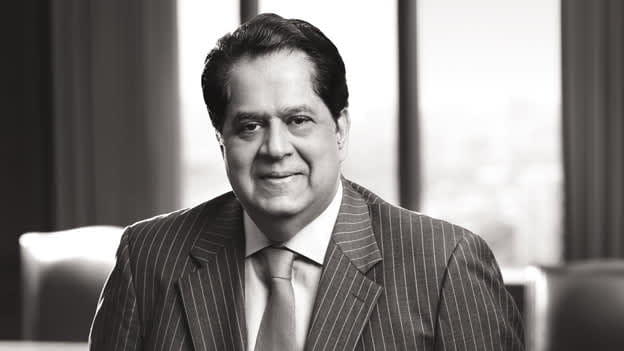
K.V. Kamath, the non-Executive Chairman of the Board of Directors of ICICI Bank talks about his journey in ICICI Bank
Q. Take us through your journey. What are the most significant experiences in your career and what were the key learnings from them?
A. For the most part of my journey, I have managed people and companies. Most of my career was with ICICI Ltd. In 1988, I went abroad for eight years and came back to ICICI as CEO in 1996. In the intervening time, I was managing small businesses within the companies I was working with.
In the 90s, we faced what I would call the “Challenge of Change”. The India that I had left and the India I came back to was vastly different, particularly in an economic sense. Post liberalization, we were facing many challenges as an organization. The biggest challenge for me was that we looked like a single business company and that was project finance. Now that we had global competition, it appeared to be too risky; our clients were very small in size, they didn’t have the required scale, quality or cost competitiveness. We needed to understand what we could do to solve this problem.
There were three major issues that we had to tackle: Capital, people and brand. The people issue was the most challenging of all because we were a small organization then. The organization structure was so clogged that you could not get the right talent to the right spots. So, I had to make one of my most difficult decisions, and that was not very common in India back then, that of offering a golden handshake. In effect, we had to part with about 30 per cent of our leadership.
I believe the first challenge that leaders face is to take a critical look at their organizations, understand the first step they need to take, and what they need to change within their organizations to remain agile. In our case, the first step was to clear the path to growth and the second was to bring in young leaders.
Since we had de-clogged the organization, a whole lot of people were promoted people who were 32-33 years old were in leadership positions. You could sense a lot of energy flowing in the organization, and this energy was a lesson for me. The second lesson was to differentiate between merit and meritocracy and build a meritocracy. Then we raised some capital, looked at some new products and worked on our brand; simultaneously we also looked at the products that we were going to offer. By and large, seven to 10 people who we had picked very early and groomed into leadership positions became the ones who then led the transformation.
Through this journey, a large part of what we did had to do with people: It was getting the right talent in the right place.
Q. How did you get the buy-in for such bold steps as you said yourself that it was not a very common thing to do in India and it was risky as well?
A. There are two issues here: One, when you talk of buy-in, human nature lends you to believe that you can do everything. The second buy-in is that a radical change is required to turn around the organization; to me, this is a bigger challenge as it affects everybody including the decision-makers. There is also no buy-in for the fact that you need to take some hard decisions, you may talk and try to convince but after all, if it is required for the business to sustain, it will need to happen.
For example, when we were in the process of transformation, everybody was happy to be put in positions of authority. Then we reached a stage where we said now we should build meritocracy; we said we were going to rate people on the curve. This was around 1995-96. Around that time, hardly any company in India did it. Here came a situation when the 10 people whom we had picked up for leadership positions sort of broke down. In the first year, giving or taking feedback was a problem, but by the third year everyone started seeing the merit in these things and it became easier. In my experience, the buy-in for radical change in structure and the acceptance that a change is required isn’t there.
Q. Is it success that makes people change when they see benefit of such changes year-after-year?
A. Ultimately, it has to be success. However, when we say year-after-year we get into tricky ground. We can see success for one or two years. After that, the conditions change and you may need to change again. I have been an advocate of frequent change. I believe you cannot have the structure of an organization cast in stone when your business is changing. You cannot have the organization structure atrophied. The phraseology that I used in those days to make it more evocative was to say that an organizational structure has to be like a living organism. It should change shape and character as your business changes shape and character. And that is not easy. For us also, it was this part in the HR structure, which was our next big challenge. We got people, meritocracy, products, but businesses were undergoing change and people didn’t want to change. As I said, buy-in to be a leader is there; buy-in for doing things differently is not there. But you explain, you push and finally you dictate it. And sometimes a good leader has to do all of this.
Q. You were saying one of the key elements was to identify the next layer of leaders early on. What is your personal style to identify people with potential?
A. There are two ways: One, if you are able to observe people, you observe them, test them and give them roles where they are able to demonstrate what they can do. The other situation is when you don’t have the opportunity to observe people directly. When I came back after a period of eight years, I didn’t have the opportunity to see people. So, I asked my old grapevine for a list of new people who have turned out to be star performers in those eight years. I got a list of a few names, decided to give them assignments. I started engaging with them over emails while I was sitting in Jakarta. So, when I came in here I had some idea about the young slate that could provide support as we go forward. Also, I laid stress on the ability to take initiative combined with lateral thinking.
Unlike the early days, the challenge now is to look at a person on a multi-skill or multi-personality basis and not on the basis of a single trait. It is essential to look at a person’s social skills, how he relates to his juniors, seniors, or the external world. I must say that by and large I haven’t really gone wrong. And of course all this is just for the first level. As you go along, you will find that people start to slow down, or sometimes you may realize that they have probably reached their limits. You need to see when they progress to their highest level and when there is time for the new leadership to forge ahead. This is how the leadership cone develops. This is what all organizations should do in theory; however, I don’t really see many organizations doing this.
Q. What comes in the way?
A. The main thing that comes in the way is the assessment of people’s personality. Sometimes you try to mentor or handhold, but you realize that it doesn’t work all the time. There are reasons why a person cannot change. It may be a character trait. In such cases one must see if one can work around it. One of the things I told our leadership slate very early is: Don’t benchmark a slate on your own characteristics. Because however good your characteristics are, everybody won’t have them. It is about how you manage with what you have.
Q. What have you learnt from your mentors?
A. I can particularly pick two mentors. My first mentor was the head of project finance group in ICICI Ltd when I joined. He is no more. He taught me the ability to look at things in a multi-dimensional way, multi-disciplinary way, and very hard technical skills like engineering, arithmetic or financial. I think I learnt the entire grounding to become a good project finance banker from him.
In the mid 80s, came Mr Vaghul. He taught me to be much more broadminded in the way I looked at business. From him I learnt to look at opportunities, delegation of responsibilities, to take the ball and run and to build a workplace with huge human talent. He was a visionary in terms of new businesses. It was from him that I learnt the necessity to look beyond the core businesses.
The biggest contribution he made to my learning was when he stepped down from his position in 1996 and I became the CEO. Once I took over, he made himself unavailable for the first six months. To me this is a huge lesson for anybody who is doing a transition: Provide the incumbent the full space and authority to do what s/he desires. When I stepped down, I did the same thing. You need to cut the cord completely. You cannot have a few strands there as those could entangle you into a whole lot of trouble.
Q. As you are looking at 2014, what are the challenges that you see for businesses in India and what are the implications of that from a talent strategy?
A. What has happened in the last few years and this is a precursor to 2014 is that most companies, which mean to be in the business for the long run, are concentrating within to see how they can address the talent strategy. For example in ICICI, we prepared an extensive one-year program on a mini MBA type of structure. Now, frankly, we don’t really need to hire from MBA schools anymore. The fact is when Ram (K. Ramkumar, Executive Director – ICICI Bank) came with this proposition that we will run this 800 people school ourselves, I was opposed to it. I asked him, ‘Where is the talent? They will all be going to b-schools anyway’. He made an argument that there is a whole lot of talent that speaks in vernacular languages and has not been mainstreamed. Because of this vernacular shift, the sort of diversity we got in this talent group was amazing.
There is talent out there. We don’t see it because we have built biases such as English speaking skills. If you can pick this talent, you can groom it according to your requirements. At every stage, combining this sort of skill improvement with a company’s own training and coaching changes things a lot. This is the sort of context that’s required for 2014.
In the business context, there will be more disruptions, more inflection points in various businesses. Fundamentally, there will be difficulties in keeping the growth momentum. The companies will have to see how they can reinvent themselves. The biggest challenge will be of reinvention for companies, inflection points coming faster and faster; in the people context, companies will need to ask if they are ready to deal with it? How are they going to survive it? I would say that embracing this reality is how you will deal with it.
Q. If you were to ask HR leaders to focus on just one thing for 2014 that will really impact business, what would that be?
A. The thing that is least attended to by HR leaders is the cultural aspect of the company, the softer side of the company. These are by and large neglected. We end up looking at everything in a number oriented way. The problem starts with the recruitment process itself. We look at number orientation in almost every aspect of talent. We are hurting ourselves by doing that. I have learned the hard way that this is required.
Author

Loading...