







Organisational Culture
Hire people who are better than you, & then get out of their way





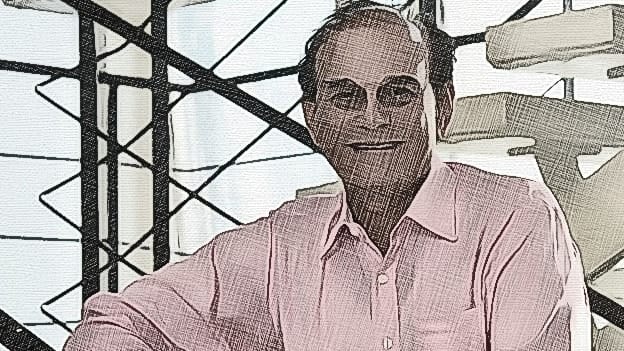
Harsh Mariwala, Chairman & Managing Director, Marico Ltd. discusses his journey of entrepreneurship, his resolve, integrating values to the culture, and what the role of HR needs to be
Harsh Mariwala took his family-run, traditional commodity-driven business to a $900 million Multinational Company and one of India’s leading Consumer Products & Services brands. Mariwala is an entrepreneur who epitomizes scale and that too in a sustainable way. He believes that “Innovation is possible in everything” and this is one of the philosophies that has helped him build Marico at the level it is today.
He shares with us his journey of starting an independent arm of his family business, and taking it to greater heights.
Tell us about your journey. How did it all start?
I started very small. I was the first person from the next generation to join my family-managed business. After joining the company, I identified that our edible oil business was being neglected. And I thought that if I could convert that commodity business from unbranded to branded, then I would be able to create a business that is far more profitable and sustainable. So I set out on that path and started innovating with the packaging and product placement. Our market share went up to 15 percent. But if we were to scale the company by leaps and bounds, we had to take some bold steps and they came with their own set of challenges.
How did you scale the company?
There was a stage when 9 family members were running three very different businesses. We realized that if we were to give thrust to branded consumer goods, we had to be a separate company. I requested my family for the freedom to operate only an FMCG business. It took me about two years to persuade my family about the idea and to take that decision.
I feel it was the most important decision for me because that gave me an opportunity to build the business on my own — I invested the profits gained from products in building a consumer product company, which also helped me in attracting the right talent. So that’s how Marico was born in 1990.
What were the initial steps you took when you were building Marico?
The first task I undertook at Marico was hiring a good HR Head who would help me find the right talent to start the company. And that’s what happened. We hired 40-50 Senior Managers within the first 6-8 months. But getting 50 new people — who had divergent views, individual opinions about product development, profit-making, etc. can be chaotic. This is when we realized that we needed a set of defined values which sets the work culture of the organization in stone. And we set out on the path to define those values.
I started by writing down my own thoughts. I wrote some 20-30 pages and shared them with the team. The response I got from the team was amazing. Not many Indian organizations at that time had values and culture articulated. We spent 8-10 days in finalizing the document and gave it a proper structure. That’s how we articulated our values.
The first task I undertook at Marico was hiring a good HR Head
Most organizations struggle with ingraining such values into their cultures. How did you manage to do this at Marico?
Drafting values is always easier than implementing values and ingraining them into the culture. I have seen many organizations that have values statements stuck on their walls, but their culture does not necessarily reflect them. For values to be a part of the culture, it is important that senior and middle management understands and owns it. Commitment only comes with involvement. So we went to the next level of management (managers and above), called them for a two-day retreat and took their inputs in terms of value additions to the document we had drafted, their ideas on where we aspire to reach, the gaps that existed and the solutions we needed to create to bridge those gaps. If we would have taken the decisions and just informed them about it, the response would have been very different. It is because the managers were involved in the value-creation process, they owned the values. Even today, we keep measuring our values periodically, which highlights the gaps and where exactly we need to get better.
Our values have been a great source of attracting and retaining talent. We crafted a unique value proposition to attract talent compared to who we were fighting in the job market. Our values like openness and empowerment were integral in getting the right talent, because our culture enabled people to learn and grow, despite their age and experience. The word out there was that Marico provides its employees a lot of learning opportunities and that became the core differentiator.
Can you share some examples of how to integrate values into the culture?
Perpetuating the values in your day-to-day working is how values are reinforced. At Marico, one of the values is Trust. So we sent the message out to our members (we call our employees our members) by giving them significant freedom around leaves and work timings. We perpetuate openness by creating an open, approachable culture. The office is designed in such a way that the space is kept open. We do open houses once a year wherein we encourage our members to ask any question they wish to. Openness as a virtue is an integral part of our leadership style, something which is taught in training programs to managers.
What, in your opinion, should be the real role of HR in an organization? What are the things HR should stop doing that it does in its current form?
To begin with, HR has to play a business role. HR gets a larger perspective of people challenges and thus, of course needs to be an integral part of the business. The war for talent is only going to accelerate and it is very important it plays a different role going forward.
I think HR’s role is beyond hire and fire. Hiring and firing is the role of the line. HR’s role is of a facilitator and a catalyst. HR should create an ecosystem where the line managers become the champions of nurturing the members to realize their true potential for growth.
What are the attributes you look in people when you make them a part of your team?
The first thing I look in people is their drive. It can be determined by testing them in difficult circumstances. If a person can overcome the toughest of obstacles thrown at him/her, then (s)he has the drive. I also appreciate the qualities of risk-taking, curiosity and a growth mindset in people. My philosophy for talent management has been – “Hire people who are better than you, and then get out of their way.”
(This interview has been built from excerpts from the Keynote speech of Harsh Mariwala at Are You In The List Gala Night)
Topics
Author
Loading...
Loading...