







Economy Policy
Tariffs, textiles & tough choices: Will India’s MSMEs survive the storm



|
Updated on


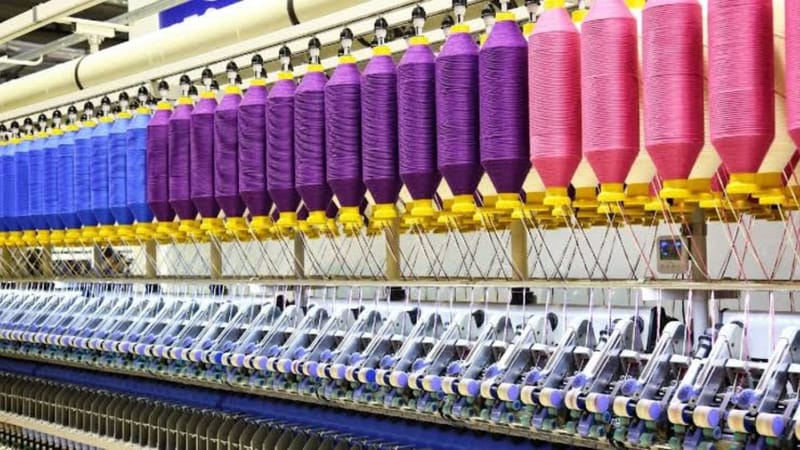
India’s MSMEs face a major blow as fresh US tariffs hit textile and jewellery exports. Can diversification and e-commerce offer a lifeline?
As India’s e-commerce giants ramp up gig workforce hiring ahead of the festive season, the country’s textile sector, second only to agriculture in employment with a 4.5 crore workforce, faces a major setback. A fresh 50% US tariff or Trump tariff on Indian imports has compounded existing pressures from geopolitical tensions and supply chain disruptions.
The fresh 25%+25% US tariff in response to India’s continued purchase of crude oil from Russia. The latest tariff has come as a blow to India’s apparel exports to the US, worth around USD 4.5 billion. This setback has come at a time when India is aiming to scale its textile exports to US $ 100 billion.
Global trade headwinds
According to the Finance Ministry’s Monthly Economic Review (July 2025), global trade has shown resilience so far, partly due to frontloading of imports before tariff deadlines and improving macroeconomic conditions. But turbulence lies ahead. The World Trade Organization projects global merchandise trade will grow just 0.9% in 2025, well below the pre-tariff estimate of 2.7%. The drag is expected to intensify in late 2025 and throughout 2026.
Textile exports under pressure
The US tariff lands hardest on India’s textile exporters, already battling tough competition from Vietnam and Bangladesh. India’s garment exports fell from USD 15 billion in 2013–14 to USD 14.5 billion in 2023–24, while Vietnam and Bangladesh surged ahead to USD 33.4 billion and USD 43.8 billion in a decade, respectively.
“The immediate impact may be harsh. However, exports to the US account for just 6% of India’s USD 179 billion textile industry—a cushion against deeper damage,” said Sonal Arora, Country Manager, GI Group Holding.
Can MSMEs Pivot?
The real question is whether India’s MSMEs, many of which dominate textiles and handicrafts, can adapt fast enough. Beyond textiles, MSMEs in leather goods, gems and jewellery, and auto components also face vulnerability from protectionist shocks.
Rajesh Rokde, Chairman, All India Gem and Jewellery Domestic Council (GJC), sees the imposition of a 50% tariff by the US on Indian gold jewellery exports as a direct blow to the country’s artisanal legacy.
“Our jewellery sector supports millions of livelihoods, from artisans in small towns to exporters in major metros. This tariff threatens to erode decades of trust and trade relations painstakingly built with American buyers,” he warned.
To survive, experts say MSMEs will need to accelerate diversification into new markets—particularly Europe, the Middle East, and Africa—while also tapping into the surge in domestic e-commerce demand. India’s recent free-trade agreements and G20 diplomacy could offer fresh openings if leveraged effectively.
For Anil Agarwal, CEO and Co-founder of Incruiter, US tariff policies may seem like just another trade headline—but their impact is deeply human. "They influence jobs, growth, and the very agility of our startup and MSME ecosystem." According to
Agarwal, the new US tariff is a reminder that Indian retail and e-commerce ventures must prepare for volatility, not just in supply chains but also in talent needs. Companies that can swiftly recalibrate hiring strategies to match shifting market realities will be better equipped to weather the storm."
Agarwal emphasised that for young businesses, especially, the ability to scale the right teams at the right time will define whether these challenges become setbacks or opportunities.
India supplies almost one in five generic medicines consumed globally, with the United States accounting for a significant share of those exports. "In this scenario, any increase in tariffs from the US will inevitably affect competitiveness and squeeze margins for manufacturers here," said Arpit Bhatia, Director at Laborate Pharmaceuticals. Yet, he sees this as a reminder of the resilience that has always defined the Indian pharmaceutical sector. "Our domestic market is expanding rapidly and is projected to reach USD 130 billion by 2030, creating a strong counterbalance to export-driven shocks. Indian pharma has weathered patent cliffs, regulatory changes, and supply chain disruptions in the past, and each time it has adapted and strengthened." Bhatia calls for a focus not just on protecting volumes, but on keeping compliance, innovation, and affordability at the core. "In doing so, we can continue to serve global markets whilst meeting India’s own rising demand for quality healthcare."
The road ahead
Protectionist measures, introduced at a time when global markets are already volatile, risk fuelling further uncertainty. For Indian MSMEs, the immediate challenge will be coping with lost margins, squeezed competitiveness, and strained buyer relationships.
Yet, the longer-term resilience of the sector may rest on three levers:
• Market diversification beyond the US to reduce dependency on any single geography.
• Value addition in exports, moving from low-cost commodities to design-led, niche products.
• Domestic demand growth, fuelled by India’s fast-expanding consumer base and e-commerce penetration.
Industry voices are urging the Indian government to intensify diplomatic engagement with Washington and push for tariff relief. But even as policymakers negotiate, businesses will need to rethink strategies.
The survival of thousands of small enterprises—and the preservation of India’s cultural and economic heritage—depends on how quickly MSMEs and policymakers together chart a new course. For India’s artisans and entrepreneurs, the coming years will be a true test of resilience.
Topics
Author
Loading...