







Employee Engagement
Future-proofing HR: Building trust, talent, and next-gen technology





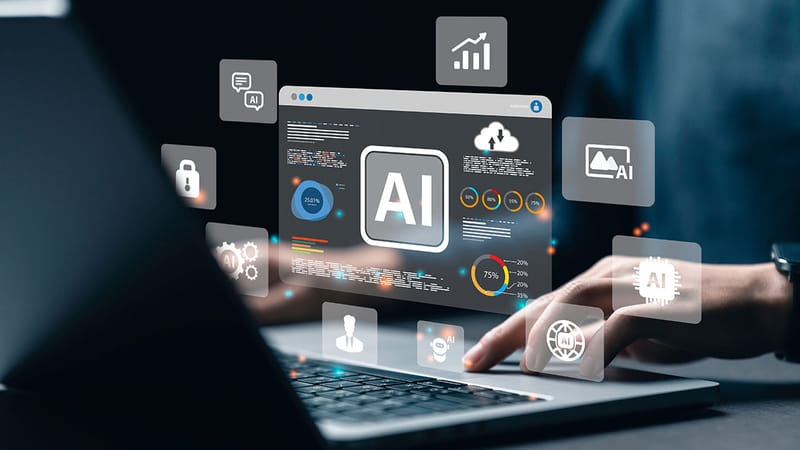
The new workplace operating system will enable HR leaders to automate repetitive tasks while focusing on the human aspects of leadership.
The world of work is undergoing profound transformation, and HR leaders are standing at the center of this shift. At the recent Future Proof HR session, hosted by People Matters in partnership with greytHR, experts and practitioners came together to explore what it takes to re-architect HR as an engine of trust, performance, and transformation in the age of AI.
The discussion featured Adhir Mane, Chief Human Resources Officer at Raymond, and Surya Srinivas, VP of Product & Engineering at GreytHR. The session delved into the evolving HR operating system, the role of people managers, the balance between human empathy and AI efficiency, and the future skills HR must nurture to thrive in a digital-first, AI-enabled world.
Where AI will disrupt HR first
The session opened with an interactive poll asking participants which HR area is most likely to be transformed by AI first. Recruitment and onboarding emerged as the clear frontrunner, followed closely by performance management. Payroll and compliance ranked lowest, despite its automation potential.
For Surya, recruitment topping the list was expected, but performance management’s rise as a close second was surprising. Adil agreed that recruitment, learning, and engagement are already seeing AI-led disruption, reflecting the ground reality of HR functions under pressure to scale and digitize.
The New ABCD of HR in the AI Era
Surya highlighted the shift HR must make from a process-driven to an experience-driven function. He reframed HR’s traditional “ABCD”—attendance, benefits, compliance, and diversity into a new playbook for the AI era:
A: AI-enabled experiences – Using automation and intelligent tools to deliver seamless, employee-first journeys.
B: Belonging-driven culture – Fostering recognition, storytelling, and appreciation to strengthen connection.
C: Continuous listening and communication – Moving beyond annual surveys to weekly check-ins, pulse surveys, and open dialogue.
D: Data-driven decision-making – Designing policies and strategies grounded in analytics, not intuition.
This new operating system, he argued, will allow HR leaders to automate repetitive tasks while doubling down on the human aspects of leadership.
Adhir emphasised that the systems of the future must be skill-enabled, integrated across HR subsystems, and built with strong ethical guardrails. “It must be something which can link acquisition to talent management while ensuring ethical clarity,” he noted, underscoring the importance of governance as AI becomes embedded in people processes.
People Managers as anchors of trust
Both speakers stressed that people managers play a critical role as anchors of trust and agility in organisations.
The leaders discussed that the managers must move away from control-and-command models toward co-creation and psychological safety. Similarly, Surya added that trust is built on integrity and consistency, while agility comes from creating safe environments where teams can experiment, fail fast, and learn continuously. He also pointed to frameworks like “Map, Measure, Impact” as ways to hardwire agility into everyday HR practices.
The Human in HR: What AI cannot replace
While AI is rapidly transforming recruitment, workforce planning, and operations, both panelists agreed that certain aspects of HR remain uniquely human.
Surya outlined three areas where AI is unlikely to replace people:
Emotional well-being – Providing empathetic support during challenging times.
Conflict resolution – Addressing interpersonal issues that require trust and neutrality.
Culture-building – Shaping belonging and connection beyond transactions.
“AI is a powerful co-pilot, but HR’s human side, empathy, trust, and cultural stewardship will always remain irreplaceable,” he said.
The leaders emphasised the importance of change management during this transition, cautioning that adoption of AI-driven systems will require leaders to handle ambiguity and guide organizations through iterative, milestone-based change.
From role-based to skills-based organisations
A recurring theme in the discussion was the shift from role-based structures to skills-based models. The first step is systematic skill mapping across all job families and roles. “If you don’t map skills at the start, the transition will be bumpy,” he said, noting that few organisations have done this effectively at scale.
For smaller companies, Surya recommended starting small, picking one critical role, running self-assessments validated by managers, and spotting skill gaps with simple tools before scaling the exercise. This pragmatic approach, he argued, avoids disruption while creating a foundation for long-term alignment.
Barriers to Future-Ready HR
Both the leaders discussed the biggest barriers that come to build a future-ready HR operating system: lack of skills among people managers and limited visibility into real-time workforce data. They concluded that the HR systems are only as effective as the managers who use them. Unless managers adopt data-driven and skill-focused approaches, transformation will stall.
Surya also added that fragmented cultures and outdated mindsets continue to hold back progress, particularly in emerging markets where HR maturity levels vary significantly.
Looking ahead to 2030
When asked to imagine HR in 2030, Surya envisioned blurred boundaries between HR and IT, with AI agents actively co-managing workforce planning and productivity. “Workforce management will not just be about humans, it will be human plus AI,” he said.
Adhir added that future challenges will include redefining human–machine collaboration and exploring platforms like the Metaverse. “Culture is not coded, but culture is cultivated,” signed off Adhir.
Listen to the complete conversation .
Author
Loading...