







Training Development
Spearheading Digital Transformation in Learning





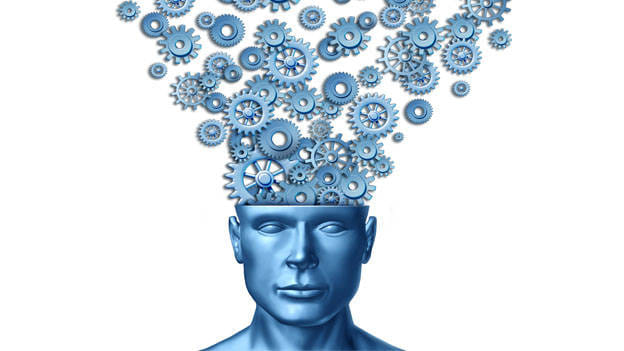
Employee-driven, highly personalized and free learning choices pave the way ahead for Learning and Development.
Digital transformation has been rightly touted as a “script in the making”. Three years ago, when organizations started talking about digital transformation, it was a mere buzzword. Organizations then realized the potential of digital, but had very little clarity on how to go about embracing the digital wave. They recognized the need for capability building in the digital age, but several challenges persisted. One such challenge is that the backbone of digital transformation is built on technology, and technology is shifting very rapidly. For example, three years ago technology most probably meant SMAC (Social, Media, Analytics, Cloud). Today, we have come a long way- the technological elements that formulate digital now incorporate humanized big data, blockchain, AI and other cutting edge transformative technologies. In fact, the key difference between previous and recent transformations is the speed- most organizations were not prepared to keep pace with the speed of change.
The L&D Role in Digital Journeys
Due to this state of flux, organizations today struggle with building capability in new-age areas. Accordingly, the role of the modern-day L&D professional has evolved too. Some of the key lookouts in this digital transformation journey, from an L&D perspective are:
How exactly do L&D and business leaders achieve this? The answer lies in how learning-centric organizations wire themselves differently.
Laying a Strong Foundation to Embrace Change
Learning is not just an organizational phenomenon. We, as humans are constantly learning. One such example can be seen in society and families, in terms of what happens when disruptions happen. For example, a family crisis makes all relatives and friends come together and rally to extend help and support. Behind all this is a feeling of connectedness. L&D can take a leaf out of this page, and use the same human-nature to build an organizational learning strategy. When people come together from different walks of life, success comes from building “connectedness”. Leaders must leverage this basic human nature and strive to create a “feeling of community” across the organization, for example between sales, software, and other departments. This strategy is called mobilization i.e. getting communities together around a point of disruption. It is essentially about creating a sense of “How do we really take this on together?” Discussing common areas of concerns makes everyone understand the challenge in the same way and helps builds confidence that the challenge can be overcome.
We see another interesting life-lesson from society. When crisis strikes, people go back to practicing rituals. They rediscover rituals and find their faith to tide over the crises. HR and L&D must use this human-affinity for faith by rediscovering organizational rituals. Leaders must identify what ties people together, and revive those fundamental rituals which we somewhere lose as a part of disruption. Reliving rituals can go a long way in encouraging winning behaviours. Organizations that stand on a strong foundation of “connect” and “belief in the core” can sustain through highly disruptive change. It is L&D, HR and business leaders’ job to instil that sense of connect and belief in its people. And it is ultimately every employee’s responsibility to be responsive to the change, by making learning an integral part of professional life.
The Role of L&D in Enabling Capability Transformation
Once the strong foundations of “connect” and “belief” are laid, what next? L&D must then enable real-life learning. The challenge here is that people who are designing learning interventions are not learners themselves, and hence don’t think like the learners. Because they are not at the learning-end of the spectrum, they may not exactly experience how roles are evolving and changing. For one, roles are becoming more invisible. Roles are becoming more compounded, they are effectively leveraging skills and capabilities in new ways than before. Traditional L&D teams are unable to figure out how exactly the role is being performed. Last but not the least, roles are becoming more complex, consolidated and comprehensive. This is creating a challenge of not knowing what causes a role to be successful. As a result, L&D is often unable to figure out what are the elements of success, and how can they recreate those elements to build a continuously learning organization. L&D can look into the following ways to create the ideal learning journeys.
Achieving the above agendas requires immense leadership drive. HR leaders tend to live in a self-imposed ROI prison, they must realise that the future of L&D does not lie in ROI-centricity. It is long-haul exercise and has to be tackled differently. Leaders should nurture a learning-mindset and build avenues for digital-age learning. For this, they can tap into the digital skills of millennials i.e. youngsters taking on transformational roles in L&D can spearhead transformation in learning. At the same time, organizations must tap into the experience of veterans to balance this with the conventional, because the reality is that most businesses today are still operating traditionally. A great idea is to separate new-age learning from conventional skill building, driving both parallelly as per either’s needs and adaptations. And slowly they can phase-out the conventional as the business demands. Organizations have no choice but to rapidly move towards digital-age learning, the sooner they face this reality and adapt, the better it is for organizations and their people.
Topics
Author
Loading...