







HR Technology
How automation changed the nature of jobs at McDonald's India





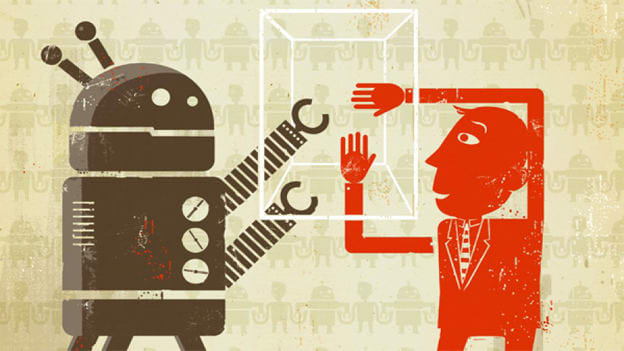
The Indian business of the worlds largest burger fast-food chain, McDonalds, has automated both internal activities and customer-facing activities. Here is how automation has impacted the nature of work & jobs.
At McDonald’s, the equipment is so standardized that their operation doesn’t require high skills for operation. Starting from the establishment of McDonald’s India in 1996, the first level of automation at the quick service restaurant chain was business standardization. And it is something that helps people to do their jobs which otherwise would require high skills. They acquire and build skills as they go and it is one of the reasons why we can work really well with an 18-year-old.
The objective of automation at McDonald’s has been to eliminate activities that are repetitive and don’t add value to an individual or to the business. So anything that is repetitive, which cannot provide career growth to an individual, we outsource such activities to partners or use technology to do such work. For instance, we launched an electronic learning module which provides online training to employees, facilitates flexibility and is a refreshing training approach compared to a face-to-face training.
The objective of automation at McDonald’s has been to eliminate activities that are repetitive and don’t add value to an individual or to the business
The objective of launching the Electronic Crew Development Program (eCDP) program was to make learning resources readily available for accelerated growth of crew members and make training independently funneled to the participants. Participants are shortlisted on the basis of performance criterion and elimination through a Cognitive Ability and Psychometric Test. Every crew room PC has an eCDP Package installed which has video training modules for each and every station in the restaurant. Having changed the self-learning aspect to allow for flexibility, the on-floor and shoulder-to-shoulder learning with peers and on-floor trainer time has been increased to allow a faster transfer and hence quicker productivity.
McDonald’s structured training and employee engagement processes relating to people development and combating attrition is imperative, as we believe that “training” is an important tool for employee engagement. Our Restaurant Development Program provides opportunities for employees that help them develop ‘skills for life’ as we impart learning in class, training curriculum as well as on the job learning.
McDonald’s has automated of both customer-facing activities and the internal processes. These are:
Customer-facing activities
Customers have evolved over the past 20 years, however, the need still continues to provide fast, friendly and accurate service. Starting in 1996, there was a complete absenteeism of the self-service culture, people expected table orders and service, today we have moved to an environment where customers want control over how they place orders and prefer to customize their food however, want to get served at their tables. We have various automated points of sale options that will allow for consumer flexibility and are actually experimenting to move from a standard burger menu to a customized menu option without impacting taste, keeping our crew’s life simple and also ensuring fast and friendly service.
The agility of the organization determines what roles become standard and hence replaceable by technology. However, there will continue to be new roles that emerge for the future and the challenge continues to be re-skilling as jobs emerge.
While customer service will continue to expand, there will be additional automated options. One example is an additional automated systems installed at drive thru’s. Using automated equipment for runner activity could also open new avenues for transporting orders from the kitchen to multiple locations in the vicinity of the restaurant. Back-end processes which involve tray cleaning and dishwashing; and night processes which involve organizing the restaurant, maintaining cleanliness, etc. can also be done by automated equipment, making the job more aspirational for the young employees.
Internal HR processes
When we look at the HR processes and HR team, we have managed to keep the team very lean. This can be attributed to the fact that we have always had a technology tool to handle the HR operations side. We have a 13 people HR team working from the corporate office and interestingly, the size of the team would have been the same even if there was no technology support for operations. It is more because of the way the business has structured, not because of technology. Technology has simply supported in the standardization of processes.
Technology should not be made the scapegoat for the slowdown in job creation. It is happening because of a combination of factors
Evolving nature of work: If we didn’t have an automated system for handling operations, a majority of our team would be engaged in doing clerical, administrative work of just maintaining data – an activity which is essential about being compliant with the law. But since technology handles operational work like this, the HR’s team biggest role is to do consulting. We help employees in building McDonald’s as a people organization like we want it to be. All our restaurants are self-sufficient units – they do their own recruitment, their own training, and their own performance management – none of these activities are done by the HR. What we do is design these processes and help push the business ahead.
Job creation by automation: Automation has added jobs, instead of eliminating jobs. One of the things that the automated systems have brought is the service sector. If there are any queries on automated systems, they are all directed towards this service center, which has been outsourced to an agency. Can artificial intelligence-run chat clients replace the people sitting at service centers? At this point, I don’t think so. People need people to talk to and not machines. For rendering any kind of service, there is an element of human interaction that has to be there, and hence I don’t think it will come to a point where machines will overtake such roles.
Technology should not be made the scapegoat for the slowdown in job creation. It is happening because of a combination of factors, viz. skilling and reskilling not being a focus, increased peculiarity of HR when recruiting, highly selective candidates and different kinds of jobs getting created. But technological advancements are a reality. We should embrace it, skill people better, and have future ready org designs.
Topics
Author
Loading...