







HR Technology
HR needs to totally reinvent itself





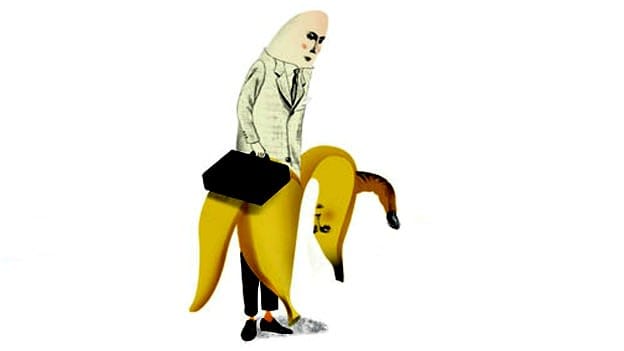
As HR transforms itself to keep up with the changing trends, it also needs to tackle disruptions on many frontiers
HR has always been slow to change and keep pace with changes in the business and the external environment. The time has come for HR to totally reinvent itself or become obsolete as a function. But as HR transforms itself to keep pace with the environment, it needs to also consider how it can reshape the environment. We need to tackle head on the challenges and opportunities in front of us, in light of what I believe are five huge disruptions facing the world –political, economic, social, demographic and technological; and these will have huge implications on HR as a function.
Political
A more rightist and nationalistic tilt to politics with more insular and local sentiments are emerging both in the developing and developed countries. Political leaders using race, religion, income inequality etc. are propagating isolation and protection of local jobs, restriction of immigration, focus on local manufacturing, import barriers, etc. One can see these trends emerging in various countries including Britain, USA, France, China, India, Indonesia, Turkey, Malaysia, etc. where globalization is becoming a bad word.
HR implication – Reshaping the key functions of recruitment & talent development will be important as there will be a need to hire & develop local talent than relying on “imported” talent. Also, this will have a huge impact on the move of manufacturing and services jobs outside the shores of developed nations and outsourcing providers will have to rethink how they offer higher order services. Also the exposure of tax havens will potentially change the way global MNCs structureanddesign their organizations to get beneficial tax treatment with regional HQs being in tax efficient locations such as the Panamas, Switzerland or Singapore.
Economic
There are unprecedented shifts in relative wealth and economic power from the West to the East and the growing inequities in income distribution within societies. With low interest rates and availability of global goods/brands, consumerism in the East is on the rise. Income inequities are fueling social tension and a need for further transparency and accountability on CEO/Senior leadership pay and an upward pressure on minimum wages.
HR implication – More companies from the developing world like India, China, Korea, Brazil, Indonesia etc. will acquire western companies and assets, and HR will need to understand and integrate very different cultures and ways of doing work. Also, with greater transparency on pay, HR will have to have a louder voice and stronger spine in executive compensation decisions. With increase in minimum wages, HR in labor-intensive industries will need to proactively look at productivity improvements, so the cost of doing business is continuously monitored and managed effectively.
Social
There is an increasing level of trust deficit in leadership within our societies aspeople hear more of greed, misuse of position of authority, corruption, non-complianceetc. with real time and rapid flow of information through social media. Bad news gets sensationalized and travels fast in all directions –up, down and sideways.
HR implication – Authentic leadership which is based on values will be more important than ever. As HR looks at who gets hired, promoted or fired, its people processes need to reinforce basic values of integrity and trust as critical requirements, even more than skills, competencies and business acumen. Recruitment firms who use deep assessments integrated with social media tracking to filter candidates who inspire trust and demonstrate integrity will be critical to partner with.Also, HR will need to work very closely with Corporate communications and may even be merged into one function, as managing and aligning real time communication internally and externally will be the difference between building trust or eroding confidence in leadership.
Demographic
We have never experienced the coming together of multiple generations at the workforce at the same time, the way we are seeing it now – from Baby Boomers to Millennials, with very different values and approaches to work. In addition to this, with life expectancy going up by almost 20 years, to an average of almost 75 years since World War I, there is a growing and capable active senior citizen population that needs to be gainfully employed. On top of all this, the emergence of the on demand or uberized workforce has changed the whole nature and extent of employment contracts and the related people processes needed.
HR implication – We will need to consciously coach and onboard the multiple generations at the workplace differently while making it a cohesive workforce bringing out the best in all. There will be more real life Robert de Niro’s like in the movie “The intern” with more senior citizens becoming part of the active workforce. In addition, the increase of the liquid workforce which flows from one job to the other has changed the nature of employment dramatically and all the people processes related to hiring, talent development, performance management, compensation and career planning need to be re-imagined. In fact, think of the impact on employment contracts where within the same day, a driver could be driving for Uber in the morning and Lyft in the evening, two fiercely competitive companies. The 2015 1099 Economy Workforce Report found that 38 percent of the on-demand workers are signed on to multiple companies.We will need to have staffing teamsthatwill havethe expertise in hiring for both the regular employees and the “Uber” workforce.
Technological
The world of real time and ubiquitous connectivity is here that has brought with it huge opportunities and challenges. There are 3 key technological trends that will impact everyone including HR-Big Data analytics, Internet of Things (IoT) and Artificial Intelligence. As per Gartner, embedded data analytics will provide US enterprises $60+ billion in annual savings by 2020.IoTs will serve as growth engines of digital transformation.By 2018, there will be 22 billion IoT devices installed, which will be requesting support and responding to service requests from things, creating new service businesses. In five years, 1 million new devices will come online every hour. IoT devices and solutions will fundamentally alter how consumers interact with enterprises and how enterprises interact with their supply chain and distribution partners. Artificial Intelligence (AI) using machine learning will change how work gets done and will “make” decisions for consumers.By 2018, at least 20% of all workers will use automated assistance technologies to make decisions and more than 3 million workers worldwide will be supervised by a “robo-boss”.
HR implication – Building capabilities and talent within these 3 areas, Big Data analytics, Internet of Things (IoT) and Artificial Intelligence will be critical for the success of the organization. We will need to redefine and replace the traditional IT organization with a Digital Transformation team, which will be a combination of internal resources and external experts, using the on demand workforce staffing model.
HR will need to have a senior resource reporting to the CHRO, as the HR Digital Officer and in many cases the succession path to the CHRO role will be through that role. This role will need to define clearly the company’s approach and policies related to the various opposing forces of employee privacy, productivity and security. Also, HR will need to work with disruptive HRTech companies which are already coming up with devices/IoT’s to monitor and enhance employee engagement and productivity while having to deal with privacy concerns. Also, big data analytics will help companies make choices on org design, training investment, engagement activities, compensation design, attrition, etc. and support employees in making informed decisions on health coverage, career and retirement planning, etc.
In addition, as AI using advanced algorithms starts to ape the human brain,many routine and administrative tasks will no longer be required, whichwill affect employment at those levels quite dramatically. As a result of technology and a more diffused definition of “employees”, the organizational construct will further evolve from the traditional pyramid to more of a network with little hierarchy. Various examples of disruptive technologies will change many areas for HR- Learning will become more self-managed and experiential with companies such as Blippar orKnolskape; employees shaping employer branding through companies such asGlassdoor;recruiting being redefined using analytics by companies such as Piqube; employee wellness being enhanced using Fitbitand many other such innovative approaches to change the way we engage our employees and deliver HR.
Overall, all these disruptive trends, will mandate changes for how HR is organized and redefined, what HR capabilities we need within the organization and externally,and the career paths which will be needed to develop HR professionals.It will be an exciting world of new possibilities for HR where it will have to ensure that itnot only “has a seat on the table” but also drives innovation and productivity for the entire organization.
As walls go up between countries and communities, HR has to find ways to build bridges to hire, connect and develop talent locally & globally
By 2018, at least 20% of all workers will use automated assistance technologies to make decisions and more than 3 million workers worldwide will be supervised by a “robo-boss”
Topics
Author
Loading...