







HR Technology
The trials of HR manufacturing: AI in blue-collar rebellion





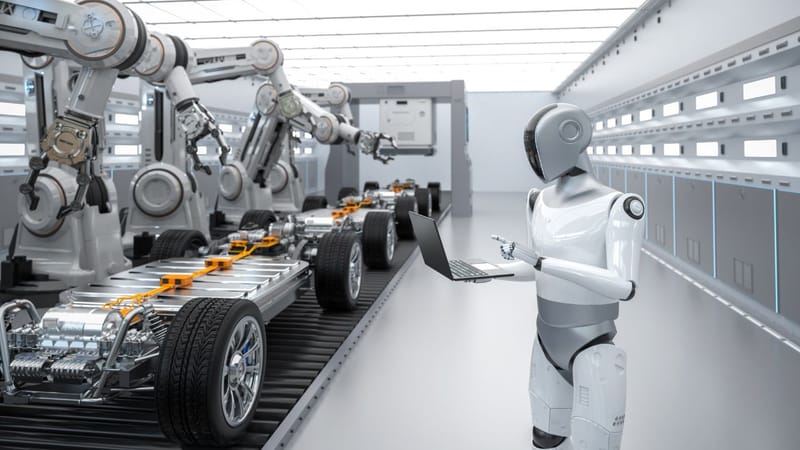
Discover how AI is reshaping manufacturing HR through digital upskilling, workforce transformation, and the future of blue-collar tech talent.
The manufacturing floor is being intricately curated. Every process now resembles a ride that is fast, efficient, and optimised to perfection. But beneath this polished transformation lies a more uneasy question: Are the people being handed blueprints to operate as human-machine interfaces, or are they just watching from the sidelines, trying to stay logged in?
According to Deloitte’s 2025 Smart Manufacturing Survey, 78% of manufacturing leaders are allocating more than 20% of their improvement budgets to smart manufacturing initiatives. Yet, over 35% admit that upskilling employees to work with advanced technologies is their biggest barrier. In other words, the shop floor job descriptions are evolving, but the people operating these shop floors haven’t been fully trained.
As the industrial world digitizes at an unprecedented pace, the role of the human resources function in traditional manufacturing industries is also being re-engineered to keep pace with the tech revolution, blurring the lines between blue- and white-collar roles.
From grease to graphs: How blue-collar work is changing
The phrase ‘blue-collar’ once evoked images of grease-stained hands, humming machines, and hours measured in physical output. But, in today’s era of intelligent factories and digitised workfloors, those same hands now glide across control dashboards, training AI models and navigating VR-based maintenance solutions.
However, the roles and responsibilities that were once defined by repetition and routine effort are transforming. However, an inherent disorientation is emerging. As robots share assembly lines with humans and data analytics fine-tunes production in real time, the skills gap widens, making digital and analytical competencies equally crucial for frontline workers.
HR in the spotlight
In conventional manufacturing tents, HR was often seen as the backstage crew, responsible for compliance, shift scheduling, and managing labour disputes. But as AI waltzes into operations, HR is leaving behind the shadows and positioning itself to focus on talent development, digital literacy, and change management. The spotlight is now on upskilling existing workers through microlearning modules, AR/VR simulations, and partnerships with vocational tech institutes.
India’s talent park is under maintenance
India’s AI engine is picking up serious speed, but the talent needed to keep it running is still playing catch-up. The Deloitte‑NASSCOM report projects that the country will need to more than double its AI workforce, from around 650,000 professionals in 2022 to over 1.25 million by 2027. The problem is, while the talent pool is growing at around 13% a year, demand for AI skills is surging ahead at nearly 25 to 35%. The good news? Over 81% of Indian employers say they’re planning to actively reskill or redeploy workers into roles that align with AI. Companies like TCS and Wipro have retrained hundreds of thousands of workers on AI, and even startups are creating ‘AI academies.’
Fortunately, India is also preparing on the supply side. Large corporations like Reliance, Adani, and Mahindra are supporting an INR 60,000 crore plan to update more than 1,500 Industrial Training Institutes (ITIs) through public-private cooperation, essentially revamping the ticketing booths in the HR ecosystem to enable large-scale training of ride operators.
The tech is ready. Are the people?
The challenge of automation isn't just technological, it’s deeply human. How do you convince someone who has operated a ride in your park for almost two decades, who knows every sound, every turn, every lever by heart, that the new sleek control panel is an upgrade and not a replacement? That the machine learning model isn’t taking their job; it’s opening doors to something better? For many workers, the introduction of automation doesn’t feel like innovation but like erasure. A line shuts down. A machine takes over. A skill that took them years to master becomes irrelevant overnight. In this reality, HR’s role extends far beyond workflow design; it now must navigate fear, build trust, and lead people through change with empathy and clarity.
Training with trust
Upskilling entails more than just access to platforms that educate you. It’s about building trust, ensuring relevance, and respecting time. Workers aren’t just asking how to learn, but why. Workers want clarity on their future career paths. They’re asking, “Where is this ride taking me?” As Joseph Fernandes, SVP of HR for South Asia at Mastercard, states, change management should “emphasize how AI can augment employee capabilities rather than replace them.”
Additionally, HR must address the why of training, not just the how. Workers don’t want training videos; rather, they want to know what the next five years of their job look like. HR can facilitate ecosystems where learning feels less like homework and more like levelling up with your crew through peer networks, mentorship, and challenges that turn growth into a game worth playing. As highlighted in a People Matters Global feature, ‘Of Bots and Bricklayers: AI and Blue-Collar Work,’ “Investing in upskilling programs, addressing concerns…, and fostering a collaborative culture will ensure AI becomes a tool for empowerment rather than a source of fear.”
The next ride starts at TechHR 2025
The blue-collar tech revolution is well underway, and manufacturing HR is no longer manning the ticket booth. Faced with both high-tech machinery and human anxieties, HR leaders must become catalysts of change, guiding workers to find their place in the new map of the park by merging old-school trust-building with new-age digital learning. That’s the kind of idea that will grace a centre at People Matters TechHR India 2025 (July 31–Aug 1, 2025, in New Delhi), Asia’s largest HR & Work-Tech conference. Under the banner ‘Pivoting to Ace the Next Curve of Change,’ TechHR 2025 gathers thousands of HR and business leaders to share strategies for exactly these challenges.
If we’re building the future of work, then HR in factories, on floors, and in the forgotten corners of the ride needs to be co-designing it. Not as a quiet partner, but as someone holding the map, pointing out where the tracks bend, where the speed picks up, and where people might fall off. The challenge is about learning cultures that delve into more than digital modules and workforce transitions that are as human as they are high-tech. Because you can automate the ride, but you still need people to believe in the journey.
Author

Loading...