







HR Technology
Why HR must manage digital colleagues: Microsoft’s Puneet Chandok explains at TechHR India 2026
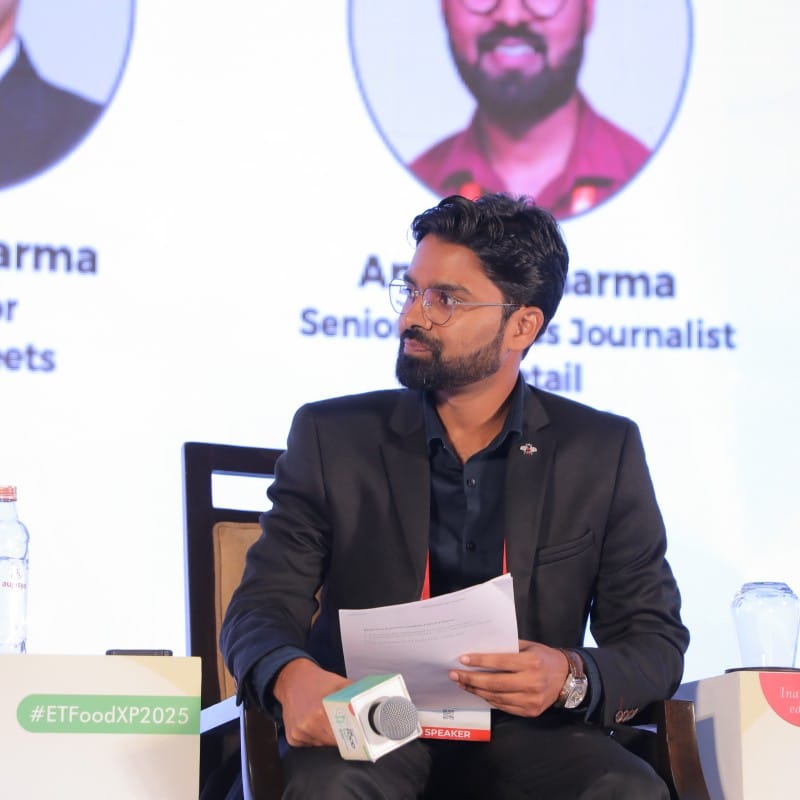





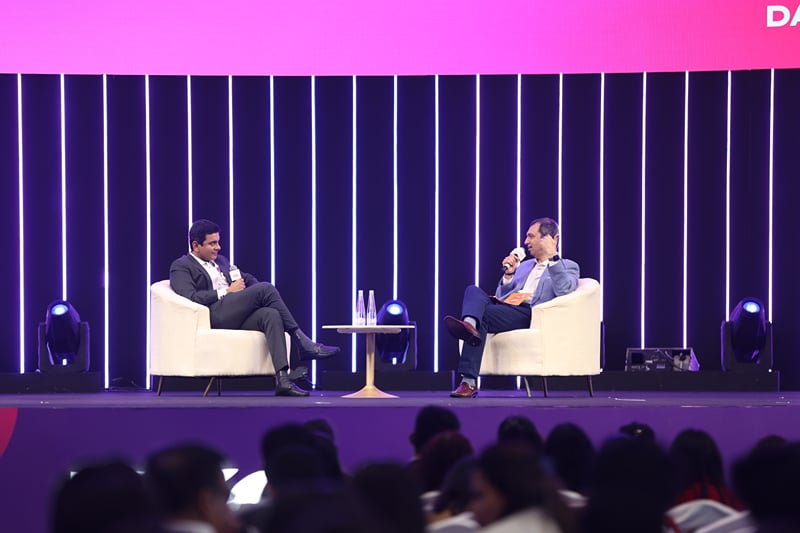
At TechHR India 2026, Microsoft’s Puneet Chandok outlined how contextual intelligence, redesigned work, and courageous leadership will define the human-led, agent-operated enterprise during a conversation with Darwinbox co-founder Rohit Chennamaneni.
The enterprise of the future will not be defined by how many AI tools it deploys. Its real advantage will lie in how intelligently it redesigns work around humans and machines, and whether its leaders can turn experimentation into measurable impact.
That was the central message from the session, “Reshaping & Building the Enterprise of the Future: People, Tech & Leadership,” at People Matters TechHR India 2026. In conversation with Rohit Chennamaneni, co-founder of Darwinbox, Puneet Chandok, President, Microsoft India and South Asia, placed the CHRO at the heart of a transition towards what he described as a “human-led, agent-operated” enterprise.
For much of history, intelligence has resided exclusively with people. Organisations are now entering a period in which intelligence can also be embedded in digital systems that perceive information, reason with it and act on it.
“These digital colleagues have perception, cognition and agency. They act with your permission, but not your involvement,” Chandok said.
That shift changes the AI conversation for HR. If intelligent agents are becoming part of how work gets done, they cannot be treated simply as another layer of enterprise software. They will need context, training, permissions, oversight and continuous development, much like employees entering an organisation.
“A lot of us feel that AI is IT’s job or technology’s job. I think AI is HR’s job because these digital colleagues are joining the workforce,” Chandok said. “They need to be trained, taught and given the context to grow within the organisation.”
The org chart must give way to a work chart
For HR leaders, the immediate challenge is bigger than introducing new tools. It is to reconsider how work is divided among employees, agents and increasingly autonomous systems.
Chandok described this emerging workforce through the idea of “human capital and token capital”, people working alongside machine intelligence that can operate continuously and at scale. The term is less an accounting construct than a challenge to conventional workforce planning: if organisations can deploy digital capacity alongside human capability, roles, structures and measures of performance must evolve.
“The old org chart of people doing things will not work. You need a work chart of humans and tokens working together,” he said.
That means examining work at the level of tasks and decisions. Which activities can an agent execute independently? Where should AI support an employee rather than replace a process? Which decisions require human judgement, accountability or empathy? And how should roles change when routine research, analysis and administration can be handled by machines?
Chandok predicted that employees across functions will increasingly become “agent bosses”, responsible for directing, evaluating and improving digital colleagues instead of completing every task individually.
The implication for HR is significant. Workforce planning must begin to account for both human and digital capacity, while learning strategies must prepare employees to delegate effectively, interrogate AI-generated outputs, and remain accountable for outcomes.
Context, not access to AI, will become the enterprise moat
As powerful AI models become widely available, access to technology by itself will offer limited differentiation. The stronger competitive advantage will come from connecting those models with an organisation’s knowledge, processes, culture and understanding of what good work looks like.
Chandok recalled a business leader comparing frontier AI models with highly educated professionals who “know everything about the world, but nothing about my company.” Their responses may sound impressive, but without institutional context, they frequently remain too generic to create meaningful business value.
The answer, he argued, is “owned intelligence”: AI that learns within the organisation and becomes more useful as it understands its language, decisions, workflows and standards.
“Models and chips will become commodities. What is truly the moat is your ability to get these models to work on your terms and with the context that you have,” Chandok said.
This places institutional knowledge squarely within HR’s mandate. HR leaders understand how work actually happens, where expertise resides and how capability moves through an organisation. Their task is not merely to help employees adopt AI, but to ensure that organisational intelligence is captured, governed and applied responsibly.
Chennamaneni reinforced this point while explaining the thinking behind Darwinbox’s Cortex. Rather than adding isolated AI features to conventional human capital management processes, the company began reconsidering HCM around two fundamentals: the moments that occur across an employee’s journey and the organisational memory that gives those moments context.
The larger lesson extends beyond any single platform. Adding agents to fragmented systems will not transform work. Organisations need a connected intelligence layer capable of understanding their people, processes and operating environment; and of improving through use.
It is time to end ‘pilot tourism’
Both leaders warned that scattered experiments can create the appearance of progress without changing business performance.
Chandok described this pattern as “pilot tourism”: organisations accumulating AI pilots, hobby projects and superficial demonstrations without a clear route to scale or impact. Such activity may generate attention, but it rarely addresses the processes that constrain productivity or growth.
His recommendation was direct: begin with the work that matters most, identify the outcomes that AI can materially improve and redesign the underlying process before applying technology.
“Putting AI on a bad process just makes it more inefficient,” he said.
Three disciplines separate meaningful transformation from AI theatre, according to Chandok. First, the C-suite must lead the transformation instead of expecting disconnected, ground-level pilots to organise themselves into enterprise impact. Second, organisations must re-architect work rather than automate existing inefficiencies. Third, they must build intelligence grounded in their own context instead of becoming overly dependent on a single model.
Trust is equally central. Enterprises need evaluation mechanisms, controls and governance that allow AI systems to learn while keeping their actions transparent and accountable. Model interoperability also matters, Chennamaneni noted, because different use cases may require different combinations of capability, performance and cost.
AI transformation is a continuous climb
Unlike conventional technology deployments, AI systems are not static implementations. They learn, adapt and become more valuable when organisations provide better inputs, context, feedback and controls.
Chandok described this as a “hill-climbing” model. A digital colleague may enter the organisation like an intern, but with training and experience, it can develop into something closer to an organisational veteran.
That progression requires leaders to replace the expectation of a magic solution with the discipline of continuous improvement. Deploying an agent is only the beginning; its outputs must be assessed, its permissions reviewed and its understanding of the business strengthened over time.
The same learning expectation applies to leaders. Chandok identified the “courage to begin and not wait” as one of the most important capabilities in the AI era. Chennamaneni added agility in decision-making, arguing that many organisations already have access to technical capability but remain constrained by their inability to make and act on decisions.
Both also called for leaders to become more hands-on with technology. Seniority cannot become a reason to delegate the learning. Leaders who experiment directly with AI are better placed to understand its limitations, identify valuable applications, and distinguish genuine transformation from attractive demonstrations.
From measuring activity to creating value
AI also challenges one of the workplace’s most persistent assumptions: that busyness is evidence of contribution.
“Writing 20 emails, attending 10 meetings and updating five Excel files is not impact. AI can beat you at that,” Chandok said.
As machines absorb more administrative and analytical work, organisations will need to judge people less by visible activity and more by the value they create. That will require HR to rethink performance systems, job design and managerial expectations around outcomes, judgement, creativity and collaboration.
Yet a more agent-operated organisation does not diminish the importance of its human core. It makes that core more consequential.
Chandok urged HR leaders to preserve “the H in HR” at a time when employees are anxious about jobs, skills and their place in an AI-shaped workplace. Chennamaneni added that while technology can inform a promotion or another sensitive people decision, translating and communicating that decision to an individual cannot be delegated.
Data can guide the call. A machine may provide analysis. But understanding a person’s circumstances, explaining a decision with empathy and taking responsibility for its consequences must remain human.
The enterprise of the future, then, will not emerge from technology alone. It will be built by leaders who can combine machine intelligence with organisational context, redesign work around outcomes and preserve human judgement where it matters most.
Chandok concluded with a leadership idea drawn from the phrase sapere aude - “dare to know.” In an era without a settled playbook, the advantage will belong to leaders willing to learn, trust their judgement and act with conviction.
“History for today’s time will be written by people who dare to know, who dare to learn and then have the courage to follow their conviction,” he said.
Topics
Author
Loading...