







Leadership
9 reasons why you shouldn’t miss People Matters LLC 2026





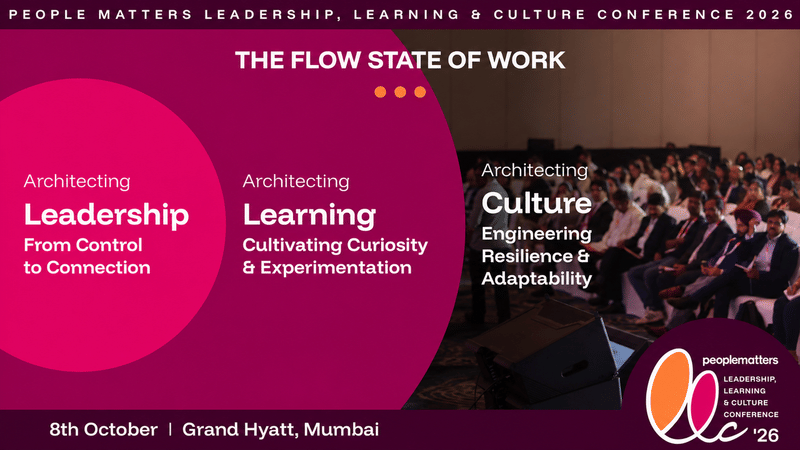
From three future-facing tracks and immersive masterclasses to exclusive SHRPA research insights and a uniquely curated awards experience, LLC 2026 promises a day designed for decisions, participation and action.
The leadership-event calendar is crowded. The real question is whether taking a day away from the business will change what a leader does when they return.
That is the test People Matters Leadership, Learning & Culture Conference 2026 is setting for itself. Taking place on 8 October 2026 at Grand Hyatt, Mumbai, the conference is built around Skills Intelligence 2.0: Optimising Workforce Liquidity Through Strategic Orchestration. Its focus is not on gathering more skills data, but on using that intelligence to move capability towards the work, decisions and opportunities that matter most.
More than 500 delegates, 40-plus speakers and 25-plus solution partners are expected to take part in over 10 hours of learning. Yet the stronger reason to attend lies beyond the scale: three exclusive tracks, candid leadership conversations, unconventional formats, immersive masterclasses, fresh research and a recognition platform designed to look beneath the surface.
Here are nine defining experiences that make LLC 2026 a conference worth joining.
1. Three exclusive tracks reshaping the future of leadership, learning and culture
LLC 2026 gives participants three focused routes through the day, each addressing a different part of the people architecture:
Leadership – The Strategic Orchestrator: The Leadership Studio will explore how leaders can orchestrate an augmented workforce, redesigning and reallocating work across humans and machines while retaining empathy, judgement and accountability. Expect decisions, dilemmas and direction on HR reinvention, leadership pipelines, composable leadership and leading a multigenerational workforce.
Learning – The Intelligence Engine: The Learning Studio will examine the shift from static skills collection to predictive skills intelligence and applied AI capability portfolios. It will connect AI fluency, career pathways, internal mobility and learning investment with the defining question: which capabilities genuinely move performance?
Culture – The Liquidity Environment: The Culture Lab will focus on creating the conditions in which talent can move and learning can take root. It will explore adaptability, reskilling, Gen Z expectations, psychological safety and the Mobility Mandate—retaining highly trained employees by making internal growth visible and attainable.
Together, the three tracks create a connected view of workforce transformation: leadership orchestrates capability, learning builds it and culture enables it to move.
2. A future-ready agenda on Skills Intelligence 2.0 and workforce liquidity
Knowing which skills exist across the organisation is useful. Knowing where to move them, what to build next and how quickly capability can be redeployed is where business value begins.
Workforce liquidity, the ability to deploy talent towards the highest-value work with speed and precision, is becoming a critical test of talent strategy. Deloitte’s 2026 Global Human Capital Trends research, based on more than 9,000 business and HR leaders across 89 countries, argues that advantage is shifting from allocating talent through static structures to orchestrating people, skills, data and technology in real time. LinkedIn’s 2026 Talent Velocity research similarly finds that 43% of talent-velocity leaders are investing in talent architecture, compared with 23% of laggards.
LLC 2026 takes the discussion beyond skills inventories and taxonomies. Its opening Big Picture session will explore how Skills Intelligence 2.0 can improve hiring, development, mobility and work design. Across the day, the agenda will connect AI fluency, career pathways, learning impact, leadership readiness and cultural adaptability with specific organisational choices.
3. Candid conversations with CEOs and business leaders
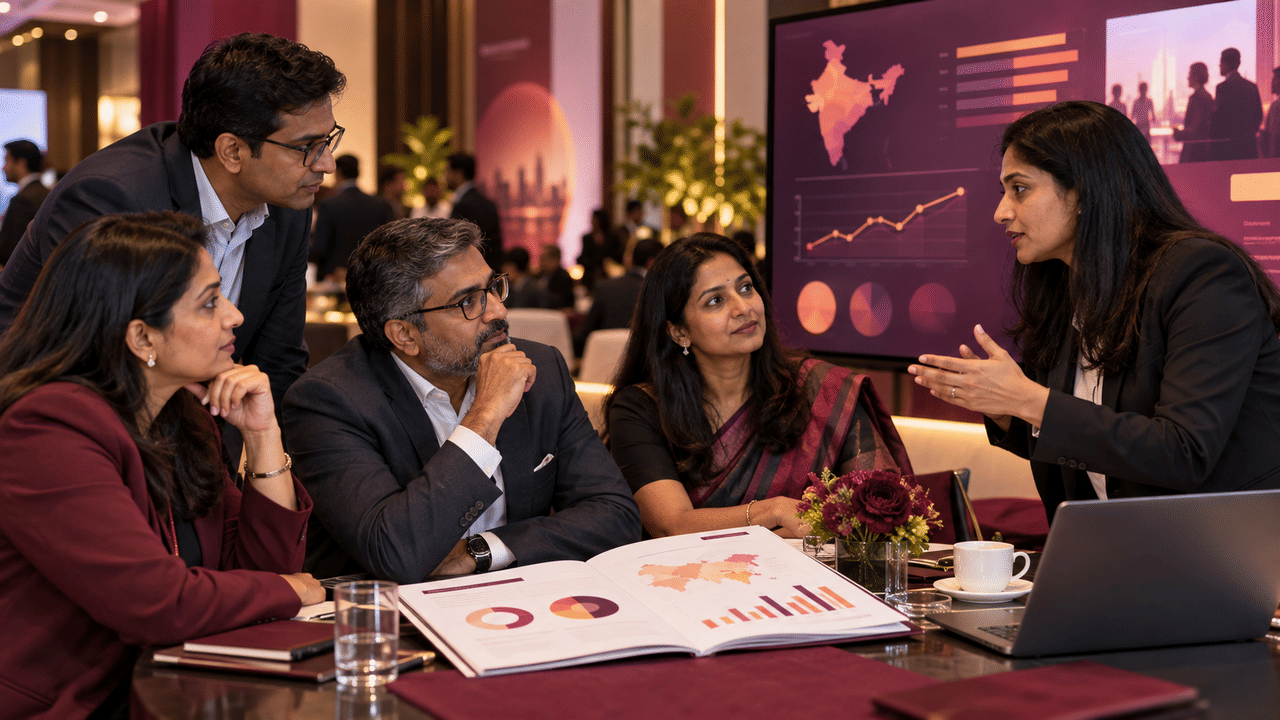
Some of the most consequential talent decisions are being made before organisations have certainty, or a proven model to follow.
In CEO’s Bet: How Talent Priorities Are Being Rewritten At The Top, Santosh Iyer of Mercedes-Benz India and Balfour Manuel of Blue Dart will offer a rare view of how leaders from two industries transforming at different speeds are changing their talent priorities.
Nand Kishore Chaudhary of Jaipur Rugs will show how human dignity can sit at the centre of a business model. Ankit Gupta will unpack how Burma Burma turned values into a repeatable culture and customer experience while scaling an unfamiliar concept. Indraneel Chitale will examine how Chitale Bandhu is building the skills, capacity and culture required to grow a legacy business at speed.
These are not abstract future-of-work predictions. They are operating choices from leaders dealing with growth, reinvention, technology and culture in real businesses.
4. Immersive formats designed beyond passive listening
LLC 2026 is designed to interrupt passive listening from the moment the day begins.
The opening experience, Think Outside The Box, led by Jimbo Clark, Creator of The B❒X®, asks participants to step outside familiar ways of seeing and solving problems—literally and mentally. Flipped panels will put difficult questions ahead of prepared talking points, while candid conversations and fireside chats will create space for tension, trade-offs and unresolved choices.
The Learning Autopsy takes the idea further by dissecting a real learning initiative that underperformed or failed. The session will examine its assumptions, design flaws, execution gaps and course correction before asking what its leader would do differently today.
For practitioners tired of hearing polished success without the struggle behind it, these formats offer a more honest—and potentially more useful—way to learn.
5. Masterclasses and workshops that turn ideas into action
The best conference takeaway is not a notebook full of ideas. It is a clearer decision about what to do next.
The masterclass Building The Composable Leader will explore how leadership development can shift from long, linear programmes to shorter capability cycles that help leaders learn, unlearn and reconfigure their approach as teams, technologies and priorities change.
In the Culture Lab, Culture in Motion will examine how organisations can build cultural liquidity and remain adaptable as workforce and business needs evolve.
For leaders seeking a deeper working experience, Breaking the Invisible Box: Rewiring Mindsets for Adaptive Leadership will invite participants to bring a real leadership or business challenge, surface the assumptions holding it in place and translate the breakthrough into a concrete action plan.
The intended takeaway is practical: a stronger decision, an experiment to run or an intervention to test after returning to work.
6. An exclusive first look at fresh SHRPA research insights
LLC 2026 will give leaders more than perspectives from the stage. People Matters will unveil fresh insights from its SHRPA research, bringing evidence into the day’s biggest questions across leadership, learning, culture and workforce transformation.
The research reveal will help participants benchmark their assumptions against wider organisational patterns, identify where capability and execution gaps are emerging, and understand which priorities require attention next. It will also give leaders a stronger evidence base for conversations with their executive teams, connecting conference ideas with data rather than instinct alone.
For participants looking to understand what is changing beneath the headlines, the SHRPA findings will offer an early view of the signals shaping the next phase of the people agenda.
7. Cross-industry insights for the year ahead
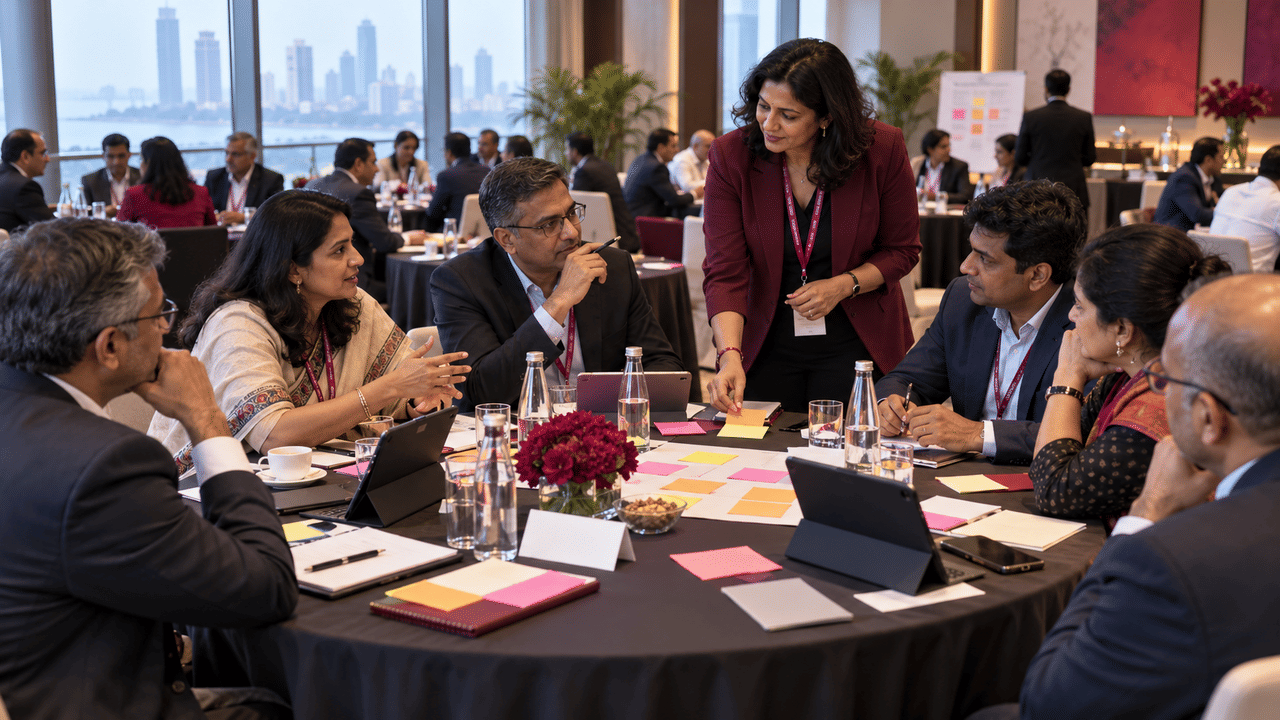
The questions running through LLC 2026 are already moving from the HR agenda to the enterprise agenda.
How should HR reinvent itself for a business shaped by AI? How can employees build AI fluency inside real workflows? Can skills intelligence make internal mobility faster and less political? What evidence connects learning with productivity and performance? How should leaders earn trust with Gen Z talent? How can organisations sustain psychological safety and wellbeing through continuous transformation?
Gartner’s 2026 CHRO research identifies AI-driven HR transformation, human-machine workforce redesign, leadership readiness and culture as the four strategic priorities shaping the function. It estimates that evolving the HR operating model carries the highest predicted impact on AI productivity gains at 29%, while embedding culture into daily work can increase employee performance by up to 34%.
Perspectives from BFSI, pharmaceuticals, technology, manufacturing, startups and other industries will allow participants to compare how common workforce problems are being addressed under very different operating conditions. The value lies in seeing what another sector has already learnt, and what your organisation could adapt next.
8. Access to 500-plus decision-makers, and a stronger platform for partners
LLC 2026 will bring together CHROs, CLOs, transformation heads, talent and L&D leaders, culture architects and WorkTech innovators in one ecosystem.
For delegates, this creates an opportunity to test ideas with peers confronting comparable pressures, discover relevant solutions and build relationships that continue beyond the conference day.
For partners, the value extends beyond visibility. The conference offers a credible platform to place solutions within live leadership, learning and culture challenges; engage senior decision-makers while they are actively exploring their next move; and build authority through insight rather than a conventional product pitch.
9. A uniquely curated awards experience that looks beneath the surface
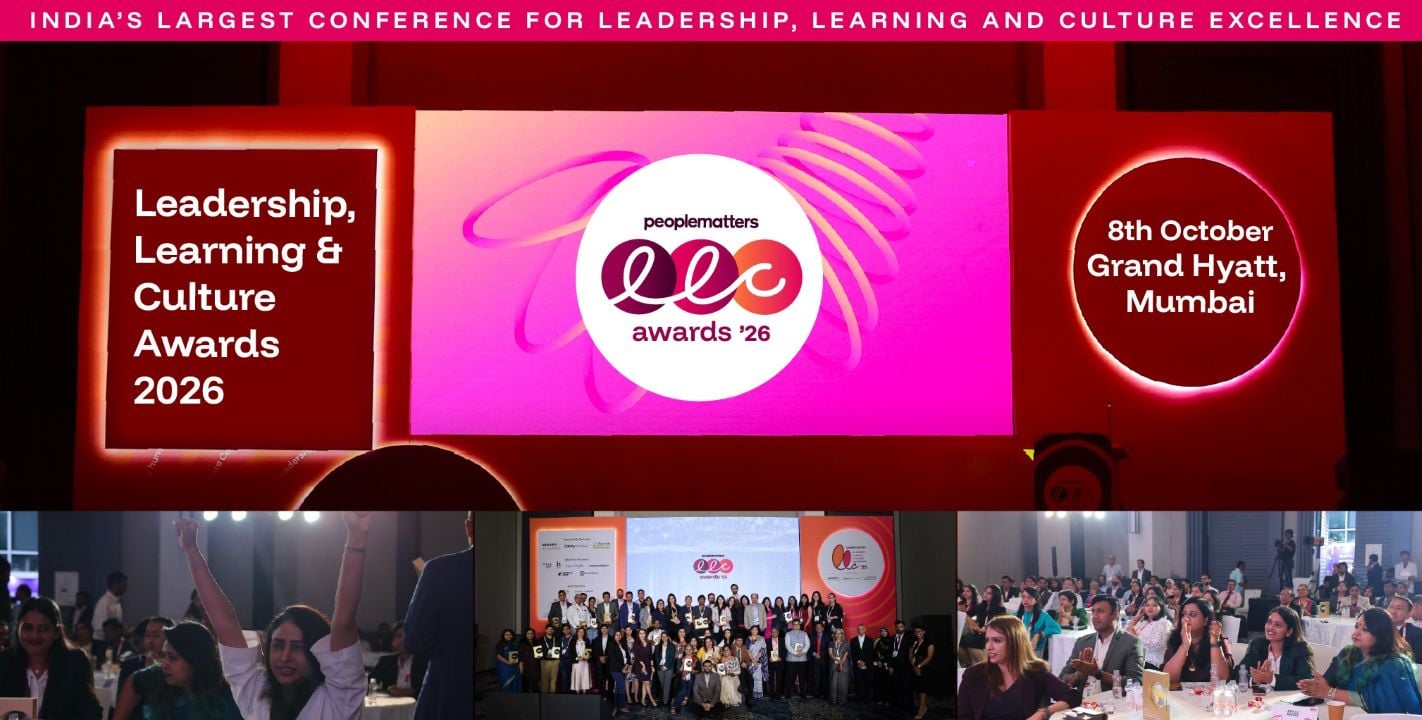
Its evaluation approach is built around four differentiators:
Multi-layered evaluation: Shortlisted entries may undergo data validation and qualitative review to assess authenticity and systemic depth.
A purpose-first lens: Initiatives are evaluated on the business and human challenges they were designed to solve, not only their final outcomes.
Future-back thinking: The assessment considers how an initiative can strengthen future capability, leadership agility and cultural resilience—not only current KPIs.
Context over uniformity: Sector, scale and organisational maturity are factored into the evaluation instead of applying one standard measure to every entry.
For attendees, the Awards offer more than recognition. They provide a view of what credible people impact looks like when ambition is tested against evidence, context and sustained value. The day therefore ends by celebrating organisations building what comes next, and giving the wider room stronger benchmarks for its own work.
Be part of the room shaping what comes next
LLC 2026 brings together the ideas, experiences and people required to move from skills intelligence to workforce action.
Be part of People Matters Leadership, Learning & Culture Conference 2026 on 8 October at Grand Hyatt, Mumbai.
Register now and join the conversations reshaping how India’s organisations lead, learn, and move talent.
Topics
Author

Loading...