







Leadership
Beyond the Algorithm: EXL’s Harrison on why curiosity beats technical longevity in the AI era





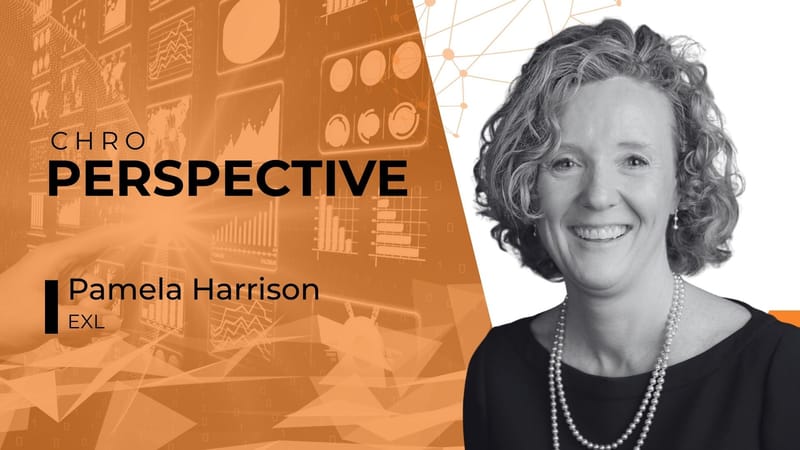
Pamela Harrison, EVP & CHRO, explains why culture, continuous learning and human judgment—not technology—are becoming the key differentiators for modern organisations.
In an enterprise landscape reshaped by continuous technological disruption, navigating the human element of corporate transformation has become the central challenge for global leaders. For Pamela Harrison, Executive Vice President and Chief Human Resources Officer at EXL, managing a workforce of over 65,000 employees spread across six continents requires a delicate balance: leveraging cutting-edge technology while doubling down on fundamentally human capabilities.
With deep delivery centres and innovation hubs across the globe, including nearly 45,000 employees in India, EXL operates at the epicentre of data, artificial intelligence, and digital operations. Yet, in this broad-ranging discussion, Harrison argues that the ultimate differentiator for modern organisations is not their tech stack, but their cultural tissue, their appetite for continuous learning, and their preservation of human judgement.
Edited excerpts:
As the CHRO of a global organisation with 65,000 employees worldwide, what are the primary people challenges currently occupying your agenda?
Staying genuinely connected to our people amidst rapid change is paramount. Employees today are navigating socioeconomic shifts, technological advancements, and an unprecedented deluge of information. Everyone processes these pressures differently, making authentic listening and meaningful two-way dialogue critical.
Protecting our workplace culture is equally vital. In a market where multiple organisations compete for the same talent pool, culture becomes the definitive differentiator. We want EXL to remain an environment where people feel empowered to bring their best selves, learn continuously, and build long-term careers.
When I joined three years ago, I visited our global sites and asked employees three consistent questions: Why did you join? Why did you return if you had left? And why have you stayed?
Across the board, the responses converged on three pillars. First, career growth: as EXL evolved, we created avenues for our people to transform alongside the company. Second, a flat structure: despite our scale, employees feel empowered to approach leadership without navigating bureaucratic layers. Third, a genuine sense of care. Returning employees frequently noted that they only appreciated the depth of our community, learning ecosystem, and support structure after working elsewhere. While an organisation issues a paycheck, human connection retains talent.
Intellectual curiosity and a bias for action seem central to that culture. How do those traits drive organisational agility?
Intellectual curiosity, combined with what I call a "maniacal bias for action," propels enterprise innovation. We have exceptional talent, but what truly sets them apart is an eager willingness to explore uncharted territory and execute rapidly.
People want to do meaningful work alongside sharp, engaged colleagues. My role is to ensure that environment remains vibrant.
Learning is a recurring theme across your talent strategy. Amid widespread anxiety regarding AI and job security, how are you framing this shift for employees?
It is the most frequent query I receive. My answer is straightforward: the only reason someone will not have a role in the future is if they stop learning.
Historically, every technological revolution has phased out certain tasks while creating entirely new categories of work. Roles evolve, but they build directly upon existing domain expertise and contextual knowledge. At EXL, we are committed to leaving no one behind.
To operationalise this, we have created dedicated sandboxes where employees can safely experiment with AI tools within their specific workflows. One of my key objectives this year is to establish 1,000 new AI-centric roles across EXL; we have already identified roughly 500 such opportunities, with over 3,000 employees actively undergoing specialised training.
Beyond technical upskilling, we are building comfort with uncertainty. Technology evolves so rapidly that total mastery is a moving target. We must foster a culture where saying, "I don't know yet, but I am eager to learn," is welcomed. Everyone must operate simultaneously as a student and a teacher. I learn daily from my team. My Chief of Staff constantly introduces me to emerging AI capabilities, which I experiment with to broaden my own perspective.
Many HR leaders argue that not having all the answers is the new reality in an AI-driven market. Do you agree?
Absolutely. Accepting that no single individual possesses all the answers is essential. The focus must shift toward maintaining curiosity and refining core human capabilities, particularly communication.
As AI integrates more deeply into daily operations, the capacity to listen attentively, ask incisive questions, articulate complex ideas, and maintain intellectual rigour becomes even more critical. Automation does not render communication obsolete; it increases its strategic value exponentially.
India forms a significant part of your global footprint. How do you assess its talent ecosystem in the context of enterprise AI deployment?
India possesses an extraordinary talent landscape. The rigour of its academic institutions, the maturity of its IT infrastructure, and the high baseline of intellectual curiosity make it one of the world's most dynamic talent pools. We have nearly 45,000 employees in India working across data engineering, AI, and digital operations.
Importantly, we treat EXL as "Client Zero." Before deploying AI solutions for external clients, we implement them internally within our own HR, Finance, IT, and Operations functions. This hands-on experience helps our teams navigate operational friction, refine methodologies, and understand the practical realities of transformation firsthand, making them more empathetic and effective advisors to our clients.
Furthermore, a tremendous volume of our global AI innovation originates in India. Through platforms like our internal Idea Tank, employees submit concepts for enterprise scaling. Last year alone, we evaluated over 10,000 submissions worldwide.
The quality of ideas emerging from our Indian teams underscores how deeply innovation is woven into the local talent base.
Does the rapid adoption of AI favour younger, digital-native employees at the expense of experienced personnel?
I view this as a balancing act rather than a replacement exercise. While early-career talent brings fresh digital fluency, senior professionals contribute essential context, domain expertise, and executive judgement.
Early in my career, I started as a Human Resources clerk. Those foundational experiences built the mental models, risk awareness, and decision-making frameworks I use today. Senior leaders understand which questions to ask, how to navigate regulatory landscapes, and how to evaluate nuances that raw data cannot reveal. AI provides information, but human experience supplies judgement.
While some organisations are scaling back graduate intake, EXL continues to invest heavily in both early-career talent and senior domain experts. To ensure deep vertical expertise, we have invested significantly in our Domain Academies. AI is only as powerful as the industry context in which it is applied.
Looking ahead, how are work structures and talent priorities changing at EXL?
Traditional multi-year strategic plans are giving way to agile quarterly iterations. From a structural standpoint, we are shifting away from functional silos toward cross-disciplinary pods.
A modern delivery team might comprise a domain specialist, an AI agent developer, a data governance expert, a cybersecurity strategist, and a predictive analytics lead.
Success depends on how seamlessly these individuals collaborate and communicate. Our objective is to build fluid capability networks rather than rigid hierarchies.
In a hyper-competitive global talent market, how do you attract and retain high-calibre professionals?
Competitive remuneration is merely table stakes. High performers stay for meaningful work and organisational culture. They want to tackle complex enterprise problems using state-of-the-art technologies without fear of skill stagnation. An equally important part of that is an environment built on dignity and respect.
High performance and organisational kindness are not mutually exclusive. People also leave poor managers more often than they leave companies, which is why continuous leadership development is non-negotiable for us.
Finally, how has the role of the CHRO evolved amidst these enterprise shifts?
My perspective has always been that HR leaders must be business leaders first. The ultimate compliment for any HR executive is to be recognised as a business leader who commands deep expertise in human capital.
To deliver strategic value, a CHRO must thoroughly understand market dynamics, client pressures, and corporate strategy. Baseline HR operations—compensation, compliance, and policy—must be flawless, but the true strategic contribution lies in translating market shifts into actionable talent architecture that directly enables business growth.
This story is part of CHRO Perspective, a People Matters series featuring bold ideas and real-world insights from India’s top CHROs. Stay with us for more perspectives that power the future of work.
Topics
Author
Loading...