Artificial Intelligence (AI) is no longer a distant ambition—it is today’s industrial reality. From intelligent assistants at home to smart devices in our factories, AI is revolutionising all aspects of business, particularly manufacturing. What used to be a debate confined to boardrooms has shifted to the center of our shop floors.
In the production industry, the transition has been especially daunting. But with this change comes an underlying question: Is AI here to replace humans, or to empower them?
The Rise of the Augmented Factory: Where Man Meets Machine
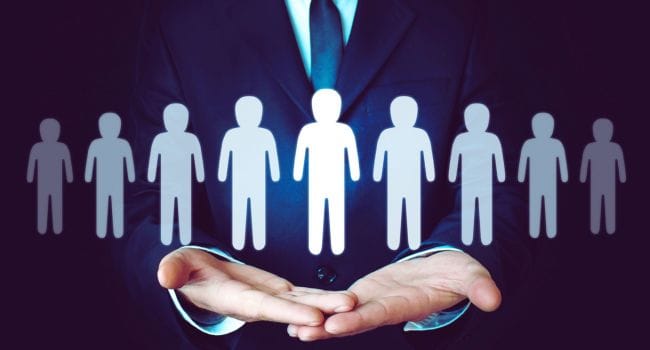
Enter the notion of the augmented factory—a next-generation manufacturing ecosystem in which AI, robotics, and analytics are tightly synced with human capabilities to propel productivity, efficiency, and innovation to achieve long-term objectives. It’s not the "dark factory" model of all-automated-no-humanly, but a harmony in which human creativity and machine precision complement one another throughout the processes.
Take for instance predictive maintenance, a software that notifies technicians to act ahead of time before failures. Collaborative robots (cobots) have become integral to augmented facilities as help with heavy or repetitive tasks. As for managerial roles, AI dashboards provide real-time information to enable supervisors to make well-informed decisions—quicker and more precisely.
These
technologies are not only proof-of-concept—they are already operational in several manufacturing facilities worldwide that are following a technology-first approach.
The Flip Side of Progress: Is AI Taking Jobs—or Transforming Them?
At the same time, the fear that AI, or as the world is calling it- Machines, will displace jobs isn’t unfounded. Recent analyses suggest that nearly 95,000 technology jobs have already been taken by AI during the first half of 2025—around 500 per day—among world tech giants. In manufacturing, too, the change is equally significant. McKinsey says 64% of manufacturing work can be automated with existing technologies—but fewer than 5% of jobs can be automated entirely.
Tasks such as CNC machining, assembly, and material handling are increasingly being handed to robots. Yet this transformation also demands a parallel evolution of human roles—data literacy for technicians, interface design for engineers, and system oversight for managers. As technology gets more intelligent, the need for skilled human interpretation, governance, and adaptability only grows stronger. The last few decades have shown several examples of such change.
Augmentation, Not Automation: Why Human Ingenuity Still Matters
The most resilient and productive factories are not those that replace humans but those that do best to combine human creativity with machine accuracy. AI excels at digging through enormous datasets, executing predictive models, or performing high-speed operations. But its strength fails when judgment, subtlety, or ethical thought is needed. Recent research indicates that existing AI reasoning models have difficulty with intricate challenges, even though they excel at performing simple ones. These models were observed imitating thought instead of actually reasoning, especially when confronted with added complexity.
That's where human capital comes in—with inventive problem-solving, situational decision-making, and strategic insight. This harmony is not coincidental; it needs to be designed. It is the foundation of the smart factory—and it requires intentional, leader-driven change across people, processes, and platforms.
The Leader’s Mandate: Rewire Culture, Not Just Code
This revolution isn't a technology initiative—it's a leadership one. For leadership to integrate AI with human capital, they need to lead a top-down redesign of their talent models and organisational culture:
● Upskilling & Reskilling: Create a continuous capability-building culture. Educate shop-floor technicians to use AI-facilitated tools. Build cross-functional teams where data analysts, engineers, and operators share a common digital language. Reskilling is not a cost—it's the ROI enabler for AI.
● Change Management: Transformation needs to be transparent. Share the 'why' of AI adoption. Engage employees early, deal with their fears, and make them stakeholders. Leaders who tell the change story well tend to lead the change well.
● Data Literacy & Interpretation: AI produces insights, not orders. Manufacturing leaders need to develop teams that can take AI outputs and turn them into business decisions—whether it's optimizing downtime, identifying safety risks, or predicting inventory requirements.
● Leadership
& Flexibility: AI is
context-deprived. It doesn't comprehend the ripple effect of delayed production
or the human price of automation. That's why leadership is important, those at
top need to construct flexible, ethically robust systems where humans are still
the judges of judgment.
Building the Future Together: Measurable Gains, Meaningful Growth
The companies that get the synergy between AI and human capital just right are already reaping the benefits in the form of higher productivity, reduced errors, improved workplace safety, and improved employee retention. Moreover, AI-human talent balancing enables more ESG goals—namely the social one. Spurring on domestic investment in talent, filling skill gaps, and fostering inclusive growth aren't good things for society—they're good things for business.
Beyond Automation: Thriving in the Age of Intelligence
In today’s race to modernize, success won’t hinge on who boasts the most advanced AI—it will depend on who wields it with the most strategic foresight and human empathy. The augmented factory is no longer a future vision; it is the operating manual of today. As AI continues to expand, so too must our capacity to incorporate it meaningfully—with people at its center.
These companies, which embrace augmentation—not automation for its own sake—will not just survive the next industrial disruption wave but thrive as category leaders, talent attractors, and innovation role models.
(This article has been authored by Pawan Kumar, CEO of consumer appliances company, Elista.)