







Leadership
Empathy, Innovation, Impact: Tarun Varma’s approach to DE&I at Tata Consumer Products



|
Updated on


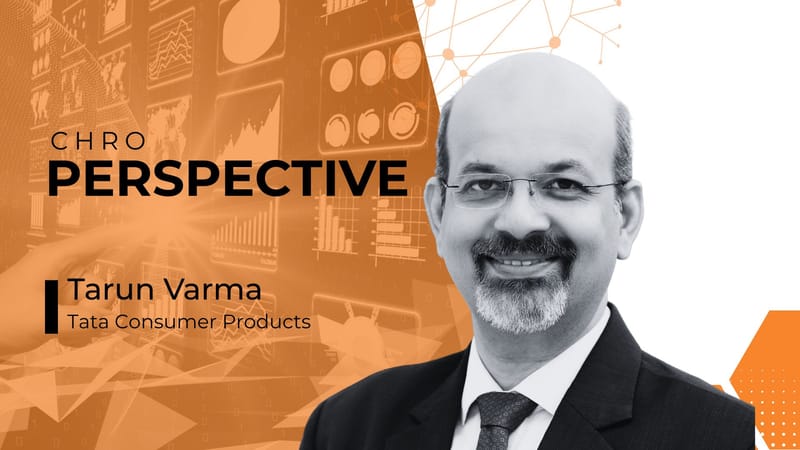
As Tata Consumer Products evolves through mergers and digital shifts, Tarun Varma reflects on building inclusion at scale—balancing identity, performance and technology with human-centred leadership.
In an era where workplace transformation is rewriting the rules of business, Diversity, Equity, and Inclusion (DE&I) have become both a moral imperative and a strategic differentiator. Yet, for many Indian companies, the journey from checkbox compliance to true, empathetic inclusion is still unfolding.
What does it really take to build an organisation where every voice matters—across geographies, generations, and identities?
To answer this, People Matters sat down with Tarun Varma, Global Chief Human Resources & Sustainability Officer at Tata Consumer Products, a company that has not only weathered waves of transformation but has thrived by making DE&I a core business agenda. From navigating complex mergers to harnessing the power of artificial intelligence, Varma shares candid insights, hard-earned lessons, and a vision for the future of inclusive leadership. Edited excerpts
To answer this, People Matters sat down with Tarun Varma, Global Chief Human Resources & Sustainability Officer at Tata Consumer Products, a company that has not only weathered waves of transformation but has thrived by making DE&I a core business agenda. From navigating complex mergers to harnessing the power of artificial intelligence, Varma shares candid insights, hard-earned lessons, and a vision for the future of inclusive leadership. Edited excerpts
Q. As a talent leader, how has the definition of diversity and inclusion evolved in the Indian corporate landscape over the past few years? What are some key changes you have observed, and where do we stand today?
Let me offer two perspectives: one from my current role at Tata Consumer Products, and another from my previous experiences in global, cross-cultural organisations such as Shell. At Shell, for instance, the focus was on shifting the organisational DNA to become more inclusive, especially in STEM roles—this is a common challenge in engineering-driven companies. In FMCG organisations such as Coca-Cola and Nestlé, diversity was essential given the wide-ranging consumer base. This experience has shaped my approach at Tata Consumer Products, which has undergone significant transformation over the years, from Tata Finlay to Tata Tea and now a global consumer products company.
In the last five years, we have evolved through multiple mergers and acquisitions—six integrations just last year—that have brought together people from diverse backgrounds and skill sets. Each integration has brought new perspectives, and the central challenge is how to successfully include people from various backgrounds in a cohesive organisational culture.
To summarise, over the past five years, organisations like ours have had to transform rapidly while also responding to evolving global expectations around diversity, equity, and inclusion. Societal expectations play a big role. As a company serving tea, coffee, salt, and staples, we must reflect the diversity of our consumer base. The other reality is our employee base. People now expect their organisations to be proactive about DE&I. Our approach has been to value our shared purpose—serving the consumer—while celebrating the differences that each individual brings. Regardless of function, background, or identity, everyone is united by this purpose.
We celebrate differences where it matters—particularly in innovation. Tapping into diverse backgrounds fuels our ability to build strong brands and drive innovation. For example, our innovation contribution has increased from under 1% of sales to 5.2% over five years, during which we launched over 150 new products. This is a direct impact of embracing diversity.
Q. What are some key challenges you face in implementing successful DE&I initiatives, especially given the scale of mergers and acquisitions at Tata Consumer Products? How do you address these challenges as a talent leader?
To simplify, I categorise challenges as 'visible' and 'invisible.' Visible challenges include factors like educational background, region, or previous company—elements you can easily identify and address through policies and training. The invisible challenges—like inherent biases or issues of identity—are harder to tackle. For instance, during M&As, employees may feel their identity is threatened, especially when asked to quickly adopt a new corporate identity.
We focus on performance and potential rather than pedigree, ensuring that everyone gets equal opportunity regardless of their educational institution. Invisible challenges are often about biases and unspoken issues. For example, post-M&A, employees may struggle with identity and belonging, having spent years building their previous company's culture. It's not just about integrating structures and systems; it's about culture and identity. Employees need to feel that their unique contributions are valued, rather than simply being asked to adopt a new badge overnight.
One way we addressed this was by ensuring everyone, regardless of their original company, received the same organisational email and access to common platforms—fostering a sense of unity. Identity is a crucial factor in any integration, not just in India but globally. Addressing both visible and invisible aspects is key to successful DE&I.
Q. How have AI and emerging technologies impacted the DE&I culture at your organisation? Do you believe technology can support DE&I, or is its role limited?
Let me share two perspectives. In my previous role as HR leader for a global technology organisation, I saw firsthand how biases can be coded into AI. I participated in projects focused on responsible AI usage and eliminating bias at the source, such as using gender-neutral language in NLP.
At Tata Consumer Products, we are exploring how AI can be used in practical applications, such as sales and frontline operations. The focus is less on demographic factors and more on the willingness to learn and adapt. AI can amplify both good and bad behaviours. If implemented thoughtfully, it can foster inclusion and efficiency. If not, it can reinforce existing biases.
For example, AI-driven tools can help our sales teams recommend products more effectively. But if these tools become too prescriptive or robotic, they risk disengaging employees and customers alike. Keeping the human element is essential. When employees are empowered to use AI as an augmentation tool, it enhances their skills and customer relationships, boosting engagement and reducing attrition.
Interestingly, we noticed even naming our AI tools (like 'Zara') raised questions about embedded gender assumptions. We have since expanded to more neutral names, emphasising the need for technology to be inclusive and unbiased. Making AI tools gender-agnostic has helped us foster inclusion, as the technology itself is now less likely to perpetuate bias.
Q. In your view, are Indian organisations doing enough to make a meaningful impact on DE&I, or is there still a tendency for it to be a 'checkbox' exercise? What more can be done to ensure real, empathetic progress?
Early in my career, I believed in strict metrics and targets for DE&I, but experience has taught me that context matters far more. For example, while working in telecom, we had a customer service centre operated entirely by students from the National Association for the Blind. Customers never noticed the difference, which highlighted the value of true inclusion over token gestures.
In another case, a visually challenged HR professional worked on a cutting-edge green hydrogen project. Colleagues didn't even realise his disability for months—instead, they valued his curiosity and insights, which drove powerful reflection and learning. These examples show that real inclusion isn't always about metrics—it's about creating environments where everyone can contribute meaningfully.
Q. There seems to be a divide between Western organisations moving away from formal DE&I reporting and Indian companies that see value in it. What is your perspective on this?
As a listed company, we have mandatory DE&I and ESG disclosures, but I see the real value in how DE&I supports our business, not just compliance. For instance, our US coffee plant near Washington, DC, employs people from diverse backgrounds, reflecting the communities we serve. We make sure our teams reflect the diversity of our customer base, whether in the US or India. This approach is integral to our business, not just a regulatory requirement. It's important that our workforce represents the communities we operate in, which strengthens our relationships and relevance.
Our responsibility as a Tata Group company is to mirror and support these communities, both for social value and business success. We believe that businesses thrive only when the societies and communities around them thrive. DE&I, for us, is about purpose and impact, not just metrics.
Q. How do you measure the impact of a successful DE&I initiative at Tata Consumer Products? What metrics or indicators do you use to gauge effectiveness?
Context is key. The metrics vary by business function. In marketing, for example, we seek unbiased insights and diverse perspectives rather than relying solely on quantitative measures. For instance, with our speciality tea brand 'Tea Pigs' in the UK, we realised that unconscious bias influenced marketing decisions, such as assuming women are the primary consumers and naming a project 'Project Pink.' Recognising and eliminating such biases is a key measure of success.
In our plantations in Munnar, Kerala, we have workers' participation in management. Top-performing tea pluckers—most of whom are women—are invited to be directors on the company board, ensuring frontline perspectives are heard at the highest level. This direct feedback is invaluable, and while we may not always have formal metrics, the impact on inclusion and business outcomes is clear.
Q. Looking ahead, what trends do you foresee in the DE&I space over the next few years? How is Tata Consumer Products preparing for these changes?
We are actively exploring the future of our business, including through initiatives such as the Tata Affirmative Action Plan. For us, affirmative action means assessing and improving education and employment opportunities for underrepresented groups in our communities, based on the belief that thriving societies lead to thriving businesses. We measure progress through targeted employability and skill-building initiatives, which are often more advanced than what we see in many companies.
One area where corporate India can improve is by not letting the pursuit of profit overshadow the broader purpose, such as worker safety, conditions, and inclusion of gig workers. We need to revisit our first principles and focus on holistic impact. We're also expanding our talent pool by hiring veterans and professionals from diverse backgrounds, ensuring we eliminate bias and create opportunities for all. We are also focused on using AI in an inclusive, gender-agnostic manner.
The workplace is no longer a simple matrix—it's a complex, dynamic multiverse. Embracing this complexity with kindness and mindfulness will be key to future success.
This story is part of CHRO Perspective. A People Matters series featuring bold ideas and real-world insights from India’s top CHROs. Stay with us for more perspectives that power the future of work.
Author
Loading...