







Leadership
Empowering the next generation: building leadership beyond hierarchies





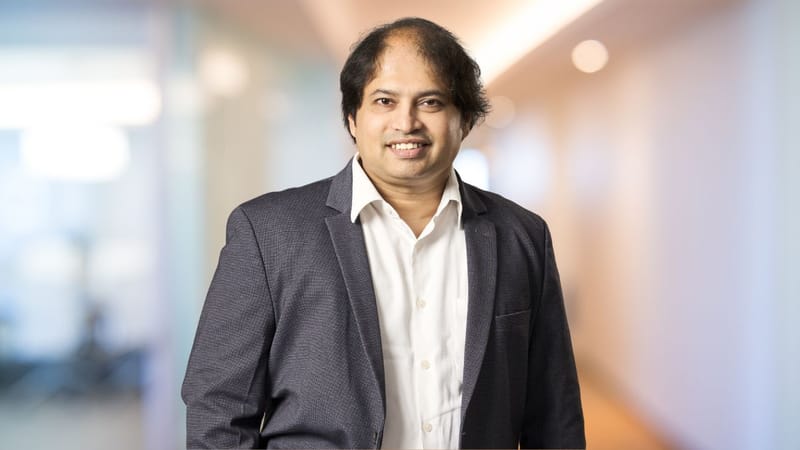
As organisations flatten hierarchies, leadership is shifting from titles to capability, empowering employees through ownership, trust and continuous learning.
The workplaces of today are undergoing significant shifts, thanks to rapid technological advancements, fast evolving business models, and the rise of multigenerational teams. In such an environment, agility is no longer optional, rather a business imperative. Traditional hierarchical structures, once the backbone of organisational design, are steadily giving way to more fluid systems that prioritise speed, collaboration and adaptability.
At the centre of this very change lies a new definition of leadership, where leaders are no longer defined by title and tenure, but in terms of their capabilities across the organisation. It is important to empower individuals within the talent pools to think, own, lead and become a catalyst for innovation. The emphasis is no longer on who leads, but on how leadership is enabled.
Redefining leadership: Ownership, access, and the rise of gen Z
For years, leadership development has largely relied on structured training programmes and workshops. While these are valuable, often such approaches fall short in readying individuals for real-world ambiguity. Organisations today are shifting towards a more immersive ‘learning by doing’ model — offering each person ownership and accountability.
By assigning individuals with responsibilities for projects and decision-making, companies create environments where leadership is practiced in a real-world scenario, not just taught. Equally important is cultivating a strong frontline obsession across the organisation. Employees closest to customers, operations, and day-to-day execution often possess the most immediate understanding of emerging challenges and opportunities. Empowering frontline teams to make decisions, share insights, and influence outcomes not only improves responsiveness but also strengthens the organisation’s overall leadership pipeline.
precedence over hierarchy. It has been observed that such environments allow faster decision-making, unlock agility, and ensure leadership is not restricted by rank, but driven by capability and talent.
This shift is particularly relevant for Gen Z — a generation defined by digital fluency, adaptability, and fresh perspectives. As organisations become increasingly innovation-driven, these attributes are proving to be valuable assets. However, realising this potential requires organisations to move towards flatter structures that provide early exposure to decision-making and leadership responsibilities, while ensuring that experience and capability continue to guide progression into formal leadership roles. A PwC Global Workforce Hopes and Fears survey highlights that younger employees seek rapid skill development and career progression.
Senior leadership also has an important role to play in this entire process, in terms of mentoring and guiding employees and making enough room for them to explore and learn on their own. This accelerates their career growth and ensures the development of a leadership pool that can cater to the fast-changing dynamics of an always connected world.
Culture as a catalyst: Self-awareness, safety, and continuous dialogue
It must also be noted that structural changes alone cannot sustain leadership transformation in the long term — organisational culture plays a defining role. Leaders today must be equipped to recognise their own biases, embrace vulnerability, and engage with teams openly.
If individuals feel comfortable to speak up, share their ideas, then collaboration and innovation naturally flourish. This is why psychological safety becomes an essential consideration.
Creating psychologically safe workplaces requires deliberate action and active listening, real-time feedback, and open forums that encourage participation across all levels within the organisation. Research with nearly 300 leaders over two-and-a-half years, found that teams with high degrees of psychological safety reported higher levels of performance and lower levels of interpersonal conflict. This also calls for a shift in culture from static engagement surveys to continuous, actionable dialogue. When people feel heard, respected, and valued, they are more likely to take charge, challenge the status quo, and emerge as leaders.
The focus today is increasingly on translating conversations and insights into meaningful action. ‘Less slides, more strides — turning FY26 learnings into FY27 breakthroughs’ captures the importance of moving beyond theoretical discussions and creating cultures that prioritise execution, experimentation, and continuous improvement.
Inclusion, empowerment, and the leadership imperative
As leadership evolves, so must the metrics used to evaluate success. The conventional measures used to assess performance may not sufficiently account for the nature and depth of employee experience and empowerment facing us today.
Diversity and inclusion also play a key role in making every employee feel empowered, have a voice, and feel their contributions are valued. McKinsey & Company revealed that companies in the top quartile for gender diversity outperform those in the bottom quartile by 25%, demonstrating the direct correlation between inclusive leadership and business performance.
This evolution in leadership thinking also places greater emphasis on succession planning. Organisations today can no longer rely on leadership transitions that are reactive or limited to a small group of senior executives. Building a sustainable leadership pipeline requires identifying high-potential talent early, exposing individuals to cross-functional experiences, and creating structured opportunities for future leaders to grow continuously within the organisation.
In an era marked by disruption and ambiguity, organisations must enable individuals at every level to contribute boldly and lead with confidence. For CHROs and business leaders, this is both a strategic priority and a defining responsibility.
The future will belong to organisations where leadership is not dictated by hierarchy, but driven by capability, trust, and collaboration. Empowering the next generation of leaders is no longer optional; it is the foundation of building resilient, forward-looking enterprises.
Loading...