







Leadership
From BFSI to Tech Powerhouse: Nilesh Dange on L&T Finance's digital shift





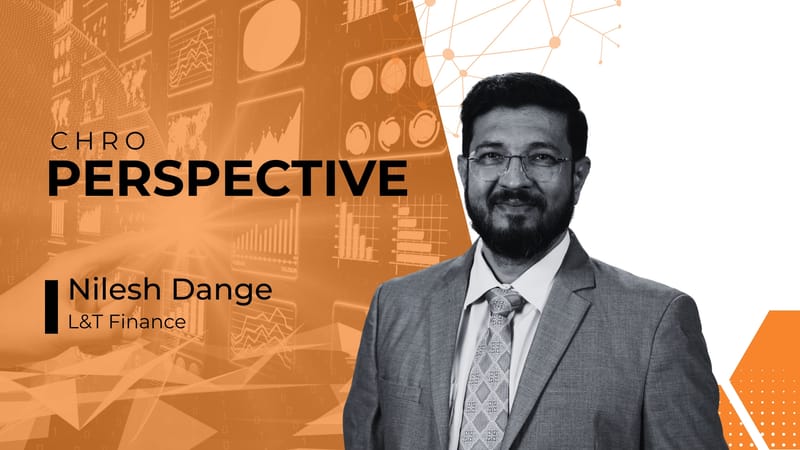
L&T Finance shifted from traditional IT to engineering, expanding its digital vertical to drive transformation and build a digitally oriented organisation.
In a rapidly changing financial landscape, L&T Finance has been at the forefront of digital transformation, shifting its focus from a traditional lending institution to a technology-enabled retail finance company. This strategic pivot has put its human resources function in a new, pivotal role. We sat down with Nilesh Dange, Chief Human Resources Officer at L&T Finance, to discuss his journey, the evolution of HR, and how L&T Finance is winning the race for top engineering talent. Edited excerpts
Q. You have spent over 20 years with L&T Group and have been a talent leader for nearly 25 years. What is the single biggest lesson you have learned in your career, and how has it shaped your leadership philosophy?
If I have to pinpoint one key lesson, it is that for HR to truly have a seat at the table, we must become business enablers. This means, first and foremost, that you must understand how the business operates. You need to know where the shoe pinches. Without that deep business understanding, you cannot appreciate the organisation's needs, and your interventions will be disconnected from reality.
My primary focus as a CHRO at L&T Finance has been to gain a deep business understanding, so that I can speak the language of the business and customise our HR strategies to address their core needs, rather than just offering theoretical solutions. This philosophy has served me well throughout my career.
Q. There is a perspective that HR should abandon its own metrics and only focus on business metrics. What is your take on that?
I don't fully agree with that perspective. While HR metrics and business metrics can't be viewed in isolation, they are distinct. HR metrics are still important, but the key is to understand the tight correlation between the two. The missing link is how your HR metrics act as a feeder to the business metrics.
For example, our turnover rate (an HR metric) is a precursor to business metrics such as productivity and cost per hire. My role is to explain how reducing turnover, achieved through our talent retention strategies, directly contributes to improved productivity and cost efficiency for the business. When both HR and business leaders understand this connection, the collaboration becomes truly enabling.
Q. The BFSI sector has undergone a massive digital transformation. What do you see as the most significant challenges and opportunities when it comes to attracting and retaining talent, especially with the rise of AI and machine learning?
The BFSI sector is a crucial part of India's economic growth, and as it evolves, so does the talent landscape. Technology is no longer just for automating tasks; it's now about aiding decision-making. This has created a constant and evolving challenge for talent. People who can transition with this shift and effectively embrace new technologies, such as AI and ML, are the most sought after.
At L&T Finance, we have recognised this and have a clear strategy in place. About two years ago, we established a dedicated AI and ML vertical to become a digitally-enabled retail finance company. We hired pure-play AI ML talent and made a point to demonstrate our commitment to this technology. We have even filed patents related to usage of AI ML, which is something you would typically hear from IT or manufacturing companies, not a financial institution. This has enabled us to attract a new kind of talent that is not only knowledgeable about AI but also has a proven track record of utilising it to enhance processes and design digitally enabled products.
Q. You have focused on building a robust engineering pipeline. Could you discuss the initiatives you have launched to attract this specific talent pool from top-tier institutions?
Our journey toward becoming a digitally oriented organisation required a fundamental shift. We transformed our traditional IT team into an engineering team and augmented our digital vertical. To build a robust pipeline, we have started hiring engineering talent directly from top educational institutions.
Over the last two years, we have shifted gears and are now going to top-notch IITs and other premier institutions.
A significant part of our strategy is to generate interest among engineering graduates, who traditionally prefer IT or manufacturing firms. We did this through initiatives like our annual 'RAISE' event, the first of its kind in the industry, dedicated to AI. It is not just a talk shop; we showcase our vision and the work we have already done. We also partnered with top institutions like IIT Kharagpur, , the Indian Statistical Institute, and IIM Calcutta for a unique program on business analytics. This has enabled us to offer internships and full-time roles, resulting in a tremendous uptake on campuses. We also ran a live business challenge called the Pearl Challenge, which attracted participants from across the globe and demonstrated that we are a company that solves real-world problems with technology.
Q. Given the BFSI sector's reputation, attracting top-tier engineering talent can be a significant challenge. How have you been able to generate so much interest from this talent pool?
It is a challenge, and we were in a similar position three years ago. The shift began with thought leadership from our top executives, including our MD & CEO, who has a strong belief in leveraging digital technology. Our leadership attends investor presentations and campus lectures to discuss our vision and the actual work we're doing.
We also support in organising events like Trilytics, which is an event on AI and ML problems and challenges. We have found that these interventions, along with our 'RAISE' event, have generated tremendous impressions and created awareness among engineering talent. We also highlight our Employee Value Proposition (EVP) through our "C.U.R.V.E. of Happiness," which stands for being Connected, Understood, Respected, Valued, and Enabled. Our MD & CEO has also coined a five-pillar HR strategy that focuses on 'Hire Right, Challenge Right, Support Right, Nurture Right, and Reward Right.' These pillars serve as the foundation for all our talent initiatives, and we back them up with concrete actions, such as our ‘STRIDE’ (Skilling and Training for Rounded Individual Development and Enhancement) program that fully sponsors continuous education for our employees.
Q. L&T Finance has a workforce of approx. 37,000 spread across ~2,500 physical locations. How do you ensure that the digital transformation and upskilling initiatives reach everyone, especially those at the grassroots level?
We follow a "different strokes for different folks" strategy. Our interventions are curated to be relevant for each level of our workforce. For our frontline officers, who are often on the move, we have developed our Gurukul Learning Management System (LMS). It is a portal with bite-sized learning modules that can be accessed on their handheld devices. They can learn about new processes, like how to handle a digital KYC, and we have even made these modules available in multiple regional languages. To build accountability, each module includes pre- and post-tests to track knowledge levels.
We have also launched a program called ‘Empower AI’ to democratise AI knowledge across the organisation. It consists of bite-sized videos and modules that teach employees how to use AI for their daily work, like summarising a legal document. We have also created three-level AI certification programs from beginner to advanced. We are launching an event where employees from various roles will demonstrate how they have used AI in their day-to-day work, which not only builds excitement but also drives real adoption of the technology.
Q. The CHRO role has undergone significant expansion in scope of work in recent years. How has your own role evolved, and what do you make of the ongoing debate about the HR function's role at the leadership table?
My role has evolved from being largely transactional and tactical to one that is more inspirational and enabling. The focus has shifted from simply examining metrics like attrition to understanding how I can contribute to core business challenges, such as increasing employee productivity while maintaining cost competitiveness. The expectations from the CHRO role have fundamentally changed. I am now tasked with building an engaged workforce and fostering a culture that is ready to tackle larger challenges.
The classical debate about HR having a seat at the table is an outcome of something more fundamental. It boils down to whether the organisation's leadership believes that human resources are the most critical asset. If that belief is there, then it is HR's responsibility to rise to the occasion and prove its value. I believe the HR function's primary goal is to garner management attention and management intention for its initiatives. If we can do that, all other things, including having a seat at the table, will naturally follow.
Q. The average age of your workforce is relatively young. How do you manage to retain this talent and provide them with opportunities for growth within the company?
The financial services sector naturally has a younger average age, and at L&T Finance, it's around 27-28 years. We are a young organisation, and we have been able to increase the tenure of our employees, meaning people are choosing to stay with us for longer periods. This is primarily because we are a multi-product organisation with multiple avenues for growth.
We have a robust internal mobility strategy in place. In a year, we fill close to 6,000 positions internally. We run two key programs: Aspire, which gives first preference to internal candidates for vertical growth, and Ascend, which facilitates lateral shifts between different functions and businesses. We have seen people transition from a legal function to a business role, or from business to risk management.
We have made it a policy that if a position becomes vacant, we first release an internal job posting before looking outside. This gives our employees the confidence that they can have a long, diverse career with us without having to leave the organisation.
Q. You mentioned building a culture of innovation. What specific programs have you implemented to foster this?
Fostering innovation is a core part of our strategy. We have launched Idea Express, a program that encourages employees not only to submit ideas but also to present and demonstrate how they would be implemented. This goes beyond a simple suggestion box and pushes for tangible, actionable solutions.
We also place a strong emphasis on employee engagement and have been certified as a Great Place to Work twice. What is particularly significant is that our score improved from 82 to 84 in the second year, even as our employee coverage for the survey increased from 73 percent to 89 percent. This shows that our efforts to build a supportive and inclusive work environment are truly resonating with our people.
Q. Where does your gender diversity ratio stand? How do you plan to improve those numbers? How do these efforts contribute to the company's overall talent strategy?
Currently, our gender diversity stands at 6.3 percent. Our goal is to increase this to a double-digit figure, specifically aiming to cross 10 percent in the next couple of years. This is not just a number; it's a strategic move to build a more inclusive workforce.
Our approach is two-fold. First, we have focused on creating a foundation by implementing women-friendly policies that, in some cases, are the first of their kind in the industry. Second, we are actively driving the induction of more women at the frontline level. This ensures we have a diverse talent pipeline from the very beginning of the organisation, which will help us achieve our goal of a more balanced workforce.
Improving gender diversity is a critical component of our broader talent and culture strategy. By attracting more women, we tap into a wider talent pool and create a richer, more diverse environment. This aligns with our overall goal of becoming an organisation that provides opportunities for everyone to grow and thrive, regardless of their background. It also reinforces our commitment to building an inclusive and supportive ecosystem, a key component of our employee value proposition that helps us attract and retain the best talent in the market.
This story is part of CHRO Perspective. A People Matters series featuring bold ideas and real-world insights from India’s top CHROs. Stay with us for more perspectives that power the future of work.
Author
Loading...