







Leadership
Harnessing talent for rural transformation: Dr Anil Rajvanshi’s model of sustainable innovation





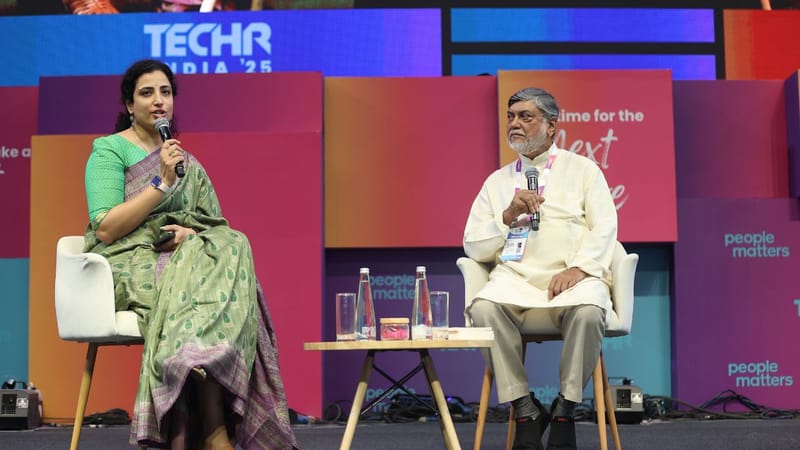
Padma Shri Dr Anil Rajvanshi on passion, innovation and sustainability, reimagining rural India through talent, technology and purpose.
In an age where talent migration is largely one-way, from rural to urban, and from Indian cities to overseas hubs, Dr. Anil K. Rajvanshi’s story stands as a remarkable reversal of the trend. A Padma Shri awardee and the Director and Hon. Secretary of the Nimbkar Agricultural Research Institute, Dr. Rajvanshi, has spent over four decades living, working and innovating in rural Maharashtra. Heading the session “Rooted to Rise: Talent, Purpose, & Innovation in India’s Heartland” during the recent People Matters TechHR India 2025, he shared his remarkable journey, candid reflections and heartfelt convictions on what it takes to create a lasting impact outside the traditional centres of opportunity.
Moderated by Dr. Asmani Surve, Vice President of Goldi Solar, the conversation explored the motivations that brought him back from a flourishing academic and research career in the United States, his deep commitment to sustainability and his belief in combining spirituality with technology to achieve not only progress, but also happiness. This article is based on key excerpts from the conversation.
A journey fueled by passion and purpose
When asked why he returned from the US to work in rural India, Dr. Rajvanshi was candidly honest: “Passion, arrogance and madness,” he said with a smile. Educated at one of India’s leading IITs and later completing a PhD in the United States, he found himself working at one of the best institutes for solar energy research in the world in Florida. Yet, something in him longed to contribute back to his home country.
Initially, when he returned, he thought he could ‘change’ India, an ambition he now gently calls foolish. Over time, he realised that India instead changed him, teaching him spirituality, humility and the essence of sustainability. These were not abstract ideals but guiding principles that grounded his work in the difficult, often unpredictable, landscape of rural development.
His early childhood sown these seeds of conviction as his father was jailed alongside Mahatma Gandhi during the freedom movement in 1942, and growing up, their home was infused with stories of sacrifice, purpose and service. Inspired by Gandhi’s simplicity, Dr. Rajvanshi adopted a philosophy that remains at the heart of his efforts: a fulfilling life can be lived with a fraction of the energy consumed in more developed nations when coupled with modern technology.
His personal mantra, repeated throughout the session, crystallised this belief: Spirituality + Technology = Sustainability and Happiness
An ongoing challenge he addressed was the migration of young talent from rural areas to cities, and from India to other nations. This movement, he acknowledged, is driven by understandable aspirations for growth and better opportunities. However, he believes those who have trained in urban or global centres carry a responsibility, and a unique capability, to bring return and give back to rural India.
“Until 60% of India, which lives in rural areas, is prioritised, we will not become a developed country,” he stressed. Development, he argued, is not only about infrastructure but also about establishing role models. He recounted how he and his wife cycled to work in their early years, attracting ridicule before gradually inspiring others to do the same.
For HR professionals in particular, his message was clear: actively identify and nurture talent that can bridge the worlds of high technology and grassroots realities. Instead of limiting corporate social responsibility (CSR) to donations or projects, he urged companies to embed systemic change within their operations by creating learning environments where skilled professionals are encouraged to contribute directly to rural transformation.
Loading...