







Leadership
How collaborative culture drives people and purpose





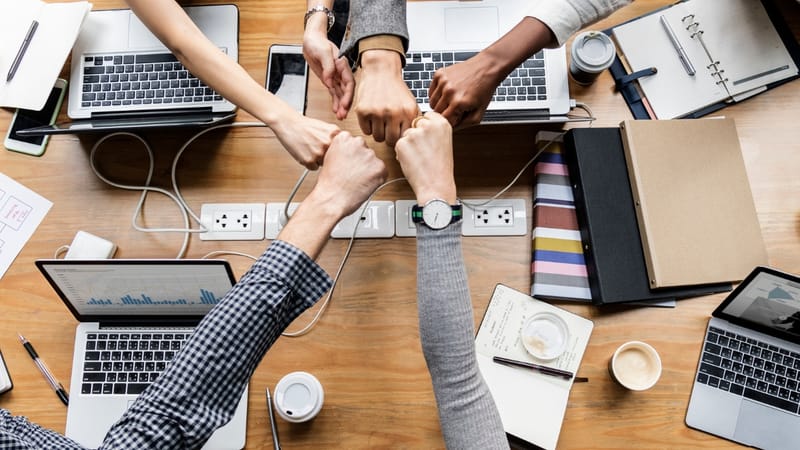
Employees across generations are increasingly seeking more than direction; they want participation, ownership, and the ability to shape outcomes.
Work today is no longer just about roles and responsibilities - it's about relationships, shared purpose, and how people come together to create impact. As organisations respond to shifting workforce expectations, collaboration has emerged not just as a value but as the operating rhythm of progressive workplaces. Employees across generations are increasingly seeking more than direction; they want participation, ownership, and the ability to shape outcomes. A Stanford study found that individuals working in collaborative settings are 50 percent more effective, reinforcing how such environments enhance engagement and motivation.
This growing emphasis on collaboration is also reshaping how organisations think about the workplace itself. While hybrid models have gained traction post-pandemic, many leaders, especially in sectors requiring real-time coordination, believe that in-person environments most effectively nurture authentic collaboration. The physical workspace acts as connective tissue, enabling trust-building, spontaneous problem-solving, and faster decision-making.
Forward-thinking organisations are even broadening their definition of collaboration, acknowledging how families, peer networks, and communities contribute to more empathetic and inclusive cultures. Initiatives like annual family days and extended wellness programs reflect this expanded view.
Cultivating ownership and agility
A collaborative culture begins with leadership that fosters openness, values diverse perspectives, and breaks down silos. It thrives where information flows freely, goals are co-owned, and accountability is shared, not imposed. This creates a sense of ownership that enhances clarity, speeds up execution, and empowers teams to move with agility.
When collaboration is embedded early, across planning, finance, legal, design, and execution, organisations experience fewer bottlenecks, reduced rework, and tighter alignment from vision to delivery.
Leadership style is a critical enabler. Leaders who co-create with their teams - rather than dictate - cultivate trust and unlock "discretionary effort": the extra energy people invest when they feel heard and valued. According to Microsoft's 2023 Work Trend Index, 85 percent of global leaders report that hybrid work has made engagement more challenging. Yet those who prioritise collaborative leadership report stronger cohesion, more effective decisions, and faster innovation.
Why real estate depends on collaboration
In real estate, collaboration is not a best practice - it's a necessity. Unlike manufacturing, which follows repeatable workflows, real estate projects are high-stakes, one-time developments that demand complex coordination across functions. From land acquisition and regulatory approvals to design, construction, sales, and handover, every phase depends on tightly synchronised teamwork.
Projects span years and involve internal departments, consultants, regulators, and buyers. Consider legal and sales teams aligning on deal structures, or MEP engineers working with leasing teams to customise occupier spaces - these interactions ensure quality, compliance, and speed.
In today's dynamic market, where ESG goals, buyer expectations, and policy landscapes keep evolving, collaboration is what enables agility. Real-time responsiveness, cross-functional planning, and co-located teams during execution phases are helping real estate firms reduce missteps and elevate delivery quality.
Collaboration as a strategic lever
As India's workplaces evolve to meet the demands of a rapidly changing economy, collaboration is taking on a broader meaning - from team synergy to adaptability, transparency, and shared vision. In real estate, this shift is moving organisations from reactive coordination to proactive problem-solving.
As developments scale in size and complexity, spanning sustainability, regulatory changes, and customer-first design, collaboration is becoming a strategic lever: enhancing risk resilience, boosting execution efficiency, and building long-term stakeholder trust.
Organisations that embrace inclusive leadership, cross-functional alignment, and deep stakeholder engagement aren't just delivering better outcomes today - they're building the blueprint for tomorrow's resilient, people-driven enterprises. Ultimately, it is this culture of collective progress that will define the future of work in India.
(The author of this article is Rishabh Periwal, senior vice president at Pioneer Urban.)
Topics
Loading...