







Leadership
TechHR 25: A Special Forces officer redefines high performance and leadership





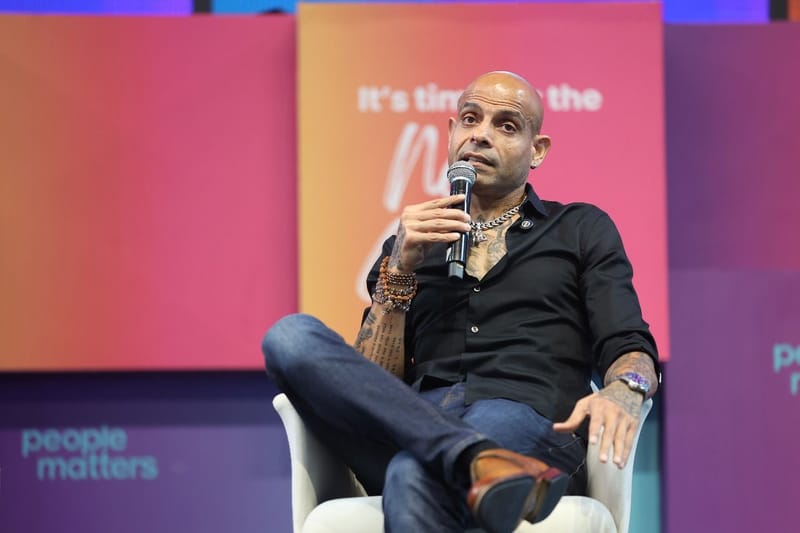
Leadership is not about giving orders from a distance. As an officer, he must bleed and sweat alongside his troops, explains Col. Kanwar.
In a high-stakes conversation that pushed the boundaries of conventional corporate thinking, Col. Shivender Pratap Singh Kanwar, an ex-officer of the Indian Army's elite Para Special Forces, offered a jarring perspective on high performance. Moving beyond the typical workplace stress of missed targets or wrong hires, he defined performance through the lens of a mission where the cost of failure is measured in human lives.
Speaking on the 2nd day of the People Matters TechHR India conference Col. Kanwar, whose unit operates in environments of extreme danger, distilled the concept of high performance into two powerful words: "mission accomplishment."
He explained that in his world, there are no second chances or retakes. A high-value mission is a "once in a lifetime" opportunity, demanding relentless training and a mindset honed for instantaneous action.
"Everything boils down to whether you are able to deliver on that particular day, at that moment. For a Special Forces operative, all decisions are "goal-driven," with the ultimate and only tangible measure of success being the successful completion of the mission."
Leading by example
When asked about building a team where members are willing to "take a bullet for each other," Col. Kanwar's response was both visceral and profound. He revealed that such trust isn't built in a boardroom but through shared sacrifice and relentless rigour. He pointed out that the selection process for elite units is brutal, with only a small fraction of the best candidates making it through.
He explained that in his line of work, there are only two jobs: training and combat. "If you're not in combat, you are in training. If you're not in training, you are in combat." This perpetual state of readiness, often involving live bullets and constant exposure to risk, forges an unbreakable bond.
Crucially, Col. Kanwar emphasised that leadership is not about giving orders from a distance. As an officer, he must bleed and sweat alongside his troops. "I need to sleep in the same sleeping bag. I need to carry that same amount of weight to walk with him," he said.
This shared hardship and mutual respect, which transcends the typical military hierarchy, is what builds the deep-seated trust required for a team to function as a single, cohesive unit. The leader must "walk the talk," earning their team's loyalty and trust every single day.
Leadership during setbacks
In an environment of such intensity, conflicts and setbacks are handled with a different kind of discipline. Col. Kanwar described a culture of "professional arrogance," where merit and skill trump rank. He noted that in his unit, a junior soldier can challenge an officer if they believe a decision is flawed, and it is the officer's honour at stake to prove their competence.
"If I tell my troops to run 20 kilometres every day, it is well written that I run 30 kilometres every day," he explained.
On the topic of setbacks, he painted a grim picture far removed from corporate failures. Setbacks in his world are part of the process, not blunders. He shared the immense pressure of operating under strict rules of engagement, where the slightest error can have devastating consequences. The measure of a team's strength, he said, isn't the absence of failure but the ability to rise after it.
The key to overcoming setbacks is the "act of not giving up." Whether a mission fails or a training run falls short, the actual test is the renewed vigour to try again the next day.
In this world, earning your stripes has a very different meaning—it is a continuous, day-by-day effort that hinges on an unwavering commitment to the mission and your team, concluded Col. Kanwar.
Topics
Author

Loading...