







Leadership
The New Rules of Work: What a global HR leader reveals about modern talent




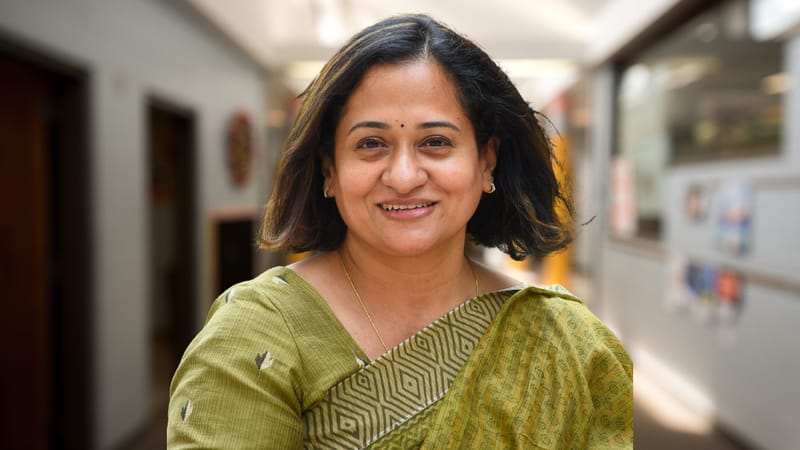
Sonia Kutty, Senior Vice President – People & Culture at Quest Global, is a leader who believes that the future of work lies not in fearing change, but in embracing it with open arms.
In a world where uncertainty has become the only constant, leaders are called upon to navigate uncharted territory, blending resilience with agility. Sonia Kutty, Senior Vice President – People & Culture at Quest Global, is one such leader who believes that the future of work lies not in fearing change, but in embracing it with open arms. In an in-depth conversation with People Matters, Kutty shares her insights on how Quest Global is shaping its workforce to meet the demands of tomorrow.
Embracing uncertainty as the new normal
As the world of work continues to evolve, Kutty observes that the turbulence and unpredictability of recent years have fundamentally altered how organisations and their people plan for the future. “I see 2026, and the years ahead, as a balance between the uncertainty we’ve grown familiar with and a greater sense of acceptance that unpredictability is here to stay,” she reflects. The COVID-19 pandemic, coupled with rapid digital transformation, has made it clear that forecasting too far ahead is often futile. Instead, Kutty argues, “it’s about adapting to change as it comes and finding opportunities within those shifts.”
One of the most striking changes in the workplace, she notes, has been the shifting perception of artificial intelligence. “There was a time when AI was seen as a threat,” Kutty says. “Now, organisations and employees are looking at how they can leverage AI as a tool, rather than seeing it as a constraint. What once seemed daunting has become more interesting and more acceptable. Looking forward is going to be the norm.”
AI Readiness: A generational shift
While AI’s relevance is undisputed, Kutty points out that the degree of readiness varies across industries and teams. “Technology is such a broad domain. Some industries have taken a leap forward, while others are just beginning their AI journey,” she explains. Yet, she is encouraged by the enthusiasm and confidence she sees among Quest Global’s younger employees.
During a recent visit to the company’s Trivandrum office, Kutty asked junior team members how they felt about AI. Expecting uncertainty, she was instead met with optimism and self-assurance. “These employees are not only aware of AI—they’re eager to learn and use it. Their managers are helping them upskill, and for this generation, adapting to technology is second nature.”
This generational shift in mindset is key to Quest Global’s strategy. Kutty believes that employees who see AI as an integral part of their work are the driving force behind the company’s ability to stay ahead. “While some teams are progressing faster than others, I expect significant momentum in AI adoption this year,” she notes.
Redefining roles in the age of automation
The impact of AI on the workforce is a subject Sonia has thought deeply about, especially as it relates to entry-level talent. “There’s always been a question about repetitive engineering tasks—whether these should be done by engineers or by diploma holders. Now, with AI in the picture, many of these tasks will be automated,” she says.
Rather than seeing this as a threat, Kutty believes it frees up human talent to focus on innovation and problem-solving. “Our true value at Quest Global comes from leveraging innovation to solve the toughest engineering problems. AI will allow us to do more of this meaningful work.”
She acknowledges that there may be some short-term disruption and adjustment, but is confident that, in the long run, these changes will be beneficial. “People will be forced to use their intellect and creativity for higher-order tasks. That’s the direction we want to move in as an organisation.”
Cultivating ‘Polymath Engineers’
Quest Global’s approach to workforce development goes well beyond mere technical training. While the company offers AI-based courses and certifications, Kutty emphasises the importance of fostering a mindset of adaptability and systems thinking. “We call it nurturing ‘polymath engineers’—professionals who can think broadly, adapt to new challenges, and learn continuously,” she says.
To build this mindset, Quest Global invests in design thinking workshops, courses on systems thinking, and early exposure to real-world problems. Junior employees are encouraged to work in think tanks and small teams, giving them the opportunity to approach issues from multiple perspectives. “A skill that’s in demand today might not be tomorrow. We want engineers, especially the young ones, to think beyond just their domain. That ability to learn and adapt is what we’re investing in,” Kutty explains.
Changing the talent playbook
The rapid evolution of skills has also led to changes in Quest Global’s hiring strategy. “Earlier, hiring was all about specific technical skills—C, C++, or Python, for example,” Kutty recalls. “Now, while those skills are important, we’re looking more for learnability and adaptability. We assess whether someone has the pattern of thinking needed to be fungible across domains.”
Kutty admits that this shift is still a work in progress. “We haven’t perfected it yet, but our focus is on identifying talent that can morph and evolve with the organisation’s needs. This is how we’ll continue to grow and remain competitive.”
A global workforce, locally rooted
With over 21,500 employees across 18 countries, Quest Global has a significant international presence. India remains the company’s largest base, with more than 15,000 employees. However, unlike many global firms, Quest Global’s model is built on hiring locally rather than relocating staff from India to other markets. “Most of our employees in the Americas and Europe are local nationals,” Kutty explains. “This approach helps us avoid visa and immigration challenges, but more importantly, it puts us closer to our customers and brings diversity of thought and innovation to our teams.”
Mergers, acquisitions, and the hearts and minds playbook
Quest Global’s growth has often come through strategic mergers and acquisitions. Kutty believes that the biggest challenge in such integrations is cultural assimilation. “When we acquire a company, we’re not acquiring land or machinery—we’re acquiring talent,” she stresses. To ensure new employees feel accepted and valued, Quest Global has developed a ‘Hearts and Minds’ playbook, which starts with a 100-day plan focused on welcoming the leaders of the acquired business.
The playbook includes people impact sessions, cultural assimilation workshops, regular surveys, and open lines of communication. Kutty emphasises that every integration is unique. “You can never assume that what worked in one deal will work in another. You have to expect the unexpected, give people time to adapt, and above all, communicate—over and over again. Patience and communication are the keys.”
Developing leaders for the future
As the engineering and R&D sector prepares for rapid growth, Kutty identifies leadership development as her biggest challenge—and her greatest responsibility. “We need strong leaders who understand this industry and are ready to step up when the time comes. Planning for leadership succession keeps me up at night. It’s critical for our continued success.”
On the other hand, client expectations have evolved alongside technological advances. “In the past, clients would tell us exactly what they wanted. Now, they expect us to tell them what’s possible with AI and technology. They see us as partners in innovation, not just service providers,” Kutty observes.
In response, Quest Global has created new positions to stay ahead of the curve. “We’ve established the role of Chief Innovation Officer, whose job is to drive innovation, think broadly, and make sure we’re always bringing the latest advancements to our customers.”
The Young and the Restless: Demographics and mindset
With an average workforce age of around 30-31, Quest Global is a relatively young organisation. Sonia would like to see this average drop even further. “Early-career professionals bring fresh perspectives. They’re digital natives, and our future lies with them,” she asserts.
Managing a multi-generational workforce, however, comes with its own challenges. Kutty finds that while some experienced professionals are quick to adopt new technologies, others take more time. “Domain expertise is invaluable, but adaptability is just as important. The good news is that most people, regardless of age, are motivated to reskill and stay relevant. No one wants to be left behind.”
The role of leadership in continuous learning
Culture, Kutty believes, starts at the top. “Our CEO is always ahead of the game—whether it’s reading a new book or trying out a new app. His example compels the rest of the leadership team to keep up. Making continuous learning a leadership priority shapes the culture for the entire company.”
Looking ahead, Kutty predicts that repetitive, automatable tasks will become obsolete. “Anything that can be done by a digital assistant won’t be a viable role in the future,” she says. In contrast, human-centric skills—coaching, mentoring, and building relationships—will become even more important. “People will always be able to find answers from an AI, but what will set leaders apart is their ability to engage, coach, and inspire others.”
Kutty’s optimism is unmistakable. “It’s an exciting time for Quest Global and for our industry. Uncertainty is a way of life now, but the readiness and adaptability of our people give us confidence in the journey ahead. That’s the ethos that drives us forward,” the leader concludes.
Topics
Author

Loading...