







Leadership
The Zero-Replacement Blueprint: How LT Foods’ Palash Aggrawal engineered a fearless AI shift



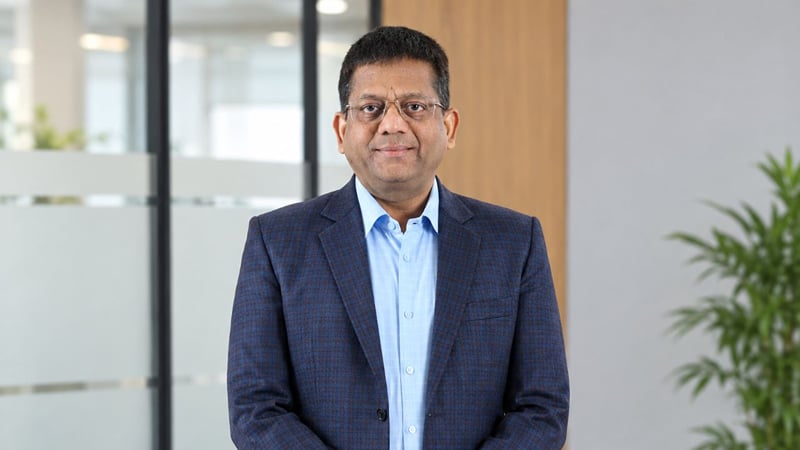
While enterprise leaders worldwide scramble to automate operations at the expense of headcounts, Aggrawal shows how a legacy fast-moving consumer goods enterprise can embrace cutting-edge technology by putting human psychology first.
While many executive teams today are caught up in hype, uncertainty, and rushing to adopt new tech, Palash Aggrawal offers something different—a steady, thoughtful approach. As Chief Human Resources Officer at LT Foods, the multinational behind everyday brands like Daawat and Royal Basmati Rice, Aggrawal leads the way in managing talent across borders and cultures.
Ask most HR leaders what keeps them up at night, and you will likely hear a panicked laundry list of technological disruptions, talent shortages, and economic volatility. Ask Aggarwal, and he gently rejects the premise altogether.
"I will not define anything as a challenge," Aggrawal says. "It is about what keeps you alive all the time—that sense of working on an agenda that has to be there continuously."
That distinction is far from mere corporate semantics; it sits at the heart of how LT Foods is navigating AI integration, managing a multi-generational workforce, and steering through persistent geopolitical uncertainty.
While enterprise leaders worldwide scramble to automate operations at the expense of headcounts, Aggrawal shows how a legacy fast-moving consumer goods enterprise can embrace cutting-edge technology by putting human psychology first.
De-escalating the AI Panic: Augmentation over replacement
When generative AI and enterprise large language models first swept through corporate consciousness, it triggered a wave of job anxiety across middle management. Much of the early conversation centred on efficiency cuts and the idea that traditional jobs would soon be obsolete. But Aggrawal saw things differently from the very beginning.
"Two years ago, when AI started entering the workplace, we kept track of the technology, but our initial step was simple: observe and understand," Aggrawal explains. "Culturally, there was a lot of fear around whether AI would replace people or make them obsolete. We were very clear: in our context, that was not going to happen."
This conviction tied directly to LT Foods’ foundational values. Aggrawal notes that whenever a major technological intervention arrives, the company’s first thought is always to explore how it can augment the business, elevate service levels, and create better career experiences, rather than reduce headcount.
By explicitly removing the threat of job replacement, leadership eliminated the primary driver of employee resistance. "When that option is not there, your mind automatically goes into the next option," Aggrawal points out. "You ask: how can we adopt technology to its full potential, and how can it help us take our business processes, systems, and decision-making to the next level?"
A Phased Architecture: From basic literacy to agentic AI
With psychological safety established, Aggrawal designed a structured, step-by-step adoption journey focused on guided intervention rather than sudden corporate mandates.
"The first step was to ensure people were not thinking in terms of fear," Aggrawal says. "We communicated clearly across different platforms that AI was going to help make their lives better at the workplace."
From general awareness, the company progressed to functional upskilling. HR established specialised cohorts across core business areas—such as Finance, Sales, Marketing, Operations, and HR itself. "We designed training programs in consultation with trainers specifically for each target audience," Aggrawal notes. "The entire discussion focused on how AI could help that specific function make better decisions and speed up their work."
To embed these tools into daily habits, LT Foods rolled out Microsoft Copilot licenses to a broad cross-section of staff. To encourage practical use, Aggrawal introduced an internal showcase initiative where employees present real-world use cases showing how they leveraged AI to optimise workflows or generate new business insights, with top solutions earning company-wide recognition.
Today, the organisation is moving into its next phase by hiring specialised AI engineering talent. "We have inducted experts from tech backgrounds to sit directly with our functional teams," Aggrawal says. "They understand our business context and process nuances, and together they are building customised AI agents for specific tasks. That is the next frontier for us."
Bridging the Generational Divide: Re-skilling mid-career talent
Introducing rapid technological change into an established enterprise inevitably highlights generational dynamics. Legacy FMCG companies employ seasoned professionals—some with decades of tenure—who work side by side with young digital natives.
Aggrawal believes the key to bringing experienced talent along lies in understanding human psychology. "Adoption speed slows down when you leave people to speculation and assumptions," he observes. "What stops people isn't an inability to learn, but psychological fears—fear of the unknown, or fear of stepping out of their comfort zone. People are always ready to learn if you enrol them properly."
To overcome this, LT Foods used live, contextual demonstrations rather than abstract lectures. Trainers sat down with veteran employees to show how AI tools could handle repetitive tasks, such as primary data gathering and formatting, in a fraction of the time.
"We show them how AI can help create reports in one-tenth or one-twentieth of the time," Aggrawal explains. "Now they can spend more time generating insights rather than crunching data. The technology handles the base-level tasks, while their level of thinking moves to strategic decision-making."
This practical handling has transformed anxiety into active engagement. Senior leadership now explicitly encourages teams to validate reports with AI before review meetings and praises staff who use technology to elevate their analysis.
Evolution of Strategy: Hiring for potential, agility, and mindset
As AI streamlines routine tasks, industry observers often assume legacy enterprises will scale back recruitment or shift exclusively toward hiring younger demographics. Aggrawal rejects this assumption.
"You don't hire people for age; you hire people for talent, skill set, and leadership competencies to deliver a particular role," Aggrawal emphasises. "Our strategy remains centred on hiring talent at the campus level, training them in our culture, and providing long-term career growth. External lateral hiring remains our last resort."
While the core philosophy remains steady, Aggrawal acknowledges that the required skill set has changed dramatically. When evaluating candidates today, interview panels look far beyond traditional functional knowledge.
"Adaptability, agility, technological acumen, and an analytical mindset—these are the key things that have evolved," Aggrawal notes. "The need for analytical ability has gone up significantly. It is now about how well you understand data points and read the signals around you."
Protecting the uniquely human core
As workplace systems become increasingly automated, Aggrawal believes HR leadership's central mission is to protect and nurture the qualities technology cannot duplicate.
"There are certain elements that technology can never replace," Aggrawal reflects. "Empathy cannot be provided by technology. Interpersonal communication, motivating people, making complex judgments in ambiguous situations, and inculcating core values—these will always remain uniquely human."
This human-centric focus is essential when managing a global workforce, especially as younger generations demand greater self-determination, well-being, and flexibility.
"Years ago, organisations decided people's careers. Today, employees decide their own careers," Aggrawal says. "HR has to play a careful role in providing platforms where people can communicate what they want, giving them the space to direct their growth while keeping them grounded in the organisational context."
For Aggrawal, maintaining this balance while expanding across more than 85 countries remains the ultimate priority. "At the end of the day, AI is created and directed by human intelligence," he concludes.
"Unprecedented challenges will always emerge, and generating solutions will always require human leaders. Technology is an exceptional tool, but human judgment and values remain in charge."
Topics
Author
Loading...