







Leadership
Vivek Ranjan on Zensar’s Winning Culture: Retention, learning, and value in an AI world





Learning is, in Ranjan’s words, “the nuts and bolts of everything we do.” But investment in learning is not made blindly; it is closely linked to business needs and customer requirements.
As the world of technology services accelerates towards an AI-powered future, organisations face a critical question: how can they prepare their people and culture not just to survive, but to thrive in times of relentless change? For Zensar Technologies, a mid-tier but fiercely ambitious IT services firm, the answer lies in a renewed sense of purpose, co-created values, and a living culture that is as dynamic as the industry itself.
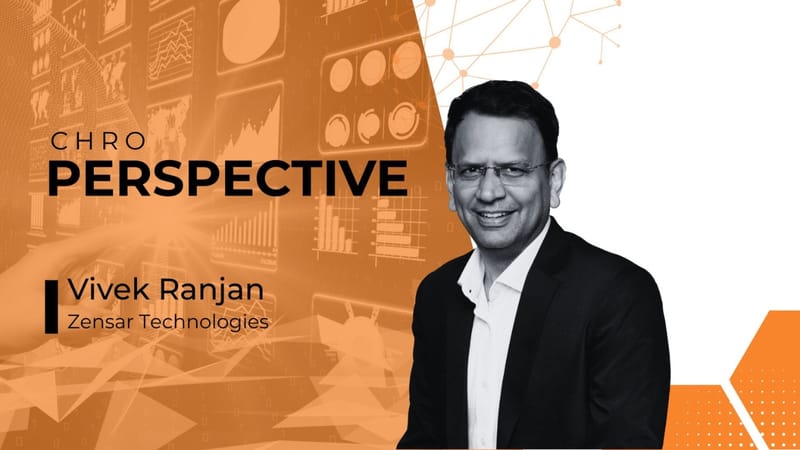
In an illuminating conversation with Vivek Ranjan, Chief Human Resources Officer at Zensar Technologies, the contours of this cultural transformation come sharply into focus. What emerges is a portrait of an organisation determined to harness change, foster resilience, and build a workplace where both people and customers are at the heart of every decision.
The genesis of a living culture
“I always return to the words of Daniel Coyle in ‘The Culture Code’—culture is not who you are, but what you do,” reflects Ranjan as we settle in for our discussion. It is a principle that underpins Zensar’s approach. Two years ago, Ranjan and his team set out to reimagine the company’s culture for a new era, anchoring it in the lived experiences of employees, clients, shareholders and the wider community. This was not an exercise in crafting lofty statements but in identifying the essential threads that define Zensar.
“We are part of the RPG Group, and across the group, there is a common thread—collaboration, care and excellence. We wanted to synthesise and harness the essence of Zensar and co-create our purpose and values,” Ranjan explains.
Our purpose is simple: 'Together, we shape experiences for better futures,' said Ranjan. “As we defined this purpose, we also refreshed our values to ensure they remained authentic and actionable.
At the heart of Zensar’s culture is a deep commitment to its clients. Everything the company does is centred around their needs.
“We operate with a spirit of togetherness as 'One Zensar,' empowering our people to pursue cutting-edge work and nurturing their growth at every stage. These principles form the foundation of our culture and guide how we work every day.”
Responding to industry disruption
Why did this transformation matter so much, and why now? Ranjan points to the tectonic shifts in the technology industry, with artificial intelligence driving what he calls the “most significant change” he has witnessed in nearly three decades.
“We are a mid-tier organisation, agile and adaptive. This industry shift—pivoting on AI—is an opportunity for us to break into the top tier. We wanted our purpose and values to energise people to make an impact. It was essential that our culture was not just authentic, but actionable and deeply connected to our business context.”
Ranjan elaborates, “For me, everything begins with a clear sense of purpose—that’s what aligns people and sets the direction. Our values are the guardrails, but in the end, it’s the everyday, consistent behaviours that truly shape culture. When those behaviours become second nature, that’s when culture starts to influence every decision and drives business performance.”
From slogans to scorecards
For many organisations, culture is an intangible ideal, difficult to measure or tie directly to outcomes. Zensar, however, has taken a more rigorous approach. “We have built a structured cultural values scorecard, aligning business metrics to each value,” Ranjan notes, offering concrete examples. Learning metrics are tied to the value of nurturing; client-centricity is tracked through a customer index, where Zensar now sits in the top quartile.
Perhaps most eye-catching is Zensar’s retention rate. “We are the only company in the industry with single-digit attrition. During the so-called Great Resignation, attrition rose to 25 percent. We analysed why people were leaving and realised it was not just about compensation, but about feeling invested in and being made future-ready. Our focus on learning and development, on building AI-enabled talent, has had a profound impact.”
We took a step back, analysed the reasons, and realised we needed to do something different. That’s when the idea of a skills-powered organisation and refreshed values took shape. Our purpose—together, we shape experiences for better futures—and our values of nurturing and client focus became our anchor. The result: single-digit attrition, happier customers, and an organisation ready for the future.”
He cites other examples, such as maintaining a hybrid workplace amid industry trends, always with an eye on what clients want. “Culture is not about one or two years. It’s about what you do for the next five or ten.”
The AUD (Awareness, Understanding, Demonstrated Behaviour) framework is used to ensure values are not just communicated, but internalised. “We tell stories, share examples, and close the loop from messaging to living the practice,” Ranjan says. “Performance management and recognition are now deeply grounded in our values.”
Learning as the engine of transformation
Learning is, in Ranjan’s words, “the nuts and bolts of everything we do.” But investment in learning is not made blindly; it is closely linked to business needs and customer requirements. “My learning team and I engage extensively with customers to understand the capabilities they value. Our structured talent transformation programme is connected to our strategic growth areas, and we have set up customer academies aligned to our service lines.”
What stands out is the emphasis on both domain knowledge and technical skills. “We have invested heavily in ensuring our technologists understand the client’s business, not just the technology. That is how we deliver real value.”
The results speak for themselves: employees who upskill and reskill are quickly deployed in new technologies, delivering immediate value to clients. “This has created a strong pull for learning—employees see opportunities to work on complex, cutting-edge projects, and it helps in their career growth.”
From Push to Pull: Embedding culture in daily life
How does one ensure that such a culture is embraced across the organisation, rather than imposed from above? Ranjan is candid about the journey. “There was a combination of push and pull. Initially, learning goals were included in everyone’s KPIs—20 percent of each person’s goals. We measured effort and outcomes robustly.”
But over time, the culture shifted. “What started as a push has become a pull. Communities and guilds have formed organically. Employees see their learning making a direct impact, and the culture is now ingrained in daily goals and tasks. We measure not hours, but value and impact.”
With revenue around $650 million, Zensar is a mid-sized player competing with much larger players. Yet, Ranjan believes this is a source of strength. “We always position ourselves as large enough to deliver, small enough to care. The spirit of care will always remain, even as we grow.”
He is acutely aware that culture is a key differentiator in attracting talent that might otherwise look to $10 or $ 50 billion firms. “There is a sweet spot here. We are like a startup, building the next and shaping the industry, but on the foundation of a strong, established culture. That’s what attracts the right talent.”
Navigating a Changing World
With operations in over 30 countries and core markets in the US, Europe and South Africa, Zensar is constantly navigating macro-level changes. Ranjan’s approach is pragmatic. “What is controllable is our culture, anchored on purpose and values. Our focus is on continuous learning, innovating, and delivering value to our clients. That’s where culture becomes vital.”
For leaders seeking to build and sustain strong cultures in fast-evolving industries, Ranjan’s counsel is clear. “Build a culture that is contextual and authentic. Co-create values with your people, then hardwire them into decisions, performance, recognition and governance.”
He cautions against treating culture as mere slogans. “Treat culture as an operating system. Measure what matters. Make culture visible and authentic, not just in posters but in daily rituals and storytelling.”
The road ahead
As our conversation draws to a close, Ranjan’s optimism is infectious. “We are at a point of inflection. Our best is yet to come. The passion to shape something new, on the foundation of a strong culture, is what sets us apart.” For Zensar Technologies, culture is not a static set of beliefs, but a living, breathing force—one that will continue to evolve as the company shapes experiences for better futures. It is a lesson not just for the technology sector, but for any organisation seeking to turn values into tangible impact in a world of constant change.
This story is part of CHRO Perspective. A People Matters series featuring bold ideas and real-world insights from India’s top CHROs. Stay with us for more perspectives that power the future of work.
Author
Loading...