







Leadership
What It Takes to Lead in India’s Green Energy Revolution: Inside Premier Energies’ talent transformation




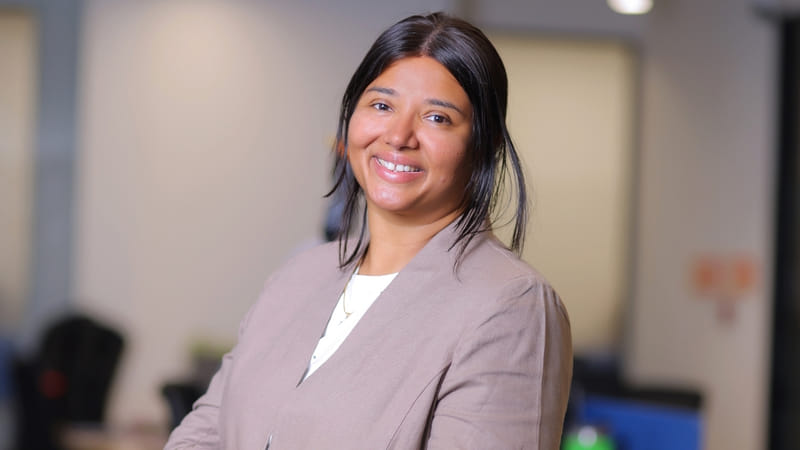
Niyathi Madasu, who has been at the forefront of Premier Energies’ growth as a founding leadership member, shares an unvarnished perspective on the acute skills gaps plaguing the industry, the persistent perception challenges around manufacturing careers, and the unique hurdles of talent acquisition in India’s rapidly expanding green energy landscape.
As India’s renewable energy sector accelerates at an unprecedented pace, the challenge of building a future-ready, resilient workforce has never been more critical. This in-depth People Matters interview delves into the heart of what it truly means to lead people through both technological and cultural transformation in the clean energy manufacturing sector, in a wide-ranging conversation with Niyathi Madasu, Chief Human Resources Officer at Premier Energies.
Madasu, who has been at the forefront of Premier Energies’ growth as a founding leadership member, shares an unvarnished perspective on the acute skills gaps plaguing the industry, the persistent perception challenges around manufacturing careers, and the unique hurdles of talent acquisition in India’s rapidly expanding green energy landscape. She unpacks how Premier Energies is intentionally building a diverse, inclusive, and digitally empowered workforce, from championing women-led assembly lines to redefining career progression, and from harnessing AI and robotics on the shop floor to forging deep partnerships with academia and government. Edited excerpts
The clean energy sector is undergoing a remarkable transformation, driven by technological advances and government policy. What are the biggest workforce and talent challenges facing your industry today?
It’s a very pertinent question that keeps evolving as the sector matures. Having been with Premier Energies for more than six years and as a founding member of our leadership team, I’ve witnessed first-hand the dramatic transformation of the sector, especially since we entered cell manufacturing in 2020-21.
The first major challenge is an acute skills shortage, particularly on the shop floor, where we require highly specialised technicians. India’s renewable energy sector is growing rapidly, but talent pools are fragmented and often concentrated in traditional manufacturing hubs such as Tamil Nadu and Gujarat. Our plants, on the other hand, are frequently in remote locations, so attracting talent is a real challenge. There’s also the perception issue—manufacturing is often seen as less attractive or ‘cool’ than IT, e-commerce, or other digital sectors, especially among young graduates who aspire to work in metropolitan areas.
Additionally, many graduates have never been exposed to the specific technologies we use—whether in solar cells, ingots, wafers, or advanced battery systems. Even experienced professionals are sometimes unfamiliar with the kind of high-tech manufacturing and automation that global players like Premier Energies deploy. The semiconductor talent pool, for example, is minuscule and still developing in India. Finally, infrastructure in rural areas often lags behind the requirements of today’s high-tech manufacturing, further complicating both the attraction and retention of talent. So, the challenges are multi-layered and require a systemic, long-term approach.
Given these hurdles—skills gaps, perceptions, infrastructure—how does Premier Energies attract, develop, and retain the right talent for such specialised and evolving roles?
For us, it’s never just about hiring to fill positions, but about creating a robust pipeline and ecosystem. We use a ‘hire, train, deploy’ model that aligns closely with our business roadmap. For instance, as we’re expanding, with new gigawatt-scale plants in Telangana and Andhra Pradesh, we proactively identify critical talent needs aligned to plant commissioning and machinery installation timelines, working backwards to ensure we have a strong bench well before operations begin.
We partner locally through BTech networks, district administration, government bodies, and NGOs, to mobilise young graduates, with a special focus on women. Our women-run assembly lines, for example, have consistently shown higher productivity, lower attrition, and better attendance. We also run our Graduate Engineering Management Trainee (GEM) programme, recruiting from tier-two and tier-three colleges and putting young engineers through a rigorous 18–24-month training programme. Many go on to become shift-in-charges and future shop floor leaders, seeding our culture into each new line we launch.
Continuous training is a central pillar, especially in areas where talent is scarce. We try to minimise dependence on contractors by building strong local partnerships and developing our own talent. Our approach is always to balance internal mobility, local sourcing, and future-facing development.
The key is constant engagement and the willingness to adapt our strategies as the business and technology landscape evolves.
You spoke about the remarkable success of women-led assembly lines. In an industry and context that’s typically male-dominated, and in such remote locations, what intentional changes did you have to make, culturally and structurally, to attract and support more women in these roles?
Today, around 30–35% of our workforce is women, and we’re targeting 40–50% by the end of this year, which is quite ambitious for manufacturing in India. Achieving this required a series of intentional, layered changes.
We started with cultural shifts, redefining roles and highlighting opportunities in labs, testing, inspection, and quality control, where women could excel. We gradually expanded into more operational roles, always ensuring the environment was welcoming and supportive.
Then there were significant infrastructural changes: we invested in well-lit premises, accessible restrooms, on-site crèche facilities, extended maternity leave, and robust anti-harassment (POSH) policies with zero tolerance and clear escalation mechanisms. We provide transport, allow for flexibility in shift timings, and ensure that women, especially those working late, are accompanied by female security staff. Crucially, we run ongoing supervisor sensitisation programmes so that men and women can work as equals and issues are addressed proactively.
We also make a point of celebrating our women leaders, whether in R&D, on the board, or in shop-floor management, to provide visible role models. These changes haven’t just helped us attract women, but they’ve also improved our overall productivity, reduced attrition, and created a more positive, respectful workplace culture.
You’ve seen the HR function from close quarters for more than two decades. How has your own role as CHRO evolved, especially in the last few years post-pandemic?
That’s such an important reflection. I’ve been in HR for over 23 years and have seen its transformation up close. Even as recently as 2019, HR was still considered a backroom function in many organisations. But the pandemic was a watershed moment. Suddenly, HR was at the centre of all employee welfare, communications, and strategic decision-making. Flexible work arrangements, which were previously seen as a luxury or an employee favour, became table stakes, especially for corporate and support functions.
The biggest shift, though, has been in HR’s evolution as a data-driven function. We now use analytics to predict attrition, track productivity trends, and proactively address workforce challenges. Digitisation has also streamlined HR operations; everything from onboarding to leave management is now digital. Yet, the strategic and human-centred aspects of HR have become even more vital. My role has moved from managing processes to enabling transformation, fostering culture, and acting as a key advisor to the CEO and leadership team. This is especially true in manufacturing, where the challenges of the shop floor and workforce engagement remain central to our success.
With AI and digitalisation making rapid inroads into manufacturing, there’s a lot of debate about whether technology will replace jobs. How do you balance these anxieties, particularly among your shop floor and entry-level workforce, with the opportunities for upskilling and augmentation?
For us at Premier Energies, AI is a tool for augmentation, not replacement. This is a message we communicate proactively, especially to our operators and technicians. Our manufacturing enhancement systems (MES) are AI-based tools that support predictive maintenance, quality control, and process optimisation—but they still rely on human oversight and decision-making.
Interestingly, we’ve seen that the older generation of workers is sometimes more eager to adapt to these changes as they don’t want to be left behind and are excited to learn new skills. The younger, digital-native generation, on the other hand, can be more anxious, perhaps because they’re exposed to more narratives about AI-driven job loss. We hold regular town halls and focus groups to address these concerns. Our approach is to help everyone see themselves as ‘operator plus’ or ‘technician plus’—someone whose skills are being enhanced, not made obsolete, by technology. This mindset shift has eased anxieties and made the adoption of digital tools much smoother across the organisation.
At the same time, we ensure robust training for these tools and create clear pathways for employees to upskill and grow alongside the technology. It’s about making everyone a stakeholder in the digital transformation, not just a bystander.
As Premier Energies scales up rapidly, the competition for skilled talent, especially in semiconductors and advanced manufacturing, has never been fiercer. Once you’ve attracted the right people, how do you retain them? What are your biggest levers for keeping talent engaged and committed?
Retention is an ongoing battle, especially as we compete with other sectors for a very limited pool of high-tech talent. Compensation is important, but it’s just the baseline—any company can match a salary. What truly differentiates us are four things:
First, our culture. We’ve worked hard to build a workplace where people feel connected, respected, and genuinely enjoy working with their colleagues. Culture is the glue that keeps people here.
Second, our ESOP programme. We’ve had exceptional success with this. Employees have created real wealth through our ESOPs, which serve as a strong financial anchor and give them a tangible stake in the company’s growth.
Third, clear career progression. For instance, our graduate engineering trainees can see a path from the shop floor to leadership roles within a few years. We invest heavily in training, exposure to global best practices, and cross-functional development. This is especially attractive to young engineers who want to build a meaningful career, not just a job.
Fourth, the chance to work with cutting-edge technology at scale. As we grow into one of India’s largest cell and module manufacturers, our people have the opportunity to work on world-class projects and technologies. That’s a huge draw for ambitious talent.
Of course, we’re realistic—the war for talent is very real. It’s a constant effort for our HR and leadership teams to keep people engaged and growing, but these pillars have helped us retain our best people.
Many leading companies are partnering with academic institutions to co-develop courses tailored to their industry needs. Are you doing something similar at Premier Energies? How do you collaborate with universities and technical institutes to ensure graduates are industry-ready?
Absolutely. We see academia as a key partner in building the workforce of the future. Our approach moves in two directions. Firstly, we have our own skill development labs and training centres, where both new hires and existing employees can gain hands-on experience, often working in simulated environments that mirror the real shop floor. This gives people practical, job-ready skills before they even begin.
Secondly, we work closely with ITIs, BTech colleges, and even institutions like IIT Mumbai to co-create course modules and expose professors to our manufacturing environment. Professors visit our plants, interact with our R&D teams, and help us shape both training and recruitment. We also partner with local and state governments, especially in Telangana and Andhra Pradesh, to influence curriculum and mobilise talent. These collaborations are not just about hiring, but about building an ecosystem where industry and academia co-evolve. It’s been a win-win for us.
As someone shaping HR strategy at the forefront of clean energy, what do you believe are the biggest misconceptions about manufacturing in India today, and what message would you like to share about the future of diversity and innovation in this sector?
If I could leave your readers with one message, it’s that manufacturing in India is no longer a male domain, nor is it the heavy, old-fashioned industry so many still imagine. Technology has completely transformed the shop floor, and so has the workforce. At Premier Energies, our journey has shown that intentional changes in culture, infrastructure, and leadership can bring women into the heart of manufacturing and drive tangible business results. Gender diversity is not just a tick-box exercise; it’s a competitive advantage.
More broadly, the sector is evolving at breakneck speed. Building an inclusive, future-ready organisation is not just about keeping pace with technology, but about cultivating people who are adaptable, empowered, and inspired to grow. That’s the real heart of the energy transition—and I believe India’s manufacturing sector is poised to lead the way, if we keep putting people first.
Author
Loading...