







Organisational Culture
Leadership for a changing workforce: Spotify’s Shreyas Haridas on what Gen Z values





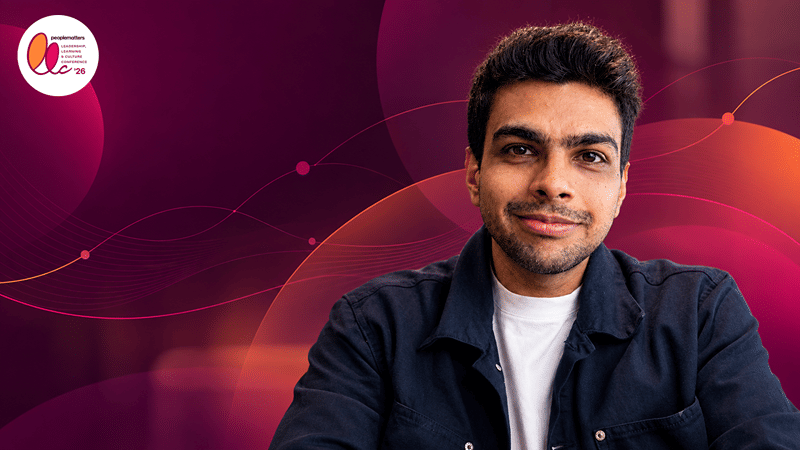
Ahead of People Matters LLC 2026, Shreyas Haridas explains why leaders must rethink feedback, growth, trust and early-career development for a changing workforce.
Many leaders still interpret frequent questions, faster career expectations and reduced deference to hierarchy as signs of impatience or weak loyalty. Shreyas Haridas sees a different signal: Gen Z is asking organisations to make the employment relationship clearer, more meaningful and more reciprocal.
As HR Director for JAPAC & SAMEA at Spotify, Haridas brings a multi-market perspective to a generation whose expectations vary by geography but share several common threads. Flexibility, mental wellbeing, purpose and the ability to relate to what an organisation stands for are becoming central to how younger employees assess work.
“It’s not necessarily the company that pays the highest money, but what gives them the most meaning to their work and, of course, helps with their wellbeing,” he told People Matters.
Ahead of People Matters Leadership, Learning & Culture Conference 2026, where Haridas will join the flipped panel Leading a Workforce That Didn’t Sign Up for Your Playbook, he spoke about the leadership assumptions that need to change, and the practical redesign required across feedback, growth, culture and early-career work.
Need to stop treating questions as a lack of loyalty
Haridas believes some of the most common descriptions of Gen Z—impatient, disloyal or unwilling to work hard—are often generalisations made before leaders understand what motivates younger employees.
The loyalty question is a useful example. Frequent job moves may be visible, but they do not necessarily prove that younger employees are unwilling to commit. Purpose, workplace relationships, belief in the organisation and meaningful work can materially influence whether they stay.
“There’s a common trope that Gen Z is disloyal,” he said. “But if the parameters and factors are what the Gen Z workforce really wants, they would, on average, stay for four to five years in the same organisation.”
For leaders, the shift is from asking why younger employees leave so quickly to understanding what the organisation has given them a reason to stay for.
Authority has to be earned through credibility
The more difficult adjustment may concern hierarchy. Leaders with three or four decades of experience can find it uncomfortable when someone early in their career openly questions a decision. Younger employees, however, may view expertise, impact and behaviour as stronger sources of credibility than tenure or title.
“Authority is not something default. Authority comes from respect,” Haridas said. That respect, he added, comes from the quality of a leader’s work, the knowledge they bring and the impact they have on other people—not simply from seniority.
This does not remove accountability or decision rights. It changes the basis on which influence is built. Leaders who explain context, demonstrate competence and remain open to challenge are more likely to earn commitment than those who expect compliance because of position.
Feedback must move at the speed of work
Annual and half-yearly performance conversations sit uneasily with a generation accustomed to immediate information and rapid iteration. Haridas said younger employees want feedback that is regular, specific and useful while the work is still in progress.
“They want ongoing and regular feedback, not your half-year performance evaluation and the end-of-year performance evaluation,” he said. “For Gen Z, it’s an ongoing thing. It’s not a point in time for once or twice a year.”
Just as importantly, feedback needs to operate as a dialogue. Younger employees want the opportunity to respond, clarify context and participate in the conversation rather than simply receive an assessment.
This places a larger responsibility on managers. The answer is not another performance form; it is building the managerial discipline to notice work, hold useful conversations and course-correct continuously.
Career growth cannot depend only on the next title
Younger employees may want visible progress, but Haridas cautioned against interpreting growth only as faster promotion. Organisations can create a stronger sense of momentum by offering new skills, broader exposure, harder problems and greater autonomy.
“How can you demonstrate growth without maybe promoting people?” he asked. “How do you possibly give them new skills, new exposure, opportunities to present their work to larger audiences and opportunities to work on newer problems that they can solve?”
The opportunity to work independently on complex problems, share outcomes and build fresh capabilities can carry more developmental value than moving mechanically from manager to senior manager.
This requires career architecture that recognises lateral experience, project-based contribution and capability growth, not only vertical movement through a fixed hierarchy.
Gen Z is questioning the structure of work itself
The generational shift extends beyond benefits and career paths. Haridas believes younger talent is willing to question some of the basic assumptions around how employment is organised.
“Why do you need to have a nine-to-five? Why do I need to work only with one organisation? Why can I not be freelancing with three organisations at the same time? Why do I necessarily need to be paid every 30 days?” he asked.
Organisations will not adopt every alternative. But dismissing the questions would miss what they reveal: a globally aware workforce is testing whether inherited systems still serve the work, the employee and the business.
HR’s role is to listen carefully, distinguish passing preferences from structural shifts and assess where greater flexibility could improve both talent outcomes and performance.
Culture cannot sit with HR alone
Purpose and cultural fit influence attraction and retention, but Haridas rejected the idea that HR can deliver culture on behalf of the enterprise.
“HR could be the custodian of culture, but ultimately the responsibility of the culture is for everyone in the organisation,” he said. “The general counsel or the CFO or the COO is equally responsible for culture as the CHRO is.”
HR can bring insight into motivation, organisation design, rewards and growth. Employees, however, experience culture through how managers speak to them, how decisions are explained and whether leaders follow through on stated values.
For Gen Z, the gap between policy and behaviour is particularly visible. A compelling purpose statement will carry little weight if the everyday experience contradicts it.
AI risks removing the work through which people learn
The intersection of AI and junior talent creates a more complex challenge. Entry-level roles often contain repeatable tasks that are easiest to automate. Removing those tasks may increase immediate efficiency, but it can also eliminate the work through which employees learn a product, process or profession from the ground up.
Haridas said organisations need to give younger employees opportunities to undertake work that may appear routine but helps them understand how the business functions. Otherwise, they risk creating future managers who have not experienced the foundational work they will eventually oversee.
AI adoption, he stressed, is here to stay. The leadership question is how to capture its benefits without breaking the apprenticeship pathway that builds judgement and institutional understanding.
Begin with trust, autonomy and a safety net
For Haridas, younger employees perform best when leaders begin with greater trust and autonomy, supported by enough oversight to help when something goes wrong.
“The default can be more trust, more autonomy, but with some oversight where, if something goes wrong, somebody can step in, not reprimand, but actually help course-correct things,” he said.
That trust works both ways. Younger employees must demonstrate that even when their working style differs, they can deliver independently against business priorities.
The emerging leadership model is therefore neither unrestricted freedom nor a return to command and control. It combines clarity on outcomes with room to act, plus support that helps employees recover and learn when decisions do not go as planned.
Taking the conversation to LLC 2026
Demographics make the redesign unavoidable. As younger employees form a larger share of the workforce, organisations will need to reconsider the assumptions built into leadership, performance management, careers and culture.
At People Matters LLC 2026, Haridas will take this conversation forward during Flipped Panel: Leading a Workforce That Didn’t Sign Up for Your Playbook. The session will explore what it takes to earn trust, rethink authority and drive performance with a generation that values purpose and transparency over titles and tenure.
He is also looking to explore how other organisations are responding, as he is keen to understand how others are approaching some of these topics that are to be discussed at the conference, especially around Gen Zs.
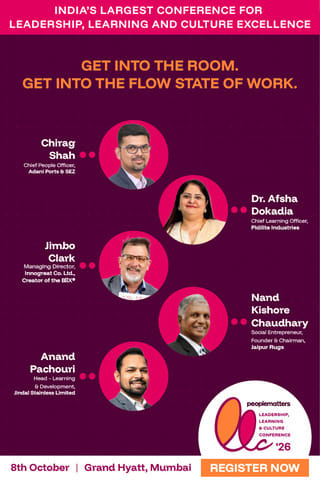
Join the room at People Matters LLC 2026 on 8 October at Grand Hyatt, Mumbai, and be part of the conversation on the leadership habits that must change for a workforce rewriting the rules of work.
Topics
Author
Loading...