







Organisational Culture
Edelweiss’s Saba Adil on HR innovation through culture and co-creation


 ||
||Updated on


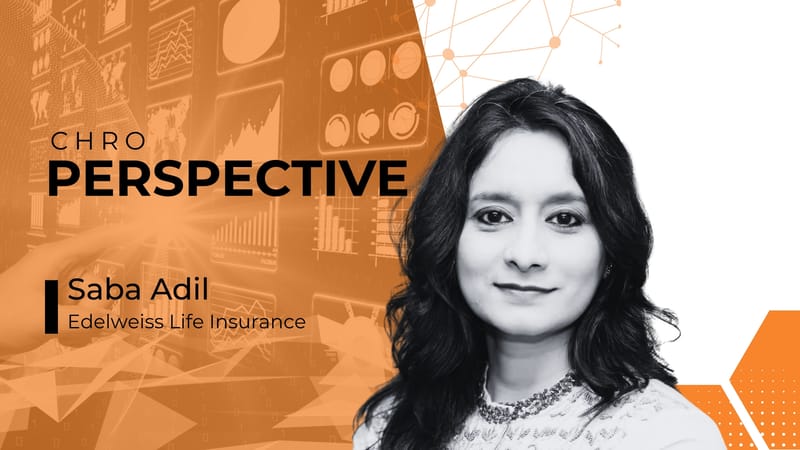
Edelweiss CHRO Saba Adil shares how curiosity, co-creation, and culture are shaping the future of HR in India’s fast-evolving insurance sector.
The insurance industry is undergoing rapid transformation—driven by digital disruption, evolving customer expectations, regulatory shifts, and the need for greater agility. In this landscape, building a future-ready workforce and culture is no longer optional; it's a strategic imperative. We spoke with Saba Adil, CHRO at Edelweiss Life Insurance, to understand how her team is navigating these shifts—from co-creating employee experiences to fostering a culture of curiosity and inclusion. Edited excerpts below:
Q. With over 20 years of experience as an HR practitioner, especially in the BFSI and insurance world, how have you seen workforce challenges evolving in this industry over time?
I have been in this field for over 20 years and have seen workplaces evolve significantly. From an employee perspective, there's been a huge shift.
Earlier, the way of working and things like benefits, onboarding, and work timings were more prescriptive and came entirely from the organisation. Now, I see a big shift towards co-creation. It's no longer "this is what you'll do" but "this is how we'll team up to create a workspace where people enjoy their work."
Enjoyment comes from a sense of belonging and purpose, but at its core, it's about people connecting with the organisation and feeling like they are a partner in creating the workplace for now and the future. If employees feel enabled—with the right tools, technology, development opportunities and managerial support—the organisation automatically becomes successful.
People want to learn and contribute. Of course, earning is important, but it's becoming more of a hygiene factor. A few years ago, people talked about long careers, but now they ask, "What's in it for me?" over the next two or three years. They're looking for growth, challenges, and exposure to new projects. This is a shift from a prescriptive approach to a co-created ecosystem. People want to know how their role contributes to the larger organisational goals and that their contribution is meaningful.
There are also technological shifts with buzzwords like AI and ML. A significant trend I've noticed in the last 12 months is that people are very willing to upskill. Previously, we had to push for training participation, but now we've changed our approach by including people in their own development journey, from needs assessment to program design. We even run focus groups with program attendees to get their recommendations for the next batch. This has made our training programs more relevant, leading to attendance rates of over 95%. It’s a voluntary process, but because the programs are relevant, they become sought-after through word-of-mouth.
Post-COVID, flexibility has also become a hygiene factor. People are asking about flexible work arrangements and if the organisation is outcome-driven rather than focused on "showing up for nine hours."
Q. It is interesting to see that employees are self-motivated to learn. What do you think works? Is it the fear of technology, job loss, or just a motivation to grow? And how do you measure the impact of this?
I think the willingness to learn comes from seeing so much change happening outside. The environment itself is nudging people to change. There's an "uncomfortable point" where you don’t have the skills for the future, but a lot of change is happening, and you want to upskill yourself. As an organisation, we're leveraging that motivation.
We're trying to build a culture of curiosity in the workforce. When new things like ChatGPT or other AI tools come out, people want to know more. This curiosity quotient has generally gone up because the environment is constantly evolving. I don’t think it’s driven by fear, but rather by the desire to be in the know how and to integrate new tools and technologies to service customers better, get more sales, and improve operational efficiency.
To measure the impact, we have various metrics. For our high-potential programs, we track retention, performance and productivity (seeing if their ratings move up), and their career movements. We check if they're taking on additional roles after the intervention. Our training programs are designed with pre- and post-surveys to see how the needle has moved. It's not just about formal learning; it's about role movements and taking on additional responsibilities.
We also have informal sessions like "Lunch and Learn," where employees themselves ask to learn about things like Python, Project management etc. We leverage our internal talent to lead these sessions, which creates a willingness to teach and share knowledge. It’s all about creating an environment that enables continuous learning and growth.
Q. Edelweiss Life Insurance is recognised as one of India's top 100 Best Companies to Work For. How do you manage infrastructure, technology, and reliability to create a workplace that meets employee needs?
Our approach to infrastructure is simple: we create a collaborative and energetic environment. Workspaces are designed to be simple, convenient with a good vibe where people feel like coming to work. Our primary focus is on a strong culture. If the culture is good, everything else falls into place. The main engagement is with your manager, connect with the leaders, doing good quality work and growth. If relationships are strong and policies are progressive, people feel heard, then it’s a a win-win. We also have an outcome-driven performance management culture, where people are not measured just by the time they show up but by the work they do and the impact they create.
Q. How does HR help the organisation prepare for industry-wide changes like technological disruptions and policy changes?
First and foremost, it's crucial to communicate what the change is about, from an industry, customer, company, and individual level. We give people as much clarity as possible, even in ambiguous situations. We include employees in decision-making at critical junctures and emphasise the larger purpose of the change, linking it to our company's mission.
We also focus heavily on change management. We pilot new initiatives and technology rollouts in specific locations to get feedback from real users. The project managers visit the branches, observe how people are using the new systems, and hold focus group discussions to address challenges before a pan-India rollout. This approach ensures high adoption rates because employees feel their feedback is valued.
Q. Are there any cultural tenets you leverage to make technology-led change resistance successful?
Collaboration is key. We create a collaborative culture where different teams and functions can share insights and solutions. A lot of solutions are already present within the organisation; it's about bringing people together to find them. We also create a culture of recognition by celebrating early successes and rewarding desired behaviours. By showcasing success stories, we can motivate others to adopt new practices. When people see that someone else has succeeded, they are more willing to try.
Q. The insurance sector is balancing digital disruption, changing workforce expectations, and regulatory demands. Within this context, what are the most pressing HR challenges Edelweiss Life Insurance is grappling with today?
The biggest thing on my mind is the continuous reskilling and upskilling trend. We don't know what the future holds, so our focus is on keeping our workforce agile and ready to adapt. We have programs for high-potential employees and use various online platforms to encourage self learning. We also leverage our internal talent for knowledge sharing.
Another significant challenge is retention. By being proactive with employee engagement and listening, we have reduced attrition by 8% in the last year. Our approach is to foster a workspace where people can be themselves and feel heard. We've also made strides in increasing women's participation in our workforce, from 30% to 33%, even in our sales teams. This is a big win for our industry.
Q. What specific interventions—beyond policy—are you implementing to not just retain but actively advance women into leadership roles at Edelweiss Life Insurance?
The biggest drop-off happens at the mid-career stage. We address this in two ways. First, when women return after a break, we look at the role and not the break. We ensure the role, title, and compensation are commensurate with what they left, so they don’t feel undervalued.
Second, we actively work to nudge women to be more ambitious. We run women's mentorship programs where we encourage them to think big and not let temporary life stages, like maternity or caregiving, define their long-term career aspirations. We emphasise that it's okay to go slow for a period, but they must maintain the mindset of ambition. With flexible work arrangements and a supportive culture, we believe they can continue their journey. It's a fine balance between empathy and encouraging them to own their careers.
Q. Given the rapid pace of technological disruption and evolving workforce aspirations, what do you believe should be the top priority for HR leaders in insurance over the next 3–5 years? If you had to leave your peers with one actionable piece of advice to future-proof both talent and culture, what would it be?
My advice would be to keep the curiosity quotient high. Create an environment and ecosystem where people are willing to learn and contribute. Build a culture where people love to come to work by giving them autonomy and avoiding micromanagement. Focus on building good leadership strength, because managers are the primary engagement point for employees. Ultimately, HR's huge responsibility is to create a high leadership quotient. Also, cultivate a social fabric and a narrative that binds people together, and don't forget to celebrate and recognise even small successes.
(This story is part of CHRO Perspective. A People Matters series featuring bold ideas and real-world insights from India’s top CHROs. Stay with us for more perspectives that power the future of work.)

Loading...