







Organisational Culture
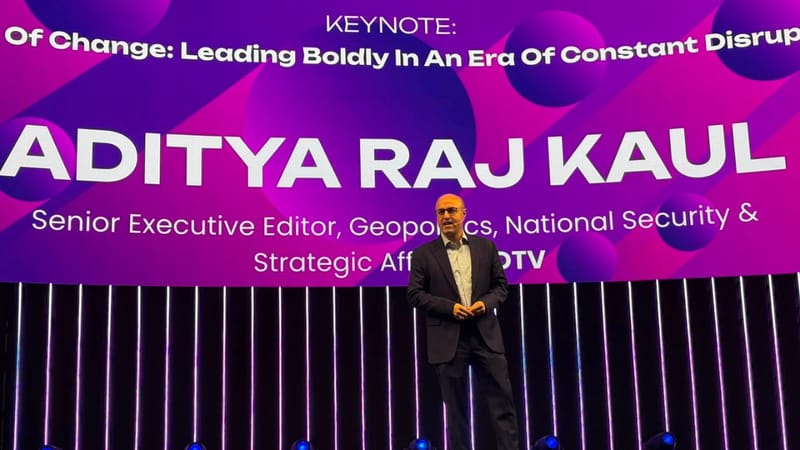
"Gen Z isn't changing work. They're changing leadership," said Aditya Raj Kaul at TechHR India 2026.





For decades, leadership has largely been measured by authority, structure and oversight. Kaul believes that equation is changing.
As organisations race to embrace AI, the leadership challenge is becoming increasingly human.
Addressing the audience at TechHR India 2026, journalist and geopolitical analyst Aditya Raj Kaul said the future of leadership will be shaped by leaders who understand people as well as technology.
For a workforce led by Gen Z, trust, flexibility and open communication are no longer optional. They are expected.
Trust over control
For decades, leadership has largely been measured by authority, structure and oversight. Kaul believes that equation is changing.
Today's workforce, particularly Gen Z, expects a different relationship with employers. Flexibility, openness and mutual trust are becoming non-negotiable. Leaders who continue to rely on rigid workplace norms risk losing relevance with the very talent they hope to attract and retain.
Summing up the mindset of a new generation, Kaul remarked, "If we want to leave, we want to leave. If we want to work from home, we want to work from home."
The comment was not simply about hybrid work or leave policies. It reflected a broader shift in workplace expectations. Gen Z is looking for autonomy rather than control and trust rather than constant supervision.
For organisations, the challenge is no longer enforcing attendance. It is creating an environment where employees feel empowered, trusted and motivated to contribute.
People before platforms
AI may be transforming how work gets done, but Kaul argued that technology alone will not determine organisational success.
Digital tools can improve efficiency, automate processes and accelerate decision-making. They cannot replace empathy, trust or authentic leadership. Those remain distinctly human capabilities.
Leaders, he said, must ensure that technology serves people rather than the other way around.
Organisations that focus only on digital transformation while overlooking employee experience risk falling behind.
As Kaul put it, "The change is constant."
That reality demands leadership models that evolve just as quickly as the workforce itself. Instead of relying on outdated playbooks, organisations must build cultures that embrace continuous learning, open dialogue and adaptability.
The leaders who thrive will not necessarily be those with the most advanced technology. They will be those who understand people best.
Conversations that matter
In an era of information overload and rapid change, employees expect honesty and transparency from their leaders.
Communication is no longer about cascading decisions from the top. It is about creating meaningful dialogue, listening to different perspectives and building credibility through consistency.
Trust, he suggested, is earned through conversations rather than corporate messaging.
Leaders who actively listen to employees are better equipped to understand changing aspirations, respond to concerns and create workplaces where people feel heard and valued.
Purpose beyond position
Kaul also encouraged professionals to focus less on titles and more on purpose.
Reflecting on his own journey, he spoke about the importance of staying curious, pursuing meaningful work and remaining committed to something larger than personal success.
Recalling a lesson from former President Dr APJ Abdul Kalam, he shared one of the leader's most enduring messages, "Dream, dream. Dreams transform into thoughts."
For Kaul, leadership is ultimately driven by purpose. Titles may create authority, but purpose inspires commitment. Leaders who remain grounded in integrity, curiosity and continuous learning are better equipped to navigate uncertainty and inspire those around them.
A new leadership mindset
Kaul's message at TechHR India 2026 was ultimately a call for organisations to rethink leadership in the context of a changing workforce.
As AI reshapes jobs and Gen Z reshapes workplace expectations, the future of leadership will depend less on command and control and more on trust, adaptability and authentic human connection.
Technology will continue to evolve. Employee expectations will continue to shift. The organisations that succeed will be those whose leaders evolve just as quickly.
Topics
Author
Loading...