







Organisational Culture
How investigation-ready HR teams can build ethical organisations





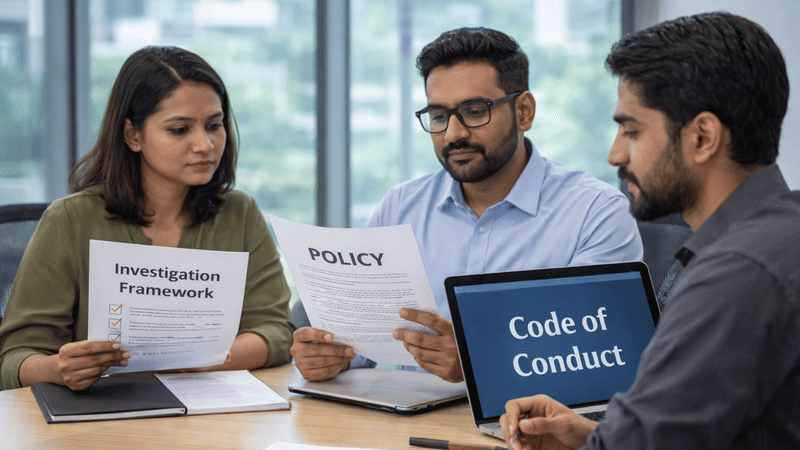
As misconduct risks rise and workplace boundaries blur, HR teams must evolve from reactive problem-solvers to investigation-ready custodians of ethics, trust, and organisational integrity.
Co-authored by: Arpinder Singh and Akshay Mehra
Amidst heightened awareness and media scrutiny over misconduct issues in organisations and the amplifying effect of social media trials, organisations can no longer afford to turn a blind eye towards conduct-related issues. Recent news headlines around employee moonlighting, behavioural inconsistencies with the company code of conduct, and gross negligence of duties—all point towards growing reputational, legal, and cultural repercussions of such incidents. This underscores the need for timely and thorough investigations.
Evolving HR risk landscape
The HR risk landscape is multifaceted. With increased adoption of hybrid work models, the boundaries of workplace behaviour are becoming increasingly fluid, especially within global organisations where hiring transcends geographical constraints. While this expanded hiring opportunity offers strategic advantages, it also introduces new challenges in managing employee conduct. Diverse cultural backgrounds, varying work ethics, and differing interpretations of professional norms can compound the risk of misalignment with the organisation’s policies. Instances of misconduct, such as dual employment, policy violations and harassment to ethical breaches, are on the rise. These violations, if unchecked, can lead to employee retaliation, a hostile working environment, and potential lawsuits.
Developing an investigative bent of mind
Traditionally, HR professionals have been tasked with issues, such as addressing attendance discrepancies or payroll concerns, that require straightforward resolution. However, today’s workplace presents a more complex challenge. Serious misconduct allegations, including workplace harassment, discrimination, or negligence of duties, demand deeper analysis and multipronged inquiry to reach a fair conclusion. To uphold organisational integrity, HR must evolve beyond its conventional role and adopt an investigative mindset. Positioned as mediators between employees and employers, HR leaders are uniquely placed to examine both perspectives objectively. This enables them to independently assess facts, navigate sensitive dynamics, and ensure that every case is approached with fairness, legal awareness, and procedural rigour.
Implementing standard frameworks for conduct investigation
As the first line of response to employee grievances and conduct concerns, HR professionals must develop the investigative acumen required to conduct thorough checks along with possessing a deep understanding of employment law, regulatory frameworks, and the psychological dynamics that often characterise case of misconduct. This calls for building a framework that can guide investigations in the right direction. A well-defined investigation process typically includes the intake and triage of complaints, preliminary fact-finding, formal inquiry procedures, documentation of findings, and communication of outcomes. Each of the following 4 steps must be executed with fairness, confidentiality, and complete procedural transparency to inspire trust.
1. Understand the implications
Every complaint is different and must be dealt with accordingly. Before beginning an investigation, HR professionals should spend some time understanding the nuances of the allegations so that they can determine the best course of action.
2. Gather data
The key to a thorough investigation lies in the systematic gathering and preservation of relevant evidence. This ensures all proof pertaining to the issue is in place beforehand and helps build a strong case for the argument.
3. Conduct interviews
Sensitivity is crucial when dealing with allegations of misconduct. Interviews offer an opportunity for dialogue and shed more light on the circumstances that led to the issue—enabling HR to make an informed decision.
4. Analyse and take action
With all facts and statements in place, HR professionals must carefully consider the intent behind the breach of conduct to draw unbiased and fact-based conclusions. Post this; legal notices—if needed—should be sent out to ensure complete compliance.
Standardising these elements not only improves efficiency but also ensures transparency and alignment with legal standards. A structured approach can help organisations mitigate risk and foster accountability, as evidenced in a recent engagement with a large global IT services company, where EY supported the HR function by establishing a dedicated Project Management Office (PMO) to manage and resolve conduct cases at scale. The initiative focused on building a repeatable and defensible investigation framework. With the framework in place, HR functions will be equipped with invaluable data insights and best practices that can be applied to future investigations.
The future is HR
In the age of Artificial Intelligence, innovation takes place at lightning speed, but enduring success still depends on human insight and effective governance. Organisations that strive for sustainable growth must embrace a people-first approach by prioritising employee well-being, inclusion, and ethical culture. The role of HR must also evolve to meet the demands of this transforming workplace. By adopting a structured, legally sound, and empathetic approach to investigations, HR leaders can gradually build workplaces that proactively nip conduct-related issues before they snowball into crises.
Co-authored by: Arpinder Singh, India & Emerging Markets Leader and Akshay Mehra, Senior Manager, EY Forensic & Integrity Services

Loading...