







Organisational Culture
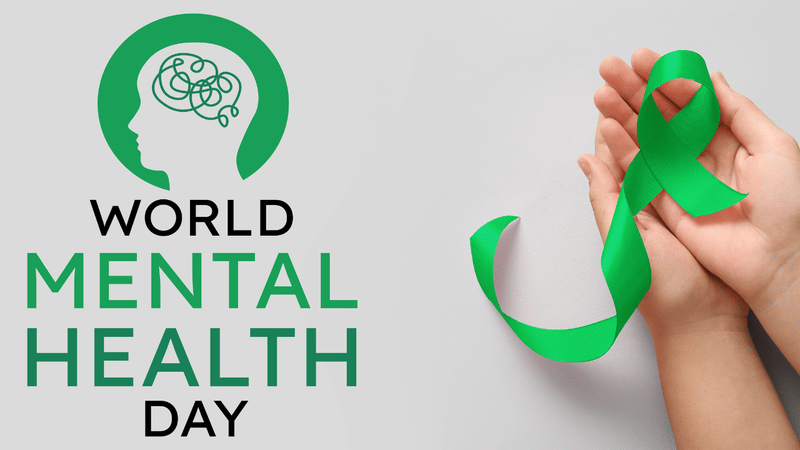
It’s ok to not be ok




Authored by: Aarti Harbhajanka, Co-Founder, CHRO & MD, Primus Partners
The workplace of today is highly evolved and complex, battling multiple challenges at the same time. The mental health of employees can be impacted by both external factors such as rapidly advancing technology, pandemics, wars, climate change-related disasters, economic recession, as well as internal organisational factors. However, while the trigger for mental health can be from within or outside the organisation, the effects are felt within the organisation itself. An employee worried after reading news about global layoffs due to recession brings their fear with them when they step into the workplace. Another employee brings their compounded worries about the rapidly spreading pandemic into the workplace as well. Stress from external triggers thus directly impacts mental health, and the aftereffects are carried forward to the workplace.
The workplace has thus become the critical conduit to address employee mental health. A recent State of Emotional Well-being report of 2024 has thrown up some worrying statistics. Mental health concerns grew to become the second-largest concern for which members sought help; 23% of individuals sought support for work-related issues and wanted to work on difficult workplace relationships. Given this scenario, mental health is something that organisations cannot afford to ignore. As quoted in a WHO policy brief, “regardless of whether people have a mental health condition, workplaces can be places that enhance or undermine mental health.”
Organisations have put in place a variety of programmes to address mental health – stress management programmes, Employee Assistance programmes, wellness programmes and mental health trainings, among others. While it is heartening to see that mental health issues are being more widely accepted, one must also beware of certain pitfalls along the way. Mental health is an outcome we want to safeguard, but for every organisation the triggers that impact mental health may be different.
When organisations design interventions around mental health, it may be beneficial to seek guidance from the global frameworks and guidelines available to us on the subject. WHO framed guidelines on mental health at work in 2022 and followed it up with a policy brief together with ILO. These guidelines were framed on the basis of a study of factors and highlighted some organisational interventions that impacted mental health, such as high workload and work pace, overtime and long working hours, workplace bullying, effort-reward imbalance, role ambiguity and role conflict, among others. Other treaties include WHO’s Comprehensive Mental Health Action Plan (2013-2030), ILO fundamental Conventions on OSH – the Occupational Safety and Health Convention, 1981 (No. 155) and the Promotional Framework for Occupational Safety and Health Convention, 2006 (No. 187), and ISO (ISO 45003), which provides a structured framework for promoting psychological health and safety in the workplace. In India, there is the Mental Healthcare Act of 2017 and the National Health Policy (NHP), 2017, which focus more on protecting the rights of people with mental illnesses but at present do not impose a mandate on organisations when it comes to mental health.
To truly gauge the pulse of the workforce, it helps to diagnose the real problem and understand it through the lens of tools such as satisfaction or happiness surveys, exit/stay interviews, employee connects and such other interactions. From this one can understand the triggers impacting mental health and then address the problem by devising solutions or interventions that tackle the issue head-on.
For example, an analysis of our Great Place to Work surveys at Primus revealed that Gen Z needed better representation. We thus devised an initiative where the organisation voted for its Gen Z representative to our board. This representative was responsible for tabling their generation’s perspectives in order to help the Board understand their challenges better.
We are witnessing that different generations also have different priorities. Boomers and millennials are perhaps not as vocal when it comes to mental health as are the Gen Zs. Therefore, regularly assessing the impact of mental health programmes and adapting them to the changing needs and culture of the workforce can help strengthen their impact and adoption. In spite of increasing openness to mental health, there is still a taboo around opting for employee assistance programmes. Organisations may offer mental health programmes, but how many employees truly avail them? If we are sensitive to the fact that such programmes can only thrive in cultures which openly encourage employees to avail these programmes, it will drastically influence the success of such initiatives.
AI and technology can help us mould our wellness offerings to meet the needs of different generations within the workforce. We may also choose to track future expectations, for we have no idea at present what Gen Alpha and Beta will demand.
We live in an age of a conscious workforce. The control of choosing employment has gradually shifted from the employer to the employee. Employees are increasingly choosing organisations that offer a comprehensive experience, including an enabling work environment, sustainable practices, and sensitivity to global positionalities, in addition to compelling benefits – factors that are of far greater value than just compensation. In such an era, organisations must become listening spaces that are agile, sensitive and responsive to changing needs. Organisations must critically assess their cultural interventions to ensure that they create psychologically safe workplaces, which provide adequate platforms for employees to also address their emotional needs. And most importantly, it is essential that we continue the conversations that raise awareness and acceptance about the fact that “it is ok to not be ok.”
Just as AI has forced us to reassess our priorities, similarly the demands of the workforce are also forcing us to reassess the kinds of organisations we want to be. The choices we make today will pave the way for the world we build tomorrow.
Loading...