







Organisational Culture
Who gets recognised at work, and what does it say about organisational culture?






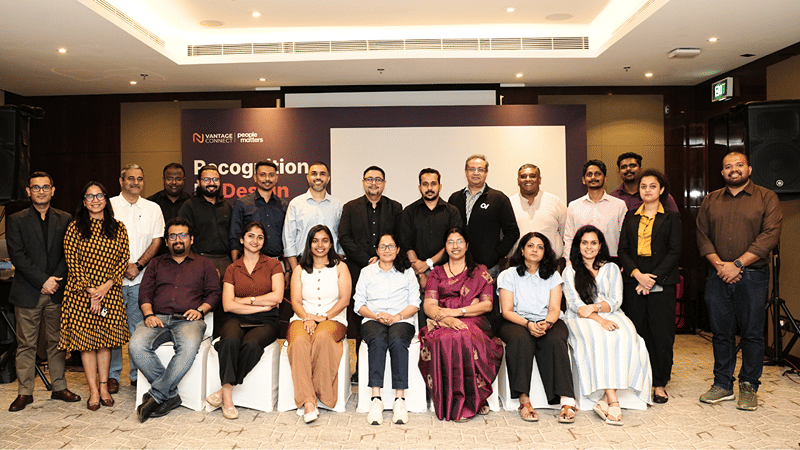
Recognition is evolving beyond rewards as HR leaders rethink how organisations recognise behaviours, performance, inclusion, and less-visible contributions.
Recognition has traditionally lived in a familiar space within organisations: rewards, awards, annual celebrations, and moments of appreciation. But as workforce expectations evolve, engagement remains a concern, and as AI changes how work gets done, recognition is being asked to do more.
The question has become about what organisations recognise, who gets recognised, and whether those choices reinforce the culture and behaviours they want to build.
These shaped the People Matters × Vantage Circle leadership roundtable, “Recognition by Design: Building the System That Powers Performance and Culture,” held at the Kochi Marriott Hotel. The closed-door conversation brought together senior HR leaders to examine recognition through four lenses: Leadership & Accountability, AI & Tech Enablement, Culture & Inclusion, and Performance Impact, with governance cutting across each.
Led by Pallav Popli, Chief Revenue Officer and Employee Engagement Evangelist at Vantage Circle, the session took an interactive approach. Leaders took positions on practical choices organisations face when designing recognition programmes, before working in groups to build their own recognition systems.
From recognising results to reinforcing what creates them
One of the first tensions the conversation surfaced was whether recognition should focus on behaviour or results.
The discussion pointed towards both. Business outcomes matter, but the way those outcomes are achieved matters too. Strong results cannot automatically justify behaviour that goes against organisational values.
As Pallav captured the idea during the discussion, “The route to the result goes through behaviour.”
That distinction matters when recognition is being used to shape culture. Connecting recognition to both outcomes and the behaviours behind them makes expectations clearer and reinforces how results are achieved.
The discussion also surfaced another often-overlooked category: consistent performers. Top performers can naturally attract attention, while employees who reliably deliver over time may remain less visible.
For organisations, this raises a practical question: does recognition reflect only exceptional outcomes, or does it also acknowledge the contributions that sustain performance?
Making values visible in everyday work
Values such as accountability, collaboration, trust, and inclusion can be clearly articulated in organisational frameworks. Their relevance, however, depends on how they show up in everyday work.
Leaders explored how recognition could help translate these values into observable behaviours at different levels of the organisation.
For individual contributors, this could include integrity and accountability. At the team-leader level, the focus could move towards transparency and communication, while delegation, trust, and inclusion become more central at the manager level.
This makes recognition more than an appreciation mechanism. It can become a way of showing employees what organisational values look like in practice and reinforcing those behaviours consistently.
Making recognition a leadership responsibility
A key question was how organisations can make recognition part of leadership expectations rather than leaving it entirely to individual managers.
During the group design exercise, one team proposed embedding recognition into behavioural competencies and performance evaluations. Managers could be assessed on how consistently they recognise their teams, supported by measures such as recognition coverage and employee feedback.
The group also suggested recognising leaders who consistently demonstrate the behaviours expected of others, creating accountability at the leadership level.
This brought equity into the discussion. Managerial judgement remains important, but organisations also need mechanisms to understand whether recognition is being practised consistently across teams and levels.
Recognition, therefore, cannot depend solely on individual managers remembering to appreciate good work. Leadership behaviour has to help set the standard for the system.
Where AI can make less-visible work easier to recognise
AI brought another dimension to the conversation, particularly around visibility.
Employees working in warehouses, logistics, stores, and other less-visible roles can have fewer opportunities to be noticed by senior leaders. Leaders explored how AI could draw on workforce data, performance systems, objectives, and customer feedback to surface contributions across different parts of the workforce.
But greater visibility also brings questions about bias. AI can help identify patterns that may otherwise remain hidden, while also reproducing biases embedded in historical data or organisational practices.
As one leader noted during the discussion, “AI is a tool. The outcome depends on the policy, the context, and the instructions you give it.”
That makes governance an important part of technology-enabled recognition. The value of AI depends not only on what the technology can identify, but also on the policies and safeguards that shape how those signals are used.
Recognition still depends on human judgement
The technology discussion also highlighted the limits of data-driven recognition.
Leaders acknowledged that recognition is ultimately experienced by people. Human judgement, emotion, and context influence whether recognition feels meaningful, particularly when contributions are difficult to quantify.
At the same time, participants raised concerns about favouritism when recognition depends too heavily on individual managers and their personal perceptions.
This created a tension between personalisation and consistency. Leaders saw value in recognising people in ways that feel meaningful to them, while ensuring that personal relationships or manager preferences do not determine who receives recognition.
The emerging approach was therefore not human versus technology, but a combination of the two: technology can support the system, while people remain responsible for judgement and context.
Measuring whether recognition is working
The question of measurement brought the discussion back to outcomes.
Simply counting recognition moments does not necessarily show whether a recognition system is working. Leaders discussed measures such as recognition coverage and employee feedback, alongside looking at who and what is being recognised.
These patterns can help organisations understand whether recognition is reaching different teams and groups, whether managers are using it consistently, and whether the behaviours the organisation wants to reinforce are becoming more visible.
This shifts the focus from the volume of recognition to its quality and intent.
The more useful question, therefore, may not be how many recognition moments an organisation creates, but whether those moments are reinforcing the behaviours and contributions that matter to the business.
From discussion to design
The most practical part of the session came when leaders moved into groups for a 30-minute design challenge.
Each table worked on a different aspect of recognition, covering Leadership & Accountability, AI & Tech Enablement, Culture & Inclusion, and Performance Impact, with governance remaining a common consideration.
The groups translated the earlier discussion into practical systems. One focused on translating values into observable behaviours at different levels. Another explored how AI could surface less-visible contributions.
The leadership and accountability group looked at embedding recognition into competencies, performance conversations, and leadership expectations. The Performance Impact group connected recognition with customer satisfaction, employee motivation, attrition, and business outcomes, alongside technology-enabled and peer-to-peer recognition.
The exercise demonstrated the difference between a recognition programme and a recognition system. A programme can create moments of appreciation. A system makes deliberate choices about behaviours, accountability, visibility, equity, technology, and governance.
What organisations choose to recognise matters
The roundtable pointed to a broader role for recognition within the employee experience.
Recognition can make organisational values tangible, reinforce leadership behaviours, and bring less-visible contributions into focus. But its impact depends on the choices built into the system: what gets recognised, who gets recognised, and what behaviours follow.
As one leader put it, “Recognition is not just about the reward. It is about what you want people to repeat.”
For organisations reviewing their recognition strategy, that may be the more useful starting point. Look at the behaviours being recognised, who is receiving recognition, where gaps exist, and what happens after recognition is given.
The real measure of recognition may therefore lie less in how many moments of appreciation an organisation creates, and more in what those moments encourage people to repeat.
Author
Loading...