







Recruiting & Onboarding
EHL’s Kanav Mata on how India’s service-led economy is redefining talent & leadership across sectors






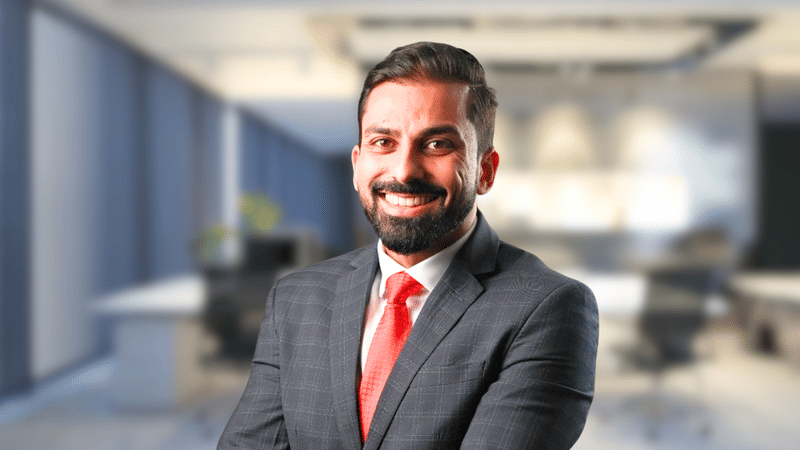
AI’s biggest benefit in the hospitality sector is that, by taking over technical processes, it frees up time for humans to focus on the human experience.
Integration between academia and industry has become a defining theme in today’s evolving talent landscape. As AI continues to reshape the nature of work, the very foundation of skills required in the workplace is being redefined, placing greater emphasis on adaptability, human-centric capabilities, and cross-industry relevance.
Against this backdrop, this exclusive interview with Kanav Mata, Director & Regional Head at EHL (India, South Asia & Middle East), explores how the organisation is responding to this shift by preparing talent equipped with essential human skills such as empathy, communication, and relationship-building, capabilities that are increasingly critical across sectors, especially for critical decision-making and leadership roles.
Mata also explains the rising demand for professionals who can seamlessly operate across industries, reflecting how education and workforce expectations are converging in the age of transformation.
Read on for detailed interview:
Q1. More than half of the Indian economy is service-led. How big is the opportunity for EHL in India?
Mata: Service sector contributes 55% to the gross value added. And if we look at how the service sector is defined in India, it is quite broad.
Within the sector, there are, of course, major players like hotels, restaurants, and hospitality establishments. But there is also financial services, real estate, IT, defence, healthcare, and education that fall under the gamut of the service sector and are ultimately led by experiences.
There is human centricity involved, and there is service excellence involved in these sectors, and these are actually EHL’s core strengths.
And within the service sector, as per our Hospitality Outlook 2026 white paper, domestic travel alone stands at about 2.9 billion visits, with Tier 2 and Tier 3 cities emerging in a big way.
With strong opportunities ahead in the service and hospitality sector in India over the next three to five years, experience-led, human-centric-led, and people leadership-led capabilities become crucial, which are also EHL’s core strengths.
Q2. Hospitality has traditionally been seen as a niche career path. How is EHL repositioning itself as a core business education for the ‘Human Experience’ era?
Mata: Hospitality industry is not just hotels alone, but also an association with luxury, retail, travel, wellness, aviation, and healthcare. So with this expanded definition, this industry is really competing on experience, building relationships, trust, and personalisation.
And “empowering growth by nurturing excellence in human experiences” is EHL’s core purpose. So the focus for EHL is really on human-centric skills like empathy, building relationships, interpersonal dynamics, giving and receiving feedback, and cross-cultural communication.
We believe in the essence of educating hearts, hands, and minds through our curriculum. The hands represent technical expertise to do the job, the head represents business acumen, and the heart represents mindset.
When we bring all of this together, education at EHL becomes a much broader spectrum than just hospitality. It can be applied across business disciplines, especially experience-driven industries.
Hence, what was once seen as niche hospitality education at EHL has evolved into business education across experience-driven industries. These are human skills that AI can never replace.
Q3. I’ve read that a lot of EHL’s graduates go on to work in non-hospitality backgrounds. What’s driving this movement beyond hospitality, yet with a hospitality foundation?
Mata: Over 45 percent of our graduates are placed in non-core hospitality sectors. Because organisations across engineering, IT, marketing, and manufacturing sectors are seeking employees and leaders who can drive human-centric skills like empathy, relationship building, interpersonal dynamics, and do this at scale.
Today, in the age of AI, organisations are increasingly looking for talent who can bring these human-centric skills to the table. This creates strong demand from companies like Apple, LVMH, Cartier, and consulting firms like EY and PwC.
Our graduates eventually get placed in these organisations, and many also go on to start their own businesses. This is because EHL imparts business education with a hospitality DNA.
This integrated hospitality DNA can be applied across industries. Students gain a strong mix of skills that fits across sectors, broadening their career options.
When students join EHL, they may have an idea of what they want to do after their education, but it keeps evolving because of the kind of education they receive. It allows them to broaden their career horizons.
So at the end of their graduation, they are prepared for varied careers across industries. Skills and industries are both evolving at a very rapid pace.
Q4. ‘Swiss Hospitality’ – the gold standard in hospitality is a crowded category, but EHL is part of the Swiss public education system. How does that fundamentally change the value for workforce ready youths?
Mata: Swiss hospitality is the benchmark in hospitality education, which EHL has maintained with top position over the last eight years in the QS rankings for hospitality and leisure management.
It is part of the Swiss public education system and is also accredited by multiple bodies, including EESO, one of the more rigorous academic accreditations out of Switzerland, the New England Commission of Higher Education, and EACSB, the Association of Advanced Colleges and Schools of Business.
These accreditations are globally recognised qualifications that add value for our graduates.
One of the key reasons students choose Switzerland is because the business degree is widely recognised and allows global mobility, including opportunities to return and work in India.
Most alumni who return to India eventually move into senior leadership positions across hospitality and other organisations.
Q5. How valued is hospitality as a skill in business? Why are sectors like luxury retail, healthcare, and private banking suddenly valuing this capability so highly?
Mata: Hospitality skills translate into human experience management. They include empathy, service excellence, interpersonal relationship building, service design, and operational excellence.
These skills are applicable across service-oriented industries, whether it is luxury retail, banking, healthcare, or real estate.
These are also the skills that will significantly set leaders apart in the AI era. If these skills are practised in a simulated environment before entering the job, individuals are often more prepared than those who learn them on the job.
For example, engineering degrees tend to focus more on technical aspects, while soft skills are usually developed later in the workplace.
At EHL, students are exposed to human-centric skills in a simulated, safe environment, which allows them to enter the job with a head start.
Today, industries are actively looking for employees and leaders with these skills, especially as automation takes over more technical tasks.
Q6. EHL’s Hospitality Outlook 2026 highlights “Human-Centric Leadership.” What does that look like in practice, especially in India’s high-growth sectors?
Mata: High growth brings its own set of challenges, especially in the hospitality sector.
It often leads to higher attrition, which can result in inconsistency in service experience. At the same time, guests are becoming more demanding and well-travelled, with continuously evolving expectations.
In this context, human-centric leadership focuses on clear communication, empathy, coaching frontline and management teams, relationship building, and cross-cultural communication.
In our Hospitality Outlook 2026 white paper, we highlighted that global hotel brands have ambitious expansion plans for expansion in India. But before executing them, they need to build leadership depth to ensure the right people are in the right roles.
Otherwise, it risks becoming just brick-and-mortar expansion rather than true brand expansion. Leadership depth ensures that growth is rooted in human-centric leadership.
Q7. India continues to face a service talent gap. How are partnerships like CII-EHL and VET by EHL helping bridge this at scale?
Mata: The service talent gap exists, and we look at it as a pyramid. Our partnership with CII and VET by EHL contributes to the bottom of the pyramid, which is the frontline workforce.
It is an 18-month diploma program in apprenticeship mode, run with CII and hotel partners such as ITC, IHCL, and Hyatt, across 30-plus hotels with close to 1,000 learners.
This helps build a qualified, job-ready frontline workforce. At the top of the pyramid are supervisors, mid-management, and leadership roles. EHL supports these levels through executive education and leadership programs.
So EHL’s contribution in India spans across all levels of the pyramid, from frontline readiness to leadership development.
Q8. What are the key trends shaping the hospitality sector’s workforce today, particularly when it comes to talent attraction, retention, and creating a truly rewarding work experience?
Mata: The starting point is honesty. Hospitality brands need to be transparent about the job realities.
Often, a glamorous picture is presented during recruitment that does not always reflect the reality after onboarding.
The truth is, this industry is demanding, with long hours and sacrifices, at the same time it is also highly rewarding in terms of interactions, people, and experiences.
If this reality is clearly linked to a defined career path, it can significantly improve both talent attraction and retention.
We live in an age of instant gratification, where even small differences in pay and compensation can lead to job switching. In this context, clarity on career progression becomes critical.
There is also a need for innovation in job design, including flexibility. While hospitality cannot offer remote work for frontline roles, flexibility in structure still matters.
Finally, as discussed earlier, the hospitality sector is an association of luxury brands, banking, healthcare, and real estate.
Providing students clarity on these wider career options opens up more opportunities and improves retention. Painting a picture may help hiring, but a realistic picture is what ensures retention.
Q9. How is AI reshaping roles in hospitality, from frontline staff to leadership, and what new skills will define the workforce of the future?
Mata: AI’s biggest benefit in the hospitality sector is that, by taking over technical processes, it frees up time for humans to focus on the human experience.
Today, many hospitality professionals are tied up in backend tasks like check-ins, checkouts, and billing, which limits their ability to create personalised experiences.
With AI and automation handling these backend processes, frontline staff can focus on building rapport, creating emotional connections, and delivering memorable experiences.
Key future skills will include emotional intelligence, empathy, critical thinking, problem solving, and the ability to work with AI.
Across industries, those who can effectively work with AI are likely to be more successful than those who cannot.
Ultimately, people remember how they were made to feel, not technical details like thread count. That human connection becomes the most important driver, and that is exactly what EHL focuses on.
Author
Loading...