







Skilling
Top 5 in-demand fundamental skills for a career in aerospace engineering





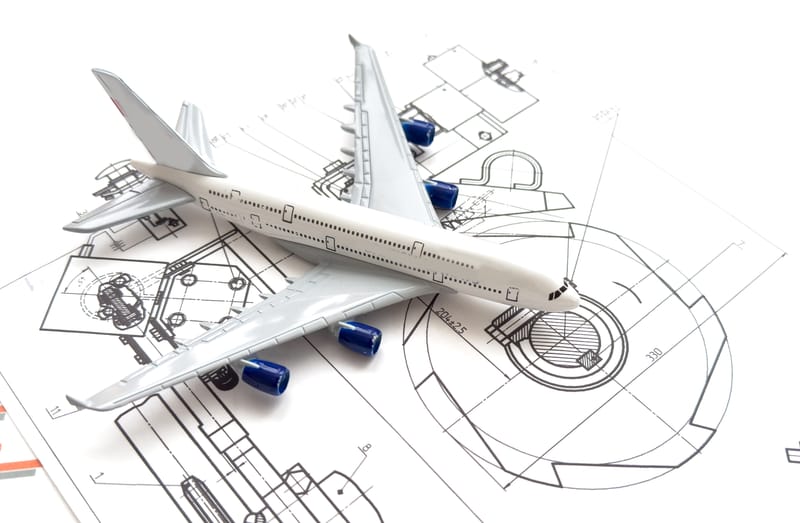
Why years of experience isn't enough: A look at the five fundamental skills that aerospace leaders are truly seeking in new engineering talent.
India is charting its path towards “aatmanirbharta” in aerospace. Development of indigenous platforms like the Regional Transport Aircraft (RTA) and Advanced Medium Combat Aircraft (AMCA), increased connectivity for the common man, infrastructure growth and supply chain expansion will all require one critical thing – strong engineering talent that cuts across from design and development to product delivery and aftermarket.
Global aerospace OEMs, including RTX, have always recognised India as a talent hub for aerospace engineering talent for decades now, and talent is perhaps India’s biggest aerospace export. There is an increasing interest in aerospace among young engineers, so here are the top five fundamental skills and attributes OEMs like Collins Aerospace, an RTX business, look for in our new hires:
1. Strong Fundamentals:
For any young engineer looking to break into aerospace and defence, having strong fundamentals is essential. Aerospace is the pinnacle for achievement in engineering, so it starts with a sound understanding of one or more engineering disciplines like mechanical, electronics, software, etc. Coupled with this, a good understanding of the fundamentals of physics and strong analytical skills, mathematical and technical proficiency are essential. There is a lot of emphasis on emerging technologies like artificial intelligence/machine learning, data science, etc. in our education today, and while these are important for products and systems in aerospace, starting with fundamental skills and further enhancing our repertoire with these technologies forms the better combination to make significant contributions.
2. Passion for Aerospace:
This is perhaps the most important attribute we look for in our engineers. We really gravitate towards someone who is likely to get goosebumps when the product or system they have worked on takes first flight, someone who understands how the work they perform on a daily basis impacts human lives, and someone who is willing to do their job in a responsible and ethical fashion. In general, it takes several years for any engineer to start thinking of themselves as 'aerospace engineers’ – before they are ‘sold’ to the domain. This is when they are able to make maximum contributions to their work. That’s why we look for young engineers who are passionate about aerospace and have a strong desire to make a career in this domain. The combination of passion for aerospace and strong fundamentals plays an important role in recognising and developing the right engineering talent.
3. Diligence, Patience and Rigour:
What sets aerospace apart is the mission criticality and the absolute safety focus for the products that we deliver to our customers. From design, development and testing to certification and deployment, there is a long gestation period. In contrast to other fields like e-commerce and banking, where the code can go from beta to live in a matter of weeks, a single aeroplane can take 10 years or more from concept to its first flight. So we look for engineers who have that bent of mind, who have the diligence, patience and rigour to design, develop and test systems with the highest quality and customer focus – again and again – so that when they deliver a world-class, safety-critical product, it works as advertised.
4. Multidisciplinary Team Player:
One of the most critical skills that young engineers need to develop to make it in the aerospace domain is teamwork and a multidisciplinary bent. In aerospace, you do not just wear one hat – and just being a software, electrical or mechanical engineer is not enough. You have to be able to work with integrated product teams from across the world, round the clock, to support our customers. That’s why young engineers need to build not just their teamwork skills but also their ability to work across multiple disciplines to solve complex problems.
5. Innovation and Complex Problem-Solving Skills:
Finally, being able to innovate and solve complex problems and to use your fundamentals when you’re in the realms of the unknown are essential for a career in aerospace engineering. For example, if you were tasked to help build the most sustainable aircraft – what would that mean? It would mean coming up with creative solutions across complex domains like new propulsion technology, how aerostructures would deliver the right aerodynamics, and what sustainable material you would use, just to name a few. That’s why we tend to gravitate towards young engineers who have a bent towards research & development – and those who are willing to not only question the status quo to deliver solutions at the edge of new technologies but also be able to pressure test those solutions over years to deliver mission-critical aerospace products.
Topics
Loading...