







Strategic HR
How Digit's CHRO is blending trust, tech, and talent in new world of work




The insurance industry has historically struggled to attract younger talent, often viewed as less glamorous. For Digit, however, this has not been the case.
In an industry often perceived as traditional and slow-moving, Digit Insurance has carved out a distinct identity as a new-age, tech-first player.
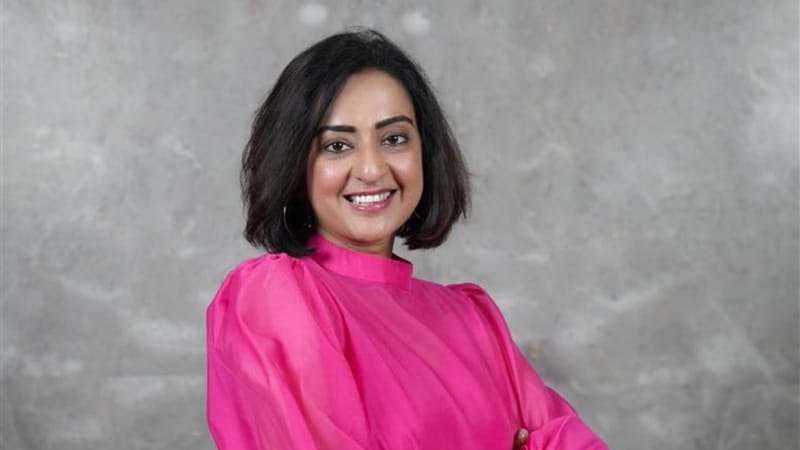
At the helm of its people strategy is Amrit Jaidka Arora, the company's Chief Human Resources Officer, who is navigating a unique set of challenges in the evolving world of work.
In an exclusive interaction with People Matters, Arora shed light on a pivotal challenge: how to build a workforce that not only understands the deep-rooted nuances of insurance but is also agile and tech-savvy enough to drive innovation.
For Arora, the insurance sector is defined by a "tricky balance." It is inherently trust-led and heavily regulated by bodies like the IRDA, demanding a cautious, compliance-heavy approach. Yet, to survive and thrive today, it also requires an agile, experimental, and technology-driven mindset.
"That kind of talent is not easy to find or grow," Arora explained. "One of the biggest challenges for us is building a workforce that can straddle both worlds: people who have deep domain experience and digital skills."
To address this, Digit has implemented a unique talent development model. Each year, the company hires between 350 and 400 trainees across all departments. Regardless of whether they are joining the HR team or operations, every single trainee is mandated to undergo an III insurance certification. This ensures that a fundamental understanding of the business is ingrained from the start, allowing them to pair this domain knowledge with their innate digital fluency.
Attracting the next generation of talent
The insurance industry has historically struggled to attract younger talent, often viewed as less glamorous than the tech or finance sectors. For Digit, however, this has not been the case. The average age of Digit's workforce, which numbers over 6,000 employees, is a remarkably young 31. This is mainly due to a culture and structure that appeals directly to the Gen Z and millennial mindset.
"We are positioned as an insurtech, digitally-savvy, and very young organisation," Arora stated. The company's culture is deliberately flat and "grade agnostic," with no grades existing beyond the Vice President level.
The ethos, according to Arora, is to foster an open, flexible environment where every employee, from the newest trainee to the chairman, is approachable. This focus on transparency and simplicity, combined with a sharp learning curve, has helped Digit sidestep the industry's struggle to attract young professionals.
While attracting young talent is a strength, Arora admitted that the challenge shifts when it comes to hiring legacy professionals—individuals who have spent a long time in the traditional insurance industry. "How do you get them to start learning more about technologies and bringing in AI?" she pondered.
AI Adoption: From intimidation to momentum
To bridge the gap and ensure the entire workforce moves forward together, Digit has adopted a strategy of incremental, mandatory steps to drive AI adoption. "People are curious, but they also get intimidated by technology," Arora observed. To overcome this, the company has mandated copilot training for all business teams across departments, including HR, actuarial, and operations.
This investment in employee training is paying off. Arora noted a significant shift in employee mindset: "I've seen now people are not waiting for training sessions; they're asking us for tools. They want to experiment, they want to learn on the go."
The company's data science team has taken this a step further with an initiative called the "code productivity leap," introducing generative AI tools to support high-level, autonomous code generation.
This exemplifies how AI at Digit is not an isolated tool but is being embedded into all workflows and processes, from talent sourcing and screening to daily reports, to drive efficiency and empower employees.
The "listen more, react less" CHRO
The last few years have tested leaders across the board, and Arora believes her role has been transformed by a core philosophy: to "stay grounded when everything around you is changing."
Her biggest learning has been that her job is not to have all the answers. Instead, it is to "start listening to people and listen deeply and always ask better questions."
This shift from a focus on policies and processes to one on people and experiences is a recurring theme among modern leaders. Arora's perspective aligns with that of other global CHROs, who are also embracing a "listen more, react less" approach.
This collective movement signals a new era of leadership, where empathy and adaptability are as crucial as business acumen.
For Arora, Digit's adoption of AI tools, such as an AI chatbot with conversational memory, is not just about efficiency; it is about freeing up HR to focus on "deeper conversations or creative energy."
The company's agility is also reflected in its policies. A background verification process that once took 14 days now happens in just seven seconds, thanks to integration with DigiLocker. This focus on speed and frictionless processes is an HR reflection of Digit's core promise to its customers: to make things simple.
The future of work: Fluidity and trust
Looking ahead to 2030, Arora foresees a workplace where roles are more fluid and traditional job structures are a thing of the past. "People may not have one job," she mused. "They will work across projects or platforms, who knows, even across companies? Maybe gig work does become very popular."
In this future, the role of HR will pivot from managing people to "curating experiences and building trust over and over again." She emphasised that AI will never replace human judgment, and therefore, HR's mission is to spend less time on data and more time shaping culture and coaching leaders.
The company's hiring philosophy already reflects this future. Digit has moved beyond a reliance on fancy degrees from top-tier colleges and now hires for curiosity and adaptability.
The shelf life of skills has shortened dramatically, making an individual's ability to learn on the job a more valuable asset than a static degree. As a result, the company has shifted towards a robust internship program to identify and hire talent based on real-world performance.
While these recruits are not "work-ready" from day one, Digit invests heavily in training and mentoring to help them hit the ground running.
Ultimately, Arora's vision for the future of work is one where technology acts as an amplifier of human capability. She believes the next few years will be defined by an era where leaders embrace AI as a partner, allowing their teams to focus on what truly matters: creativity, empathy, and the human side of business. This is the new, high-tech reality of the insurance industry, and Digit is leading the way.
Topics
Author
Loading...