







Strategic HR
People are the success factor for the grid the world needs: Alice Hamann, Hitachi Energy


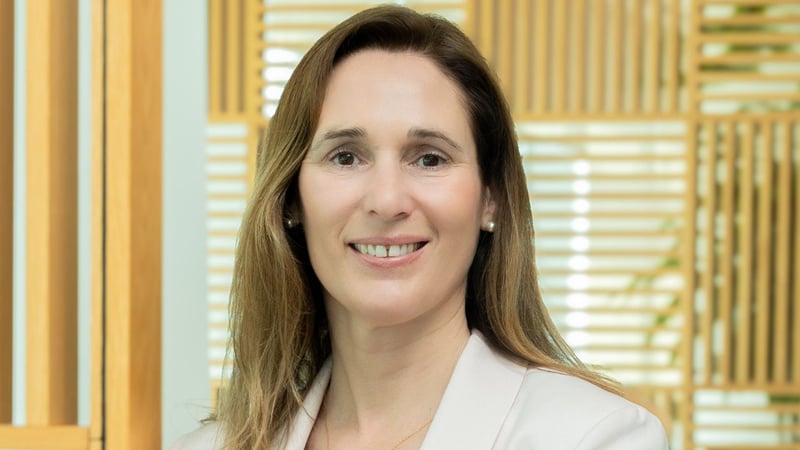
As traditional power grids evolve into software-defined, intelligent networks, the global energy transition is rapidly becoming less an industrial challenge and more a workforce imperative.
The global push toward clean energy and sustainable infrastructure is universally framed as a challenge of capital allocation, technological innovation, and engineering scale. Yet, behind every high-voltage direct current (HVDC) line, digitalised grid, and massive infrastructure expansion lies a far more immediate bottleneck: human capability. As traditional power grids evolve into software-defined, intelligent networks, the global energy transition is rapidly becoming less an industrial challenge and more a workforce imperative.
In this exclusive conversation, Alice Hamann, Global Chief Human Resources Officer at Hitachi Energy, explains how the organisation is building a future-ready workforce to match the staggering pace of global demand. From deploying People 360—a strategy that aligns talent planning directly with capital expenditure—to redefining DEI as Diversity, Opportunity, and Inclusion, Hamann explains how HR serves as an equal business co-architect alongside the CEO and CFO.
Hamann also shares key insights into scaling digital fluency across traditional electrical engineering talent, leveraging India as a vital global capability engine, and dismantling the "broken rung" to elevate women into core operational leadership. Edited excerpts
The global energy transition isn't just an engineering or capital problem; it’s fundamentally a human capital bottleneck. How is Hitachi Energy shaping its talent architecture so a shortage of specialised skills doesn't slow deployment of critical grid technologies?
The bottleneck isn't just the number of skilled people, but whether they have the right skills and stay current. India has a large, young workforce, so the question is relevance and quality, not availability. At Hitachi Energy, we hire for where the business will be in five years, weighing learning agility and judgement more heavily than today's skill checklist.
To complement this, we treat learning as part of the job: self-directed, AI-personalised, and employee-owned, with manager support. Capability has to be grown deliberately. This combination of quality hiring and continuous learning helps us prepare for evolving industry requirements.
As legacy power grids evolve into software-defined, digitalised networks, workforce requirements are shifting rapidly. How are you approaching large-scale upskilling to transform traditional electrical engineering talent into experts in digital grid automation and power electronics?
As workforce requirements evolve, we are investing in upskilling to help traditional electrical engineering talent build capabilities in digital spaces. At the same time, we don't aim to turn engineers into software specialists. We aim to add digital fluency on top of the deep domain knowledge that is hard to replace. In a safety-critical grid, an engineer who understands both the physics and the data is the most valuable profile.
We do this at scale through three routes: a global learning platform with AI-driven, personalised recommendations; partnerships with universities for deeper technical skills; and on-the-job learning, where new capability is built on real work rather than in a classroom.
With Hitachi Energy’s massive footprint and ambitious growth in the region, how are you strategically leveraging India’s talent ecosystem to drive global product engineering and digital grid solutions—and how is this shift reshaping your broader global mobility, leadership succession, and talent delivery models?
India is a global capability engine for Hitachi Energy. With manufacturing sites, Research and Development Centres, and Shared Service Centres, India supports our business well beyond the region, from the products we engineer to the digital solutions and services we deliver worldwide. Our presence spans large metros and smaller cities, so we build capability close to where talent is.
For careers, we want people in India to grow into roles that reach beyond the region, and we want leaders from elsewhere to benefit from experience here. So we look at who is ready to step up now and who will be ready in the next few years, and we support them with the right development and international opportunities in India and across APAC.
Hitachi Energy sits at a unique intersection—blending deep European industrial heritage with Japanese corporate governance and global agility. How do you build a unified, high-performance global culture across diverse geographical markets without losing local nuance?
Unified does not mean uniform. We define what is core for Hitachi Energy globally and what remains distinct locally, because we recognise the importance of local context in each market we operate in. We bring together our European lineage, Japanese corporate governance, and global agility, taking the best of each approach. Our heritage brings a strong focus on quality and safety, which are non-negotiable at Hitachi Energy.
Those principles apply from a new joiner's first day. How they are expressed, whether in communication, leadership style or working norms, should reflect each market. Where the standard is clear, local nuance strengthens the culture.
With supply chain disruption, geopolitical shifts and surging demand for energy infrastructure, business conditions can change quickly. How is Hitachi Energy building scenario-based talent mobility that can pivot dynamically as market conditions change?
We can't forecast the next supply chain disruption or geopolitical shock, so we focus on being ready to act. That means knowing where our skills are, who is ready for what, and what each person wants from their career. When conditions change, whether through disruption or a sudden rise in demand, we can match business need with employee aspiration instead of reacting with a one-size-fits-all move.
Mobility works best as a two-way conversation. People move well when the move fits their experience, location and ambition, not only the business's immediate need.
Under your Diversity, Opportunity and Inclusion framework and gender representation targets, how is Hitachi Energy moving beyond entry-level hiring quotas to fix the 'broken rung' in mid-career technical management—ensuring women don't just enter the energy pipeline, but systematically advance into operational and business leadership?
Entry-level hiring is the easier part. The harder part is mid-career, where technical specialists become managers. That's why our KPIs cover representation in middle and senior management, not just entry. We pursue both internal promotion and external hiring, and we build the operational and business capabilities that leadership roles require. This helps us create opportunities for everyone and build a stronger, more diverse leadership pipeline across levels.
In heavily industrial and technology-driven sectors, HR is sometimes viewed through an operational lens. How do you ensure the CHRO sits as a true co-architect of business strategy alongside the CEO and CFO at Hitachi Energy—especially when planning multi-year infrastructure expansions?
My test is simple: when a multi-year investment is on the table, do you bring the people perspective in at the start or at the end? Capital and infrastructure can be committed quickly. People and talent cannot. Growing our workforce by around 15,000 people by 2027 only works if skills, location and leadership capacity are planned alongside the capex.
That is the thinking behind People 360, our people strategy for how we attract, develop, engage and include our people, built around the business plan rather than beside it. It is why HR sits at the table as a business partner and not as a downstream function. Our job is to tell the business early what is realistic, and to make it possible.
Looking ahead at the massive scale of the energy transition over the next decade, what does success look like for you personally as CHRO? What one cultural or organisational legacy are you determined to leave behind at Hitachi Energy?
For me, success means people are the success factor for the grid the world needs. The energy transition will be defined by how fast we can build and upgrade grids, and that comes down to people: the right skills, in the right places, at the right time. People 360, our people strategy, puts that into practice, but it all comes down to one question: can our organisation grow its capabilities as fast as the demand in front of us?
The legacy I'd want to leave is a future-ready organisation that scales and evolves as fast as needed, and an environment that makes this possible: leaders who inspire and treat developing others as part of the job, and employees who own their growth and their decisions. If we get that right, the organisation will keep adapting and growing even after today's programs have changed, and I have moved on. What we build now is for the people who come next.
Author
Loading...