







Strategic HR
Skilling, inclusion, and the rise of HR as a growth function





India’s formal workforce now exceeds 56 crore people, with participation rising and unemployment trending down. The current budget cycle has sharply increased allocations for skill-building programs, with nearly ₹9,885 crore proposed for national skilling initiatives.
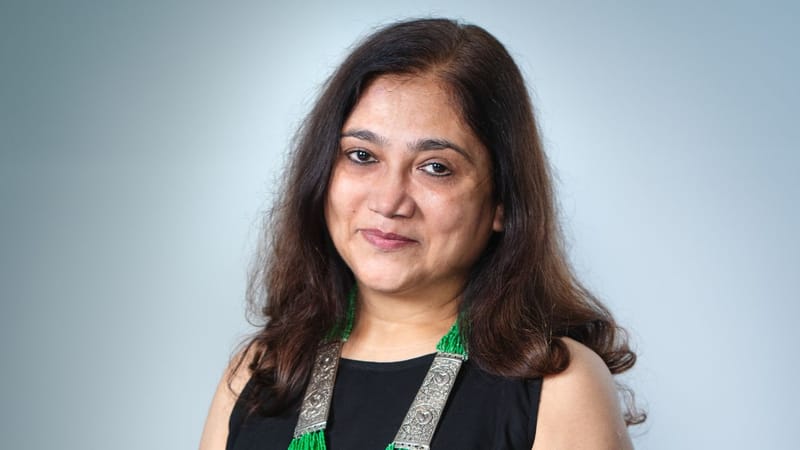
By: Ruhie Pande
India’s next phase of economic expansion will depend on its workforce as much as its factories and capital. Recent policy focus reflects the reality that talent readiness is now being treated as economic infrastructure rather than a supplementary activity. India’s workforce is large and young, with approximately 65% of the population under 35, yet a significant segment lacks the skills demanded by industry.
This gap matters. Only nearly 54.8% of Indian graduates are considered job-ready for industry roles, and a large share of the workforce remains in low-competency jobs. HR can no longer be a back-office function focused on hiring and compliance; it must drive skilling, inclusion, and sustainable talent growth.
What policy direction reveals about workforce priorities
India’s formal workforce now exceeds 56 crore people, with participation rising and unemployment trending down. The current budget cycle has sharply increased allocations for skill-building programs, with nearly ₹9,885 crore proposed for national skilling initiatives.
Despite such progress, the workforce still faces a significant skills gap. Only a small percentage of the workforce has formal training, and employers report notable shortages in technically trained talent. Policy now links skilling with job creation and formal employment. Rather than isolated training schemes, there is an emphasis on aligning skill content with real-world roles—an unmistakable signal that capability development is now a core organisational strategy.
HR’s Expanded Mandate: From compliance to capability
In boardrooms today, the question is no longer how fast you can hire, but how robustly you can prepare and retain teams. HR’s mandate has expanded from compliance to capability development.
Across sectors, basic digital literacy and practical job-ready skills are increasingly expected, even in roles outside traditional technology functions. This reflects the nature of work today, where technology-enabled processes, data usage, and continuous learning are integral to everyday business operations.
Retention is now a focus because the cost of losing a trained worker, especially one who has undergone structured training, is high. Organisations that evaluate HR success in terms of long-term contribution and continuity, rather than merely hiring speed, gain operational stability.
The Skilling Ecosystem Shift: Collaboration replaces one-way training
India’s skill ecosystem has shifted toward partnerships between industry, training institutions, and employers. The old model of training without industry input contributed to a mismatch between what people learn and what jobs require. Today’s skilling initiatives encourage industry-linked programs and shorter, targeted certifications that bridge this gap.
For organisations, this is a strategic opportunity. HR teams that work with education partners and training bodies can help shape curricula, prequalify talent pools, and bring candidates up to performance standards more quickly. These partnerships also make job transitions smoother for workers and reduce new-hire time-to-contribution.
Inclusion as growth infrastructure, not charity
Inclusion is a strategic necessity, not an add-on. The female labour force participation rate in India has risen sharply from roughly 23% in 2017–18 to about 42% in 2023–24, and formal payroll additions show growing female employment.
While this is progress, India still trails peer economies in women’s workforce participation, highlighting the work that remains. But improved participation rates clearly demonstrate that inclusive hiring is directly linked to workforce supply and organisational capacity.
In practical terms, inclusion demands workplace safety, flexible models wherever operationally possible, clear career paths for women and underrepresented groups, and return-to-work programs. These are no longer ‘nice to have’ but are key elements of workforce resilience and continuity.
What should organisations do now?
Organisations must rethink how they manage their workforce to capture emerging business opportunities. This begins with a skills-first mindset that looks ahead to future role requirements rather than reacting only to immediate gaps. This approach must be backed by a structured reskilling framework that links learning directly to job roles and performance outcomes.
Building closer ties with training institutions and ecosystem partners is equally important, as it enables companies to build steady, reliable talent pipelines rather than relying solely on the open market.
At the same time, stronger inclusion systems are needed so people from different backgrounds can enter the organisation, remain engaged, and grow. Finally, internal HR processes such as onboarding, payroll, and compliance must be simplified and made more transparent. When these systems work smoothly, they build trust, giving employees greater clarity and confidence.
Conclusion
Forward-thinking organisations now base their growth plans on skilling and inclusion as essential elements for development. The combination of policy direction, workforce statistics, and market expectations demonstrates that people capability is now a business mandate.
Companies that invest in skills development programs and link their HR functions to strategic business objectives will build more resilient workforces. Organisations that fail to meet this requirement will experience increasing skill deficiencies, higher turnover, and operational bottlenecks that will inevitably impede their expansion.
(The author of this article is Group CHRO & CMO, Serentica, Resonia and Sterlite Electric. Views expressed are their own.)
Topics
Loading...