







Strategic HR
Zomato - Around the world, one plate at a time



 ||
||

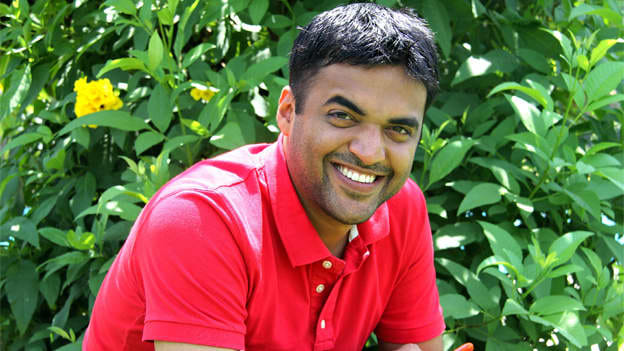
Zomato CEO Deepinder Goyal on his company's origins, its no-nonsense culture and why he doesn't have a business plan
How did you come up with the idea for Zomato?
While we were working at Bain, we noticed that a lot of people queued up for menu cards during lunch hour and a fair amount of time was wasted on a daily basis. So, we decided to scan menu cards and uploaded them online so that everyone could view it at one go. Soon after creating the intranet website, we noticed a significant number of hits and it quickly became clear that a viable business could be built out of it. Since Zomato’s inception, for almost one-and-a-half years, I was with Bain collecting, scanning and uploading menu cards during the weekends.
So, when did you realize it was much more than just uploading menu cards on Bain’s intranet?
There was no eureka moment as such, but it was a confidence booster when people started giving us a lot of positive feedback about our product and how it was making their everyday lives easier. When merchants started finding value in our highly targeted platform which essentially bridges the gap between customer and restaurateur that’s when we realized that we could make some money with this venture of ours. The money, initially, was not that great but was enough for paying our bills. That’s when we took the leap of faith.
How did you plan your next move? Did you have a structured business plan or a vision in place?
It may sound surprising, but we do not have a business plan, even today. I believe it’s primarily about having a great team with people ambitious enough to execute great things. Even our investors haven’t asked us about our business plan; they understand the fact that business is not build by thinking five years into the future but by taking the step-by-step approach. We are very lucky to have such people onboard with us.
During the initial days, how difficult was it to convince people to leave their jobs and join you?
Most of the people we had upfront did not quit their jobs to join us. So, it was relatively easy to convince them to work with us. The people who join start-ups right after college, are a different breed altogether. They come with a fresh mind and are eager to learn. Once our initial hires were made, the ball was set rolling for our future hires. People already at Zomato understand the culture and kind of people who would fit in, this always puts them in a good position to identify the right talent.
How do you attract talent to join your brand?
For us, it was relatively easier as we are part of the restaurant, food and internet industry. The glamour quotient of all these three sectors attracts talent to join us. It’s a nice place to be at! Additionally, the best talent out there have come to realize the importance of learning quickly and working in an environment that allows greater freedom and flexibility. As a start-up we don’t stop at version 1.0. We strive to create a better version of ourselves. An environment like ours is exciting for learners in more ways than one. Also, like I said earlier, we use our flexibility to find and attract people, putting the question out there by also asking our own people to seek talent by referring friends from their social circles.
How would you define the culture of Zomato?
I would define it as a ‘no nonsense-get it done-culture’. The other part of our culture is that the company is almost always growing faster than the people so everybody has to work really hard to keep up with the pace of the company. From an employee’s point of view, that’s a tough place to be at. People have to keep improving and honing their skills to remain at par with the growth of the company. Even I struggle a number of times to keep up with the pace of the organization. The recent roll out of our revamped website and app was after all possible because of the team’s effort and attitude to get things done.
I believe you’re doubling your workforce number this year so as a people’s CEO, what are your learnings in terms of scaling up, especially your organizational culture?
I believe it all boils down to finding and hiring the right talent. There are two kinds of people in this world, the ones who want to learn and the others who don’t. So, if you could garner enough people on-board who want to learn, then you can pretty much coach them in any way possible. These are the kind of people start-ups would love to have in their workforce. As we grow and scale up our team significantly in the near future it is imperative we ensure that we hire the right people without compromising on our culture.
With so many start-ups around, how do you make sure this talent joins you and not other start-ups?
I have a theory for this. Nobody walks into your office with an intention to do a bad job; they always aspire to do something good. It’s like in the case of a newborn child, the child is always born innocent, but it’s the series of events during the child’s life that makes the child good or bad. As an organization, we are trying to understand what is it that makes a new joinee a good or a bad performer. I believe this transformation has got to do with us and not the individual. On day zero, everyone starts afresh, but eventually, maybe after six months, the system makes a mistake that would turn some people good and some not so good.
What all things have you changed in your on-boarding process that you believe would help nurture the spirit with which a new joinee joins your organization?
One of the changes that we have adopted is accountability. Although a new hire is encouraged to take up ownership of their work, it is the manager who has to ensure growth of the individual and the team. We try to hire managers with better experience to weed out potential errors that are bound to happen. We focus on hiring people with diverse backgrounds and experiences which in turn contributes to the eventual growth of the organization and helps avoid one dimensional growth. We encourage people to grow the company through their own professional growth and the manager in this respect has an integral role to play.
How do you identify high-potentials in your team?
We don’t have to. These people just show themselves up. They would do great things and would shine by themselves so we don’t have to put in any great effort to identify them. This also means that some people, who make an extra effort, would also shine and I believe that’s fine. The ones who make the extra effort are the ones who want to make great things happen and that is a desirable trait.
What were your learnings during your tenure at Bain?
Investment in people, the merit of spending a lot of time with people, making sure you have the right hires and doing everything that would contribute towards the growth of the people are some of the key things I learnt during my stint at Bain.
Does managing a startup become easy if you have friends as co-founders?
Having a friend as a co-founder requires you to clearly define work and life. How we talk during work is very different from how we interact outside work. The first few people we hired, after the first round of funding, were some of our close friends. At the end of the day, you need a circle of people whom you can trust with your life, and therefore, the first obvious choice is to go to your friends. After all, the first few people you bring on board go a long way in shaping and establishing your organization’s culture. Culture is everything. Once that’s happened, attracting more people with similar values and beliefs becomes a lot easier. Later, a lot of other people join in and gain your trust and become a part of that trust circle. I believe it’s a crucial part for the survival of a startup: to get onboard as many trustworthy people as possible.
How important is it to communicate with your employees?
I believe people need to know why they are here, what is it that the organization is trying to do. For a company that’s growing so fast, the answer to the question ‘why they are here?’ also changes very fast. This is because whatever we set out to achieve would get done in the next six months and we would move on to a new set of goals. Therefore, our goals keep changing very rapidly and that’s why it’s essential to keep communicating with people.
What is your secret of finding such a good workforce?
I think if you keep your culture very open and transparent, only the good people would walk in to join you. Given our tough values-culture construct a large percentage of people simply don’t apply at Zomato. It just automatically filters 90 per cent of the people who are not the right fit for Zomato. Only a select few people apply and it also makes our job a lot easier as we don’t need to go through a pile of applications. If we’re aiming to take Zomato around the world, one plate at a time, we need a smart and hardworking team on board to help us bring the best to the table.
How do you manage your work-life balance?
I switch-off on Sundays. I don’t even check my emails on Sundays and if there is any kind of emergency, which is rare, people call me.
Twitter: deepigoyal
LinkedIn: deepigoyal
Topics
Author

Loading...