







Strategic HR
Why Indian-origin CEOs are leading global companies



|
Updated on


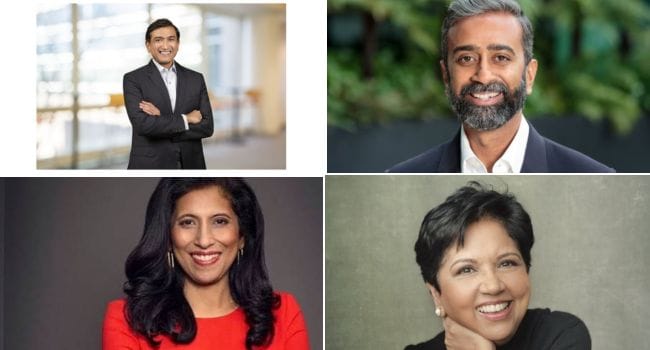
As global companies turn to Indian-origin leaders, it’s time to ask: What is it about the upbringing, education, and ethos that makes them suitable?
When Shailesh Jejurikar was growing up in Mumbai, few could have imagined he would one day lead a company older than the Indian Republic itself. But come January 2026, he will become the first Indian-origin CEO of Procter & Gamble—a 200-year-old American icon.
Jejurikar’s appointment as the next President and CEO of Procter & Gamble (P&G), effective in January 2026, is another testament to the rising prominence of Indian-origin leaders on the global stage. Stepping into one of the most powerful corporate roles in the world, Jejurikar will also make history as P&G’s first Indian-origin CEO in its close to 200-year-old history since 1837.
A 36-year veteran of the company, Jejurikar was born in Mumbai and is an alumnus of the Indian Institute of Management-Lucknow and Mumbai University. Currently serving as Chief Operating Officer, he has been an integral member of P&G’s global leadership team since 2014. His career has seen him lead multiple businesses, with substantial contributions to the Fabric and Home Care categories.
“It is a proud moment for India and the family that Shailesh has been appointed to be the global CEO of Procter and Gamble, which is amongst the top 25 most valuable companies in the world,” said Rajesh Jejurikar, Executive Director & CEO (Auto & Farm Sector) at Mahindra Group, who is elder brother of Shailesh Jejurikar.
The global boardroom's new vanguard
From Google and Microsoft to PepsiCo, Chanel, Starbucks, and the World Bank, these organisations may have little in common in terms of sector or scale, but they share one striking trait: Indian-origin leaders at the helm. While Indian-origin leaders have long been recognised for their contributions in the technology sector, their growing dominance now extends far beyond it.
This trend is no longer confined to American boardrooms. Recently, Air New Zealand named Nikhil Ravishankar as its next CEO, and Ajay Banga broke the longstanding American dominance over the World Bank presidency by becoming its 14th president. Gita Gopinath was another leader who proved her mettle as the first female Chief Economist in the history of the International Monetary Fund (IMF).
The list of these trailblazers is long and distinguished: Sundar Pichai (Alphabet/Google), Satya Nadella (Microsoft), Leena Nair (Chanel), Indra Nooyi (former PepsiCo CEO), and Shantanu Narayen (Adobe) have all made history as the first Indian-origin individuals to lead these global giants. As business tycoon Anand Mahindra noted on Jejurikar's appointment, this success "proves yet again that Indian-American leaders can navigate not just tech, but the hearts and minds of US consumers.”
A broader shift in global influence
This wave of success is more than just a matter of national pride; it reflects a broader shift that signals India’s rising influence in shaping global talent pipelines and leadership paradigms. It is a powerful motivator for India’s homegrown talent, inspiring the next generation to dream bigger—not just locally, but globally. It’s an era where the corridors of global power are increasingly being navigated by leaders with roots in India, redefining what global corporate leadership looks like.
Rising Indian influence
Earlier in a podcast with American podcaster Liser Fridman, Prime Minister Narendra Modi said that people raised in India -- especially those coming from joint families and brought up in an open society -- find it easier to lead complex tasks and large teams effectively.
According to PM Modi, Indian professionals are exceptionally skilled in problem-solving and analytical thinking. "Having these skills makes them globally competitive and extremely valuable on the international stage.”
Sharing a similar sentiment, Vinita Sahay, Director of IIM Bodh Gaya, said that India has historically been the land of wisdom and knowledge. “Education is given a very high importance and impetus in middle-class families. Parents put their all into ensuring their children receive a quality education. They know that the only way to change the orbit of life is through education,” she said.
Prof. Sahay added that children, in turn, are deeply aware of these sacrifices. “They grow up knowing that their parents are giving up a lot to fund their education. This instills a powerful work ethic and a sense of responsibility in them from a young age.”
Commenting on the competitiveness of premier institutions, she noted: “We still operate largely on elimination rather than selection. With around 3.5 lakh aspirants taking the CAT, and only about 10,000 making it into IIMs, it's an extremely high-pressure, high-performance environment. These students are resilient—they can study for 14–16 hours a day, overcome obstacles, and stay focused despite odds.”
She also highlighted how many of these students go on to pursue global opportunities. “When they move abroad, especially to the US, they carry with them both the hopes of their families and the pressure of repaying the costs incurred to send them. But the US, being a fair and accepting society, rewards hard work. Indians, with their discipline and determination, thrive there.”
"No wonder Indians, as a sub-ethnic group, have achieved so much globally. It’s a success we can all be proud of,” Prof. Sahay concluded.
Deepak Visweswaraiah, senior vice president and managing director, Pegasystems, said that India’s leadership reputation was first established in the global technology sector, where talent combined technical expertise with strategic insight. “That influence now extends well beyond technology. In FMCG, manufacturing, luxury, and other industries, Indian leaders are applying a robust problem-solving mindset and disciplined execution to areas where understanding consumers, building brands, and advancing sustainability are essential to success.”
According to Visweswaraiah, the ability to deliver impact across industries has led to Indian leaders being entrusted with defining strategy, driving growth, and achieving results in some of the most competitive markets worldwide. “The confidence placed in them is built on a proven ability to navigate complexity. Experience in India’s dynamic and demanding business environment has shaped leaders who know how to balance scale with agility. They understand how to introduce innovation into large operations and are skilled at guiding diverse teams toward measurable outcomes.
Visweswaraiah emphasised that to sustain this trajectory, India must continue to invest in leadership development. Access to the right skills and training, structured mentorship, and early international exposure will prepare the next generation to operate confidently on the global stage. “A diversity of experiences and perspectives will ensure India’s talent shapes industries worldwide for years to come,” he added.
Shantanu Deshpande, Founder, Bombay Shaving Company, who himself is an IIM Lucknow graduate, found Jejurikar’s appointment as P&G CEO incredibly inspiring.
“What makes this special is that Jejurikar isn’t just of Indian origin, he studied and built his career in India, rising through the ranks at P&G to now become its global CEO. That’s what makes this personal and inspiring.”
“It's a big deal—Procter & Gamble is the world's largest and one of the most prestigious consumer goods companies. What's remarkable is that this isn't just an Indian-origin leader raised abroad—this is someone who studied in India, worked in India, and worked his way up the ladder at P&G to now become its global CEO.
In the last decade alone, Indian-origin leaders have ascended to the top of global giants. Sundar Pichai at Google, Satya Nadella at Microsoft, Arvind Krishna at IBM, Laxman Narasimhan at Starbucks, Shantanu Narayen at Adobe, but most of them are from tech-centric or relatively younger companies.
As someone who has worked on Gillette—a P&G brand—it gives me hope. When I graduated from IIM Lucknow, the idea that someone like me could one day lead a company like P&G seemed unimaginable. But when someone does it, it shifts the narrative. It makes you feel like, ‘Hey, someone like me did it. Maybe I can too.’
Everything I’ve read and heard about Shailesh Jejurikar paints a picture of a humble, sharp, and empowering leader—someone who invests in others’ success, someone always smiling. There’s something genuine about him. I hope to meet him someday. Success like this should happen to people like him. I’m incredibly proud and wish him all the best.”
As Shailesh Jejurikar prepares to take the helm of one of the most iconic American companies, his journey stands as a beacon of what's possible when talent, resilience, and opportunity align. For millions of young Indians, it’s not just an achievement; it’s a signal that the global stage is theirs to step onto.
Topics
Author
Loading...