







Recruiting & Onboarding
CEO as the chief talent officer





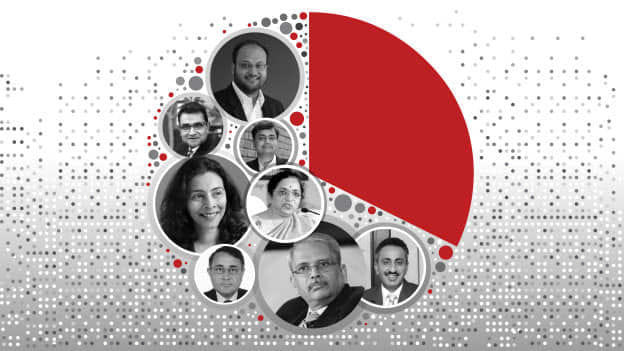
Third People Matters and Monster.com 'CEO as Chief Talent Officer Survey 2013' shows CEOs' increased focus on talent
If 2012 was a year of volatility for business corporations, this year turned out to be even tougher. Not only did the companies have to face the global macro-economic crisis, but the complete policy paralysis of the government (as a result of its populist measures) had culminated into a stage where the country’s economic growth prospects appear crippled.
While the business corporations battled cost pressures, they also witnessed plummeting confidence in the Indian economy, resulting in many global corporations retracting their India businesses in the past several months. Many businesses in India also saw some very high profile exits, leaving huge gaps in succession planning and rising questions on the effectiveness of their talent management programs.
Never before have the lines between people and business blurred as much for a CEO as they did this year, and many have come to realize that their business goals can only be achieved through a singular focus on talent.
This is the third year we have conducted the CEO as the Chief Talent Officer Survey among CEOs in Indian corporations in collaboration with Monster.com. CEOs from 80 business corporations across the length and breadth of the Indian industry participated in the survey to assess their talent priorities for the year. The results of this year saw surprising shifts in the manner in which CEOs were viewing talent management and their talent priorities.
Not surprisingly, a third of the CEOs participating this year commented that they spend more than 50 per cent of their time in talent related activities. Not a single CEO commented that they spent less than 25 per cent of their time on talent management. The picture globally seems to be no different. Very recently, advisory services firm The Conference Board conducted a global survey among 729 CEOs, Presidents, and Chairmen asking them about their top business challenges for the coming year. The survey results state that human capital ranks as the no. 1 challenge for heads of businesses for the coming year. It is perhaps, not unfair to say that CEOs view talent and the business as the same and hence, and the singular question that they are asking while discussing business plans are, “Do we have the people to do it?”
Building a common vision of purpose
While businesses need growth to stay robust, cost pressures and the lack of skilled talent is crippling CEOs from making strong decisions. Many talent considerations complicate the growth equation so CEOs are tracking recruitment, retention, learning, and motivation more closely in their organizations. Another reason why CEOs are involving themselves in talent management is because the costs of key people leaving the organization or having the wrong ones on board have risen phenomenally.
Our survey results show that 80 per cent of CEOs consider building teams in line with growth expectations as their top priority. Sanjay Modi, Managing Director, Monster.com (India/ Middle East/ South East Asia) says, “I look at my leadership team to work outside their silos and contribute to the growth plans of the organization. At Monster, the roles of leaders have all merged into business-centric profiles. I believe that technology acts as an enabler when it comes to employees. We have an applicant tracking system in place to streamline the hiring process. I use technology to connect with my people innovatively: through recorded messages once in a while, calling for virtual ‘All Hands’ meeting or by inviting them at an online forum to connect with me on one to one basis. As the MD, I stand as an evangelist for my brand and hold the responsibility to spread the message of a common goal and purpose among the teams.”
Not surprisingly, many CEOs have mentioned that there has been an increase in their leadership development efforts in the past months intended to drive and fortify the beliefs and values of the organization among the leadership teams. Nearly half the CEOs in our survey (47 per cent) are looking to spend greater amount of time on the leadership of the organization.
Sandeep Banerjee, Managing Director (India), of the multinational contract food and support services company Compass Group says, “I am convinced that living the values within the organization can solve a host of the problems that CEOs may encounter. In our organization, we conducted workshops with the leadership team where they worked on co-creating their purpose and roadmap for the organization. What I achieved as a CEO was a set of collaborative ideas and vision that travelled upwards from the team who not only believes in the purpose, values and the way forward but also will work on achieving our business goals by ‘living the values’. Now my job is to merely act as a facilitator for these visions to see the light of the day. I do not have to worry about alignment and accountability, as these ideas originated from these very people in my team. Over the years, I have realized that this is a beautiful way to drive the goals and values of the organization. It takes time and we have just begun our journey. If one is willing to take the longer path, the returns can be really enduring and endearing.”
The “hands-on” CEO
A striking shift in the CEO role has been observed this year compared to previous years. In our survey, more than half of the CEOs (54 per cent) indicated that they invest the maximum amount of time in formal and informal coaching. This is in stark contrast to last year, where CEOs indicated their involvement in hiring, motivation, restructuring, retention, and leadership development priorities as more important than mentoring and coaching. This jump in priorities (from the sixth to the first) is very interesting to note because it firmly establishes the skill and leadership crisis that organizations in India are facing at this point. Globally, the scenario is no different. A 2013 survey by the consulting firm, PWC, the 16th Annual CEO survey among 1,330 global CEOs, says that lack of key skills is worrying CEOs across the industry.
Kris Gopalakrishnan, Co-Founder and Executive Vice Chairman of Infosys says, “In our industry, what a CEO really needs is a set of leaders who can give strategic direction to the business. We need accelerated development of leaders. It is, thus, the age of the hands-on CEO who spends time and effort in educating, mentoring and coaching people in his teams to take on the challenges of the coming times.”
About 87 per cent of the CEOs in our survey, across industries, have responded saying that CEOs need to spend at least a quarter of their time in talent-related activities. Aditya Malik, CEO of the education services company, TalentEdge says, “For a CEO, growth of the business demands having talent with the right set of skills. It is important for the CEO to have people in his team who can keep pace with the changing needs of the business and demands of the external environment.”
Another area where CEOs are investing their efforts around is the succession management process of the organization. In our survey, CEOs ranked leadership planning and succession as the most important activity of CEOs in 2014 followed by restructuring of the organization to aid growth plans. Hands-on involvement of the CEO in the succession management process has, therefore, become a business necessity.
Are CEOs facing the scarcity effect?
While conditions appear difficult for the business as well as the operating environment, CEOs comment that after succession and restructuring priorities, their biggest headache was retention of key people within the company. Retention of key people within the company ranked as number 3 among the list of CEO priorities. 92 per cent of the CEOs highlighted that retention of high potentials constituted one of the key aspects of their CEO scorecards. 100 per cent of the CEOs we interviewed for this study commented that the fear of losing key people is what keeps them up at night.
This raises the question on whether CEOs might be over-investing their time and efforts on talent retention because of their perception of talent as much too valuable to part with. This frame of mind can be very well captured by the term, “the scarcity effect.” A well-known terminology among marketing professionals, the scarcity effect refers to the phenomenon of consumers sub-consciously hiking the premium on items of consumption, which are seemingly scarce. Our survey results indicate that 92 per cent of CEOs have started tracking retention of high potentials and high performers actively as part of their business scorecards. Consequently, CEOs now can be seen actively involving themselves in efforts to retain and engage talent.
Social collaboration is one area where CEOs are actively seen participating to engage and motivate talent. Aruna Jayanthi, CEO of the IT services firm, Capgemini says, “Forward looking CEOs are already planning ahead to be prepared for talent retention and succession challenges among next-Gen talent, and therefore they are investing lots of efforts on social collaboration. CEOs are involved in putting together a social environment within the organization to bridge the gap between the personal and professional lives of employees. CEOs are now spearheading the use of social collaboration within their organizations through channels such as Facebook.” This radical shift toward social collaboration hints towards the fact that the workforce composition will change over the next 10 years, with the older workforce getting gradually replaced by the younger generation. CEOs want to be prepared for this change and are inclined to build organizations which are prepared for this transition.
It’s what you do, not what you say
During times of uncertainty, what a CEO does becomes much more important than what he talks. Employees tend to monitor the actions of a CEO much more closely, and judge if there is alignment between what they talk and what they do. Almost every CEO we spoke to unanimously agreed that due to the changed business and operating environment, their focus on playing the role model for employees has become much more important. CEOs are therefore much more vigilant about their internal and external communications, and make concerted efforts to act as an ambassador of the brand and the organization.
As the national, political and economic landscape continues to wade through uncertainties, CEOs have realized that it is meaningless to treat business and talent separately. This is the age of the hands-on CEO, and true business leadership has become a question of the intent and ability to plan for talent. The CEO role has transformed into the role of a brand ambassador, as a coach and a mentor, as a champion of organizational values, and most importantly, as a representative of talent needs and preferences.
A great CEO in the coming months will be one who can fortify the company against the internal and external uncertainties. Talent has taken the centre-stage in a CEO’s priority map and the credibility of his leadership will be based on beliefs and values. Over the years, while they’ve wished for radical changes in the business landscape, it is encouraging to see that CEOs are at the helm of affairs now, spearheading this change. CEOs are chartering a new course for business corporations, which are grounded on the fundamentals of trust. While rebuilding of confidence is a slow and painful process, it is perhaps not too far-fetched to say that CEOs have taken a step in the right direction, and the future corporation will be one which is based on trust, integrity, and values.
The Top 5: The major points that stood out in this year’s survey
1. Coaching and mentoring
CEOs ranked coaching and mentoring as the area where they spent most of their time. Their areas of focus are building a leadership team that can collectively work toward common business goals, training leaders on customer relationship management, employee motivation and strategic thinking.
2. Retention of key talent
The worry of losing key talent is keeping CEOs up at night. A majority of the CEOs we spoke to mentioned this as their biggest potential business derailer in the coming months. About 92 per cent of the CEOs said they track high potential and high performer retention as one of the key metrics in their business scorecards.
3. Leadership and succession
After coaching and mentoring, CEOs spent the maximum amount of time on leadership and succession planning. Almost every CEO is now talking about ‘accelerated leadership development,’ or giving potential and leaders more exposure to leadership situations for building their aptitude to adapt to the demands of the current environment.
4. Hiring the right people
Much like last year, hiring continues to be one of the top CEO agendas across industries. When CEOs were asked about their top business agenda for 2014, it emerged 77 per cent of the CEOs consider building teams to aid growth plans as their top priority.
5. Motivating employees
As part of their overall agenda to retain talent, improve productivity, and reduce the negative influences brought forth as a result of the gloomy and uncertain external environment, CEOs consider employee motivation as an area to invest their time and effort.
Author
Loading...