







Performance Management
5 stages in the learning and talent maturity framework





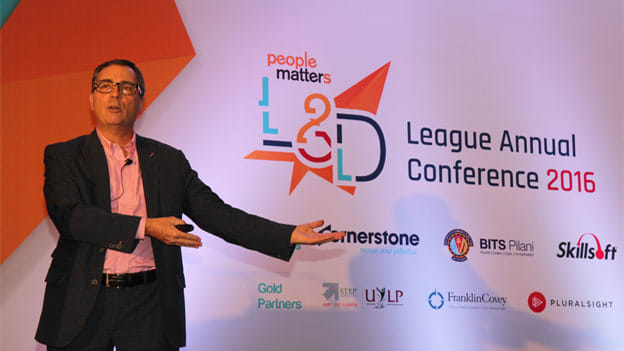
At the L&D Annual League Conference 2016, John Ambrose spoke about the pursuit of becoming a self-developing organization. Here's a snapshot of the framework from the session.
The modern day employee is one who is overwhelmed with information – leading to declining productivity and low engagement. The role of an L&D professional therefore depends on the capacity to understand the context that the individual employee operates in and to help them develop to the best of their ability. Apart from personalizing, the new generation workforce also expects career mobility, continuous learning and coaching. This where the concept of a self-developing organization is most useful since the focus is on delivering an experience that radically simplifies the ability to empower every role in the organization with a personalized and self-directed development path to engage employees in meaningful growth. At L&D Annual League Conference 2016, John Ambrose from SumTotal shared the learning and talent maturity framework. Here are five stages that companies can be categorized into based on where they are on the maturity cycle:
An L&D journey through the different stages of the talent maturity creates talent agility; it resolves skills gaps, creates meaningful analytics and optimizes the performance. The journey, however is not dependent on the L&D function alone, a number of stakeholders including the business and the technology vendor play a key role in driving transformative change in the company.
(This article is based on a session called “The pursuit of becoming a self-developing organization” at the L&D League Annual Conference)
Author
Loading...
Loading...