







Performance Management
Psychological safety must be every HR leader’s top KPI. Here’s why





Psychological safety today is not simply a cultural aspiration. It is an operating infrastructure. In many ways, it is the currency that buys truth. And truth is the currency that buys performance.
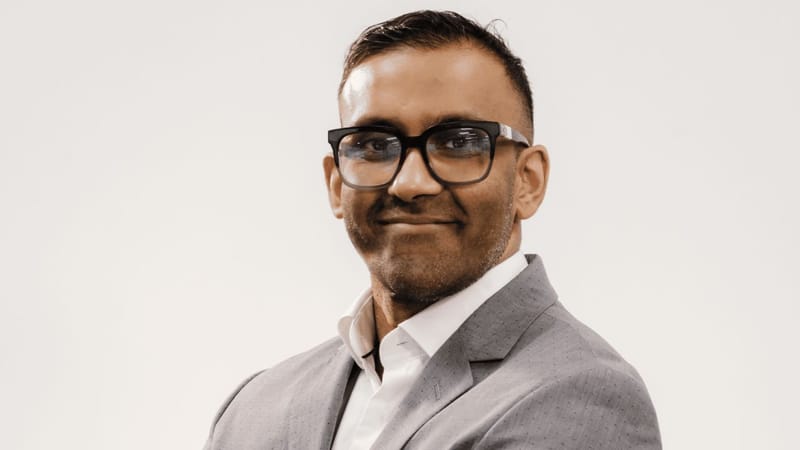
By: Nitin Nahata
For decades, compensation was the dominant currency of work. Pay more, retain more. Incentivise harder, perform better. That equation no longer holds. Across industries, the workforce is redefining what it means to stay, engage, and grow at work. While fair pay remains essential, compensation alone no longer drives loyalty or discretionary effort. Employees increasingly value culture, flexibility, mental well-being, purpose, and the ability to speak and grow without fear. For HR leaders, the focus is shifting from attracting talent to building environments where people can thrive amid uncertainty, with psychological safety at the core.
Psychological safety today is not simply a cultural aspiration. It is an operating infrastructure. In many ways, it is the currency that buys truth. And truth is the currency that buys performance. When psychological safety is missing, speed often becomes noise, talent becomes fragile, and execution slowly drifts away from reality.
At the same time, disruption is accelerating. What once changed over decades now shifts within years or even months. Skills can become outdated before learning programs scale. In this environment, organisations rarely fail due to a lack of capability. They fail when people stop questioning assumptions, raising risks, or experimenting early. Fear is expensive. When fear enters a system, learning slows. When learning slows, adaptability weakens.
The COVID-19 pandemic reinforced this shift. Traditional markers of productivity, such as presence and supervision, lost relevance, and trust became central to performance. Organisations with strong psychological safety adapted faster. Where it was missing, performance often stalled. COVID made one thing clear: ownership drives execution in uncertain environments, and ownership thrives only where people feel safe enough to act.
Psychological safety is often misunderstood as comfort or consensus. It is neither. It is the shared belief that people can speak up, ask questions, admit mistakes, and challenge decisions without fear of embarrassment or career damage. In practice, it determines whether employees raise concerns early, ask for help, offer dissenting views, and learn faster rather than playing it safe. It is the invisible engine behind creativity, adaptability, and problem-solving, especially in high-pressure or hierarchical environments.
The data increasingly support this shift. Indeed’s 2024 Global Work Wellbeing Report found that only 22 percent of employees globally say they are thriving at work, with disengagement often linked to fear of speaking up, lack of recognition, and cultures that punish failure. Research from the Boston Consulting Group in 2024 shows that organisations that invest in psychological safety experience lower attrition, particularly among underrepresented groups. Psychological safety is not only a cultural factor. It is a retention and performance strategy.
This shift is also redefining HR’s role. HR is no longer only a policy designer or an enforcer of compliance. HR leaders are shaping how voice, power, and trust operate day to day. This shows up in how feedback is encouraged and acted upon, whether leaders are trained to listen rather than direct, how mistakes are handled, and whether dissent is treated as disloyalty or contribution. Psychological safety is not created through policy announcements. It is built through consistent leadership behaviour, one interaction at a time.
Mistakes in fast-moving experiments were treated as learning signals, while accountability remained high. The result was faster decisions, stronger collaboration, and better leadership readiness despite external volatility. In this context, psychological safety helped sustain performance under pressure.
Every organisation operates with an implicit safety-to-accountability ratio. Too much accountability without safety creates fear, politics, and silence. Too much safety without accountability creates comfort and drift. High-performing cultures get the ratio right. People can speak the truth, and the truth still has consequences. This is what converts psychological safety from a stated value into organisational design.
One simple litmus test reveals where organisations stand. When a project slips, do teams surface the real constraint in the first conversation, or do they manage optics until deadlines make the truth unavoidable? The answer usually reflects the true state of psychological safety more than any culture survey.
Hybrid and remote work have made psychological safety even more important. Without physical cues and informal conversations, misunderstandings can escalate quickly. Silence becomes easier. Employees may hesitate to speak up in virtual environments where hierarchy can feel amplified. Organisations now need to be more intentional through structured feedback loops, inclusive meeting norms, and visible access to leadership. Without these, disengagement can grow quietly.
When employees feel safe, they take ownership of learning, seek feedback, and pursue internal opportunities. Psychological safety becomes a driver of retention, upskilling, succession planning, and internal mobility. Gallup research shows employees who feel heard are significantly more likely to perform at their best. Recognition combined with safety unlocks discretionary effort, supporting innovation, collaboration, and resilience over time.
The question for leaders is no longer whether people can adapt. It is whether organisations have created environments that allow them to. Is it safe to disagree? Is failure treated as data or as a defect? Are managers trained to lead with trust instead of control? In an era of constant reinvention, strategy sets direction, but adaptability determines survival, and adaptability thrives where psychological safety is actively built and protected.
Compensation still matters, but it is no longer the full story. Today’s workforce increasingly values dignity, voice, growth without fear, and belonging. Organisations that recognise this shift are likely to build stronger, more resilient cultures and businesses over time.
(The author of this article is the Group CHRO at Gameskraft)
Topics
Loading...
Loading...