







Workforce Planning
Preparing the workforce for the shift from services-led engineering to IP- and platform-driven innovation





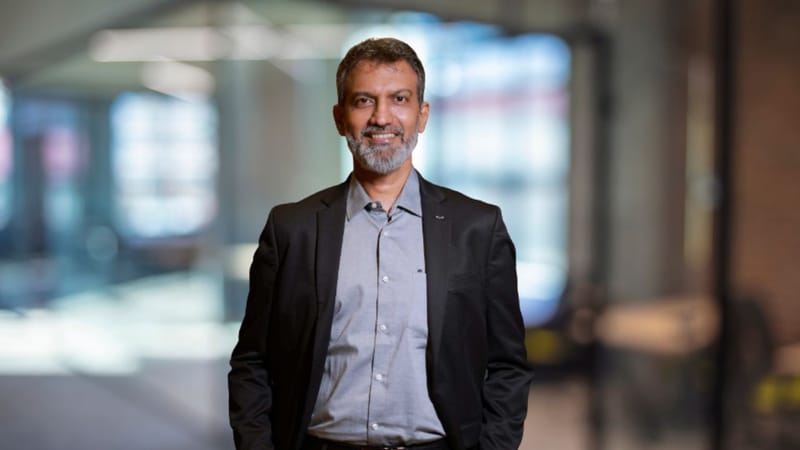
Engineering’s shift to IP-led innovation demands a new workforce mindset, with AI, learning agility, ownership and leadership shaping the future of talent.
By: Sathish Kumar
For decades, success in engineering services had a fairly predictable formula: sign the Statement of Work, staff the project, bill the hours, deliver to spec and hope the client comes back for more. It’s time for a wakeup call that the formula is quietly breaking and nearing obsolescence. The industry's next winners won't be the ones executing specs fastest; they'll be the ones building something they own proprietary IP, reusable platforms, AI-enabled and Edge AI products that keep creating value long after any single project ends.
And here's the part most transformation conversations get wrong: this isn't a technology story. It's a people story. Engineers need a new instinct and not just new tools. The mindset to think beyond the ticket, build for reuse and keep learning as fast as the technology around them changes. That shift shows up first in the people behind the engineering.
The changing nature of engineering talent
Engineering organisations have traditionally rewarded technical expertise, delivery excellence and customer responsiveness. These capabilities still matter but they're no longer enough on their own. Domain expertise alone is not a determinant for success anymore. It’s how an engineer thinks and adapts that increasingly matters as much as what they already know.
The rise of AI, Edge AI, embedded intelligence, software-defined products and reusable platforms requires engineers to think differently. Success increasingly depends on their ability to
Develop products that can scale across multiple customers while maintaining integrity.
Collaborate across hardware, software, AI, cloud and business functions.
This shift requires organisations to rethink not only technology strategies but also how they hire, develop, reward and retain talent.
Building an innovation-ready workforce
Preparing a workforce for an IP-led future takes a structured, deliberate approach. Here’s how I’d break it down.
1. Hire for learning agility: Current skills cannot be your only benchmark!
Technology cycles are becoming shorter every year. The skills required today may become outdated within a few years. Talent that was hired once for a particular skill set should now have the agility to go beyond it; people who can adapt as the environment changes, supported by a culture that actively fosters that adaptability.
Organisations should look out for curiosity and adaptability and not just stick to the rule book of identifying talent. How fast someone picks up something unfamiliar is a strong signal of the kind of talent needed to move toward an IP-focused organisation. The engineers worth betting on bring problem-solving instincts, an innovation mindset, and a genuine appetite for continuous learning.
Technical skills can be developed; the willingness to learn and innovate is far harder to cultivate.
2. Move from role-based Learning to Capability-Based Learning
Conventional training is often reactive. It’s triggered either by an immediate project requirement or by a specific skill gap. Unfortunately, that model no longer holds up. As technology moves faster and projects grow more cross-domain, training needs to build broader capabilities. Learning cannot be event-driven and must be continuous.
And to sustain that, it requires an internal innovation ecosystem that gives capability-building somewhere real to go through innovation sprints. At embedUR, this already shows up in practice: cross-collaboration happens at every program, with engineers working together on common platforms within necessary security boundaries. Voluntary knowledge-sharing sessions are the real engine behind this; after all, who wouldn't rather learn a new skill from a peer who's already cracked it, instead of an external expert?
Learning moves faster when it comes from someone you trust. Nurture that kind of environment and capability-building stops being a one-off event, you start to see it compound on itself.
3. From delivery to ownership: The culture shift that actually matters
Perhaps the biggest change organisations need to make here isn't technical at all, it's purely cultural.
A service mindset asks, "What does the customer need today?" An IP mindset asks something bigger: "What reusable solution could solve this problem for hundreds of customers tomorrow?" and "How much more value can I create within this same relationship?"
How we show up with our customers reflects the ownership value we bring to our services. As embedUR's CEO and Founder, Rajesh Subramaniam, puts it: "Partners, not vendors." We own outcomes, not just the tasks. A culture of ownership breaks the tunnel vision of waiting for instructions and treating the SOW as a ceiling and that partner mindset needs to be deeply rooted in every engineer, not just at the leadership level.
Building it starts with leadership: encouraging experimentation, tolerating intelligent failure and providing psychological safety to take those experiments. For the mindset to truly take root, these behaviours need to be recognised and rewarded, reinforcing the pattern of thinking instead of appreciating the outcome.
Employees need to feel that creating long-term value matters just as much as hitting today's delivery commitments.
4. Leadership must evolve first
Leaders play a critical role in enabling this shift in mindset. Engineering managers must move from being project coordinators to capability builders. When new technology arrives, it's not only the engineer's job to learn it, managers also need to upskill too! None of the shifts described so far will take hold unless leaders are willing to change first.
Leadership development therefore becomes one of the most strategic investments an organisation can make. Tenure alone doesn't build it; deliberate investment does and that's what keeps the partner mindset reinforced at every level.
5. AI is not going to replace engineers, it’s going to augment them
The big existential question of "will AI replace the workforce" is, in truth, the wrong question to ask. In the current landscape of innovation lead transition, it's transforming workflows at unprecedented speed. Handling repetitive work like test-case writing, for example, frees up engineers' time to focus on higher-priority problems. We need to understand that it’s a productivity shift and not a headcount reduction.
Training and adoption of AI needs to be projected as “here’s what this frees you up for” not “here is a tool that is going to replace you”.
At embedUR the AI-first mindset runs across the board, from ModelNova to our service engagements. As our CEO puts it: "What changes is how we write code, how we solve problems, and how we deliver value, but AI cannot replace creativity, judgment, taste, ethics, and ownership. We build with AI in the loop, not as an afterthought."
Organisations should focus on building AI-augmented engineers-professionals who leverage AI to improve productivity while applying human expertise to solve complex problems. That said, over-reliance on AI carries its own risk: knowledge atrophy and unhealthy dependency are real concerns worth guarding against.
6. Measuring the right outcomes
Transformation cannot be sustained without the right metrics. HR without metrics is like navigating without a compass: it can tell you're moving, but not whether you're headed anywhere useful!
Beyond SOW tracking and beyond utilisation and revenue, organisations need signals that capture innovation readiness. On the people side, that means how fast the workforce is picking up new capabilities, how freely talent moves internally and how ready existing skills are for what's coming next.
On the innovation side, it means whether patents and IP are being generated and how deeply engineers are participating in innovation activity rather than just hearing about it. Together, these give a far clearer picture of an organisation's readiness for long-term innovation than delivery metrics alone ever could.
The HR imperative
Human Resources has evolved from being a support function to becoming a strategic transformation partner. We set the boundaries to let this slide or thrive in such situations. It may sound complicated, but it shouldn’t be uncomfortable:
HR leaders must pave the way by establishing competency frameworks and career ladders, so IP contribution carries the same weight as delivery.
Rewards should be tied to actionable metrics, not delivery alone. They should recognise innovation and knowledge creation.
Leadership development should shift from delivery focus to an ownership focus, and organisations should incentivise experimentation.
And this isn't starting from zero. HR already knows how to build this kind of measurement: attrition dashboards and headcount tracking are already up and running, tracked in real time. That's proof the metric muscle exists. What's needed now isn't a new skill, just a new focus. Point that same tracking discipline at platform adoption and reusable IP, not only attrition and headcount.
The workforce transformation required for an IP-led future cannot be achieved through technology investments alone. It demands intentional investments in people, leadership and organisational culture.
The future of engineering belongs to organisations that can combine execution excellence with innovation at scale and that starts with how we think about our people, long before it shows up in the platforms we build.
About the Author: Sathish Kumar is the Head of Human Resources and Operations at embedUR systems, where he partners closely with business and technology leaders to build high-performing teams. With over two decades of experience across technology organizations, he has led transformational initiatives spanning talent strategy, leadership development, organizational culture, workforce planning and business operations.
Loading...