







Business
Trump's USD 100K H-1B visa fee shakes up India's IT industry





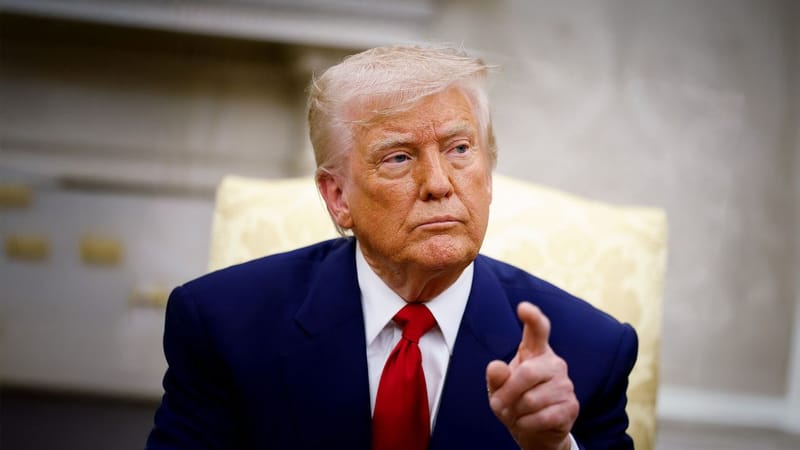
Companies in the US recruiting foreign professionals on H-1B visas will have to submit a substantial USD 100,000 payment for each application.
The tech industry is on edge as a sweeping overhaul of H-1B visa fees threatens to fundamentally alter its talent strategy. The move comes at a time when the United States government is determined to end practices where foreign workers "take jobs from hard-working Americans" and exploit the nation's economy without making meaningful contributions, according to US Commerce Secretary Howard Lutnick.
Under the proposed changes, organisations in the US recruiting foreign professionals on H-1B visas will have to submit a substantial USD 100,000 payment for each application, placing them under a significant financial burden for each foreign professional they hire, potentially disrupting a crucial source of innovation and expertise.
The US H-1B visa is a non-immigrant visa needed for foreign nationals who want to work in the United States. The move is raising alarms, especially within India's IT sector, where a large portion of the US workforce could be directly affected.
H-1B visas are a cornerstone of the US tech industry, allowing companies to sponsor foreign workers with niche skill sets. According to a Mint report, currently, the US issues 85,000 H-1B visas annually, with India accounting for nearly 75 percent of these permits.
What does the order say?
According to the Proclamation signed by US President Donald Trump, H-1B employees, including current visa holders, will be denied entry to the US beginning Sunday, September 21, unless their employer has paid a USD 100,000 annual fee for the employee. This change in the application fees is way higher than the current H-1B visa fees, which range between USD 1,700 and USD 4,500, making it economically unviable for most companies, according to a Times of India report.
The statement issued by the White House stated that the restrictions are in place to curb abuses that displace US workers and undermine national security. In recent years, the share of IT workers with H-1B visas in the US has risen from 32 per cent in FY 2003 to over 65 per cent, according to the government, which has resulted in a higher unemployment rate amongst computer science graduates, more than double the rates for biology and art history majors.
The number of foreign STEM workers in the US has more than doubled between 2000 and 2019, while overall STEM employment increased by only 44.5% during that period. According to the statement by White House, American companies are laying off their American technology workers and seemingly replacing them with H-1B workers.
Impact on the Indian IT sector
Such a massive hike in H-1B visa fees would disproportionately affect companies that sponsor the largest number of visas. These organisations include major technology firms and large IT consulting companies, such as Amazon, Cognizant, Microsoft, Apple, TCS, Wipro, Intel, Infosys, Walmart, and many others.
These companies rely heavily on Indian tech talent to fill roles in software development, AI, and data science and such a move might pivot their hiring away from international recruitment and focus more on domestic talent pipelines, drastically impacting the Indian IT talent.
Indian-based IT services giants, such as TCS, Infosys, Wipro, and HCLTech, along with global firms like Deloitte and Cognizant, are among the largest users of the H-1B program. Their business models are susceptible to changes in visa costs.
Data from the US Citizenship and Immigration Services (USCIS), sourced by Times of India, shows that in FY2025, Amazon topped the list with 10,044 approvals for H-1B visas, followed by TCS 5,505, Microsoft 5,189, Meta 5,123, Apple 4,202 and Google 4,181. Many industry experts believe that such a move can impact both Indian IT services and US tech giants that rely on this talent pool in equal measure.
Industry's Reaction
Industry body Nasscom said the US' move to raise the H-1B visa application fee to USD 100,000 will impact India's technology services companies, as business continuity will be disrupted for onshore projects that may require "adjustments".
Donald Trump's USD 100,000 H-1B fee will choke US innovation, and turbocharge India's, said former NITI Aayog CEO Amitabh Kant in a post on X. "By slamming the door on global talent, America pushes the next wave of labs, patents, innovation and startups to Bangalore and Hyderabad, Pune and Gurgaon. India's finest Doctors, engineers, scientists, and innovators have an opportunity to contribute to India's growth & progress towards Viksit Bharat. America's loss will be India's gain.
"Because of the new H1B rules, a tremendous number of talented individuals are going to be headed back to India. It will undoubtedly be tough at the beginning to move base, but it will work out for them, given the tremendous opportunities in India," said Kunal Bahl, serial entrepreneur and co-founder of Snapdeal.
Speaking to CNBC TV-18, Sandip Agarwal, Fund Manager at Sowilo Investment Managers, estimated the overall hit to Indian IT margins could be in the range of 6–7 per cent.
Radhika Gupta, MD and CEO of Edelweiss Mutual Fund, notes in her LinkedIn post that while H-1B visa norms were once favourable, the 2008 financial crisis caused significant challenges for Indian students and professionals in the US. Many felt disillusioned and chose to return to India.
"Some eventually returned home, and years later, even those of us who still had the visa made the same choice. Today, we've built fulfilling lives here — with tremendous professional opportunities and the deeper joy of creating in our own country," said Gupta.
On a personal note, Gupta shares she would never go back to the United States, now that India is offering opportunities for its youth within the nation.
"Personally, I wouldn't want to go back — at all. So, if you're on a US campus right now feeling shaken or disheartened, I know what that feels like. But remember: when one door closes, many others open back home. And India of 2025 is a far more exciting place than India of 2005 ever was. Chin up. Aao, ab laut chalen!" Gupta commented.
While this is still a developing situation, some industry experts see this as an opportunity for India's GCC industry to strengthen its position further. This arrangement could mean that more companies would want to set up their GCCs in India to address the talent shortage and offset the rising costs of visas.
"Now what will happen is everybody will work to increase offshoring... because it doesn't make sense, first, you don't get talent, second, the costs are too high. That will happen over the next six to 12 months, Infosys veteran and investor Mohandas Pai told PTI.
Topics
Author
Loading...