







Economy Policy
Global fuel crisis pushes governments to promote work-from-home and demand cuts, says IEA







The IEA also recommended reducing business air travel where alternatives such as virtual meetings or rail travel exist, in order to reduce pressure on jet fuel markets.
Governments, businesses and households around the world are being urged to reduce fuel consumption, including working from home, driving less and cutting air travel, as the global oil market faces the largest supply disruption in history following the war in the Middle East, according to the International Energy Agency (IEA).
"The crisis has severely disrupted oil shipments through the Strait of Hormuz, a key global energy route that normally carries about 20% of the world’s oil supply. With tanker traffic reduced to near zero, global oil markets have tightened sharply, pushing crude prices above $100 per barrel and sending diesel, jet fuel and liquefied petroleum gas (LPG) prices even higher," IEA said in the report.
While IEA member countries have already agreed to release 400 million barrels of oil from emergency reserves, the largest release in the agency’s history, the agency says supply measures alone will not be enough to stabilise markets. Instead, reducing demand is now seen as one of the fastest ways to ease pressure on fuel prices and protect consumers.
Work from home returns as an energy policy tool
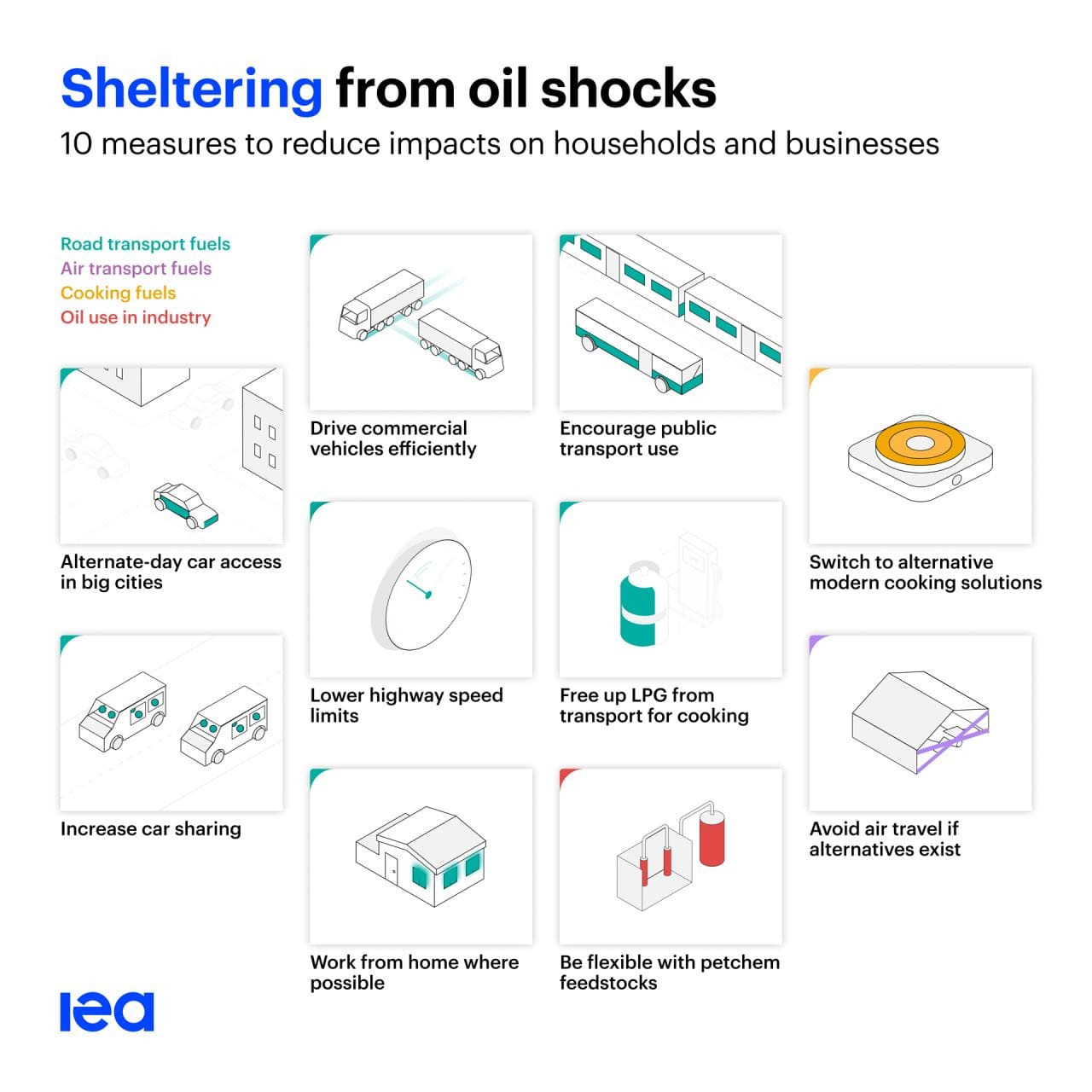
Among the most immediate measures recommended is working from home where possible, which reduces fuel use from daily commuting. The agency said remote work could quickly lower oil demand, particularly in cities with large commuting populations.
Other road transport measures include lowering highway speed limits, encouraging public transport, car-sharing, and implementing alternate-day driving schemes in major cities to reduce congestion and fuel consumption.
Road transport accounts for around 45% of global oil demand, making it the biggest area where consumption can be reduced quickly.
Aviation, cooking fuel and industry also affected
The IEA also recommended reducing business air travel where alternatives such as virtual meetings or rail travel exist, in order to reduce pressure on jet fuel markets.
For households, the agency suggested shifting away from LPG where possible by adopting electric or alternative clean cooking solutions, while ensuring LPG supplies are prioritised for essential cooking needs rather than transport use.
Industries were also advised to switch from LPG to alternative feedstocks such as naphtha where possible and implement short-term efficiency measures to reduce oil consumption.
Governments urged to lead demand reduction
The agency said governments should lead through public sector measures, regulations, awareness campaigns and targeted financial support for vulnerable households rather than broad fuel subsidies, which are expensive and often ineffective.
The IEA noted that demand restraint has historically been part of emergency energy responses and can reduce fuel use within weeks if widely adopted.
“The war in the Middle East is creating a major energy crisis, including the largest supply disruption in the history of the global oil market. In the absence of a swift resolution, the impacts on energy markets and economies are set to become more and more severe,” said Fatih Birol, Executive Director, IEA
“As the global energy authority, the IEA is doing everything we can to support the stability of energy markets. We have recently launched the largest ever release of IEA emergency oil stocks – and I am in close contact with key governments around the world, including major energy producers and consumers, as part of our international energy diplomacy."
Birol added, "In addition to this, today’s report provides a menu of immediate and concrete measures that can be taken on the demand side by governments, businesses and households to shelter consumers from the impacts of this crisis. It draws on the IEA’s decades of expertise in this field and highlights measures that have been proven to work in practice in different contexts. I believe it will be of use to governments around the world, in both advanced and developing economies, in these challenging times.”
However, the agency warned that even if all demand-side measures were implemented globally, they would not fully replace the oil supply lost due to the disruption. Restoring shipping through the Strait of Hormuz remains critical to stabilising global energy markets.
Until then, the world may see temporary changes in work patterns, travel behaviour and industrial fuel use, similar to past energy crises, as governments try to manage fuel shortages and rising energy costs.
Author

Loading...