







Employee Skilling
The first measure of learning impact must be business results: S&P Global's Bhavna Batra





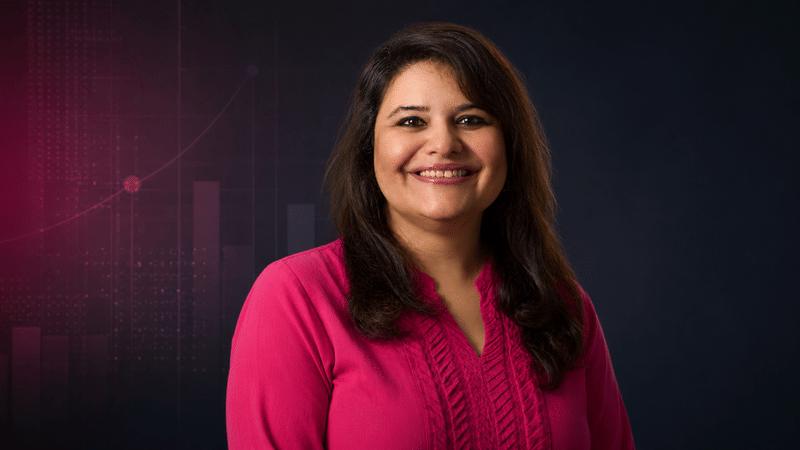
Ahead of People Matters TechHR India 2026, Bhavna Batra explains how S&P Global is connecting skills data, internal mobility, employee expectations and learning investments with decisions the business can measure.
HR teams have more workforce data, learning platforms and employee feedback than they did a decade ago. Yet one question remains stubbornly difficult: what changed because of them?
Did an upskilling programme improve performance? Did better skills visibility help an employee move internally? Did a benefits decision strengthen the experience people actually value? Did a manager development programme improve the connection between organisational purpose and everyday work?
For Bhavna Batra, vice president – People, S&P Global, the challenge is not gathering more information or offering more programmes. It is connecting skills, data and employee experience with an outcome the business can recognise.
“If we do not start with the business outcome in mind, we may create something that is good to experience in the moment but does not have long-term impact,” Batra told People Matters.
Ahead of her participation at People Matters TechHR India 2026, Batra spoke about how S&P Global is using its internal talent marketplace, people analytics and employee listening to make growth more personalised—and why HR must measure value beyond participation, activity and promotion.
A skills profile should open a door, not sit in a system
S&P Global’s internal talent marketplace, Nexus, is built around a simple proposition: skills data should help an employee decide what they can do next.
Employees across the organisation have profiles reflecting the skills they brought into the company and those they have developed since. Nexus uses that information to recommend career coaching, training programmes, bite-sized learning, mentorship, gigs and special projects.
The profile can also connect an employee with internal opportunities. When a role is posted, someone whose skills indicate a possible match can receive a prompt to explore it.
This is where a skills inventory begins to become talent intelligence. A static profile records what an employee knows. A useful talent system shows where those capabilities may travel, what the person could learn next and which experiences may prepare them for a different role.
It also changes the mechanics of internal mobility. Opportunities become less dependent on personal networks or whether a manager happens to identify the fit. The platform can make the possibility visible at scale; the employee still decides whether it aligns with their ambition.
For HR leaders, that distinction is important. Personalisation should not make career decisions on an employee’s behalf. It should give people better signals, more relevant options and clearer agency.
A dashboard must answer the question behind the number
Across industries, Batra sees clean, connected people data becoming a leadership priority. But the ambition should extend beyond consolidating information into a polished dashboard.
A workforce total does not tell a leader whether the organisation has the capability to deliver its strategy. An attrition number does not reveal whether the people leaving hold scarce or critical skills. A succession slate does not show whether the identified candidates are ready.
The more consequential questions include:
Where is voluntary attrition concentrated?
Is the organisation losing critical capabilities?
What is anchoring the talent the business cannot afford to lose?
How ready are the people on succession slates?
Which experiences or exposures could close the gap?
Answering them requires HR to connect workforce cost, headcount, attrition, skills, engagement and succession data that may sit across separate systems.
The value is not the dashboard itself. It is the decision it makes possible: where to intervene, which capability to build, whom to retain and what risk requires attention first.
Batra sees stronger maturity in technology-enabled talent acquisition and personalised development. Predictive analytics, using signals to anticipate attrition risk, capability gaps or future workforce concerns, remains an unfinished area for many organisations.
Descriptive data explains what has already happened. Workforce intelligence should help leaders prepare for what may happen next.
Benefits data should change the benefits
S&P Global is also using employee sentiment and utilisation to understand which benefits are creating value.
During the pandemic, the company introduced wellness holidays. It has retained five each year, with the organisation switching off collectively, generally around a Friday or Monday to create a longer break. Employees also receive a wellness allowance.
Batra said the offering has continued to attract positive feedback across internal sentiment, external sentiment and usage, making it one of the company’s most appreciated benefits.
The example shows what evidence-led employee experience can look like. Data did not simply report how many people used a benefit. It helped the company recognise which practice employees continued to value after the original context had changed.
That matters in a multigenerational workforce. The same benefits portfolio will not carry equal value for employees at different life stages. Medical insurance may feel foundational to one person and less immediately relevant to another.
Analytics should therefore help HR distinguish between an offering that exists, one that is used and one that meaningfully strengthens the employee experience.
Employees are asking why, and watching what leaders do next
Batra sees employee expectations shifting in three clear ways: stronger alignment with organisational purpose, clearer boundaries and a greater willingness to question established practices.
She recalled that long working hours were once accepted in some industries as part of the role. Employees today are more likely to ask whether those hours are creating meaningful value or merely preserving an old way of working.
That willingness to question can unsettle leaders, but Batra sees it as healthy. Millennials were described as unusually vocal when they entered the workforce; Gen Z now attracts similar labels. Asking why can expose processes, behaviours and assumptions that an organisation has stopped examining.
S&P Global has ten people resource groups, including a well-being group. Batra sees these communities as part of an ecosystem in which employees can participate as whole people rather than only as occupants of a role.
But employee voice creates value only when the organisation is prepared to absorb it.
"Every people leader, manager and senior leader has to listen,” Batra said. “We are often good at sharing. We may not always be as effective at listening or absorbing."
Trust cannot therefore be assigned to an HR policy or the top of the organisation. HR can create practices that support respect, belonging and transparency, but managers must role-model those behaviours and be held accountable for them.
Employees are not judging organisations only by what they communicate. They are watching whether the questions they raise lead to a conversation, a decision or a visible change.
The first measure of learning impact is business results
Traditional learning evaluation often places business results at the end of the measurement process, after participation, learner reaction and knowledge gained. Batra would reverse that sequence.
“For me, the first stage of impact in the world we operate in is business results,” she said.
She divides capability building into three connected areas:
Functional and domain expertise: the knowledge required to perform and solve problems within a field.
Digital fluency: the ability to use technology and data effectively in the context of work.
Power skills: capabilities such as storytelling, collaboration, influence and complex problem-solving.
S&P Global deliberately avoids calling the third category soft skills. These capabilities determine whether functional expertise and digital knowledge can travel across teams, influence a decision or resolve a complex problem.
Storytelling, for example, becomes a business skill when employees need to build support for an idea, collaborate across functions or prevent disagreement from becoming personal. Its impact should be examined through the person’s ability to create influence—not simply through attendance or satisfaction scores.
Manager development requires the same outcome discipline. Batra describes managers as the connectors between organisational purpose and everyday work. Engagement, belonging and external employee sentiment can indicate whether that connection is working.
Those workforce measures should ultimately be read alongside customer experience, innovation, retention and collaboration. The precise metric will differ by intervention, but the question should remain consistent: what should improve if this learning works?
If HR cannot answer that before designing the programme, it will struggle to prove value after delivering it.
Three horizons. Three priorities. No activity theatre.
Batra believes HR earns—and retains—its influence by understanding the “business of the business”: how the company makes money, where margins sit, who its competitors are and which headwinds or tailwinds are shaping its decisions.
Without that understanding, the function risks being seen as a process steward. With it, HR can help prepare the organisation across three horizons:
Today: delivering against immediate business and workforce expectations.
The foreseeable future: preparing for needs likely to emerge over the next two or three years.
The unknown: reading wider signals, encouraging experimentation and building a culture comfortable with constructive disagreement and considered risk.
The three horizons do not require an endless list of initiatives.
“Do not undertake 20 initiatives when you do not have the bandwidth,” Batra said. “Focus on three and do them really well.”
Her argument brings the story back to measurement. HR’s influence will not be determined by how much activity it generates, how many dashboards it launches or how many people complete a programme. It will be determined by whether the function identifies the right priorities and accepts accountability for the outcomes.
The article ends here. The measurement starts in the room.
Bhavna Batra will join more than global experts, CEOs, CHROs and HR innovators at People Matters TechHR India 2026, Asia’s largest HR and Work Tech conference, on 6-7 August at Yashobhoomi Convention Centre, Delhi.
If your learning dashboard counts completions better than capability—or your people data describes the workforce without changing a decision—bring those questions to TechHR India.
Register now to join Bhavna and other leaders examining how skills, workforce intelligence and leadership choices can be translated into growth for the business and its people, can feel.
Topics
Author

Loading...