







Sustainability & ESG
Peepal Baba on why sustainability is a people practice, not a CSR strategy



|
Updated on


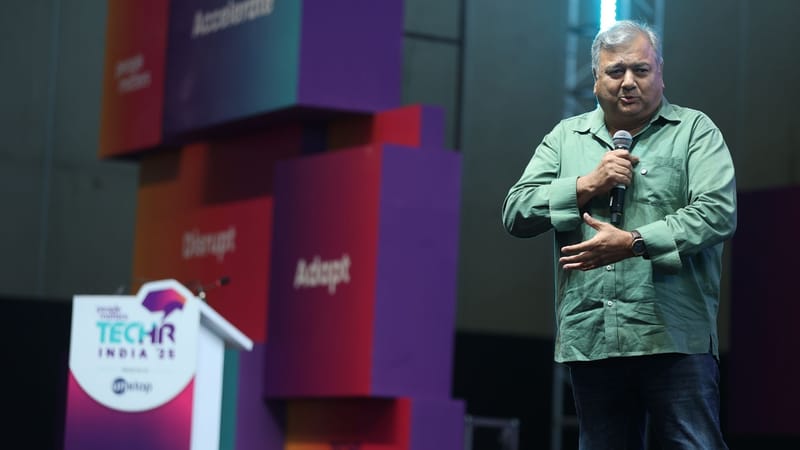
At TechHR India 2025, Peepal Baba, reminded us that sustainability isn’t about corporate social responsibility—it’s about conscious human responsibility.
People Matters TechHR India has long been a platform where conversations around leadership, technology, and the future of work converge. Yet, this year, one of the most profound moments came not from a corporate heavyweight or tech visionary, but from a man who has quietly transformed India’s ecological landscape by planting more than 20 million trees over four decades.
Peepal Baba (Swami Prem Parivartan), a name synonymous with ecological activism, took the stage with a deeply personal and grounded take on sustainability. Over the past four decades, without chasing recognition or funding, he has led a movement that has planted over 20 million trees across India. What started as a calling at age 11, after a schoolteacher opened his eyes to the climate crisis, has grown into a pan-India movement involving over 4 lakh volunteers through the non-profit Give Me Trees.
The seed of change
Born into an Army family in Pune, Peepal Baba’s ecological journey began at the age of 11. “A schoolteacher told me stories about bio-diversity, and the damage we were doing to the earth. Something clicked. That started his biodiversity journey, and he has never stopped since,” he shared. Encouraged by his grandmother and mentors, he soon grew into a life mission; quietly mobilising lakhs of volunteers to green India.
Give Me Trees Foundation, which he started in 1977, has since grown into a pan-India environmental movement, operating across India with over 4 lakh volunteers. And all of it, he insists, without chasing limelight, government funding, or corporate grants. “We’ve planted trees in forests, army cantonments, and even conflict zones—using desi jugaad, bicycles, and community kitchens. No chemicals. No campaigns. Only commitment.”
Beyond optics: A call to corporate India
Peepal Baba emphasised that, “Don’t talk about climate change—it’s beyond your control. Stop turning sustainability into a business plan. Humans are no longer nature’s contributors—we’ve become consumers, even invaders,” he said, challenging CSR leaders to walk the talk instead of relying on metrics and glossy sustainability reports.
Instead, he called for organisations to integrate ecological practices into employee engagement and leadership development efforts. “Why does team-building always happen in air-conditioned hotels? Take your teams into the forest. Let them feel the soil. Let them dig, plant, and breathe. That’s where real learning happens—not just about nature, but about life, purpose, and humility.”
A people practice, not a policy
Throughout the session, Peepal Baba emphasised that sustainability must be led by people, not paperwork. “Our story starts and ends with trees. Water and air don’t come under GST. Nature is not a line item on your quarterly agenda. You want to make your workplace meaningful? Give your people a cause bigger than themselves.”
He believes that re-establishing our relationship with nature is the foundation of wellbeing, community, and creativity—all key aspects of a future-ready workplace. And while his remarks were often punctuated with humour—“I like trees better than people. They always give. They never complain.” The core message was deeply serious.
Uploading a new intelligence
Peepal Baba left the TechHR audience with a parting thought that lingered long after: “You talk about artificial intelligence. We need to upload a different virus now—one of conservation, community, and cosmic intelligence.”
In a conference brimming with innovation and emerging technologies, Peepal Baba’s presence was a quiet but powerful reminder that sometimes, the most radical disruption is not digital—it’s ecological. That nurturing the planet isn’t just a green initiative; it’s a deeply human one.
Topics
Author
Loading...