







Workforce Planning
PM Modi questions India Inc over hiring and salary hikes after corporate tax cuts



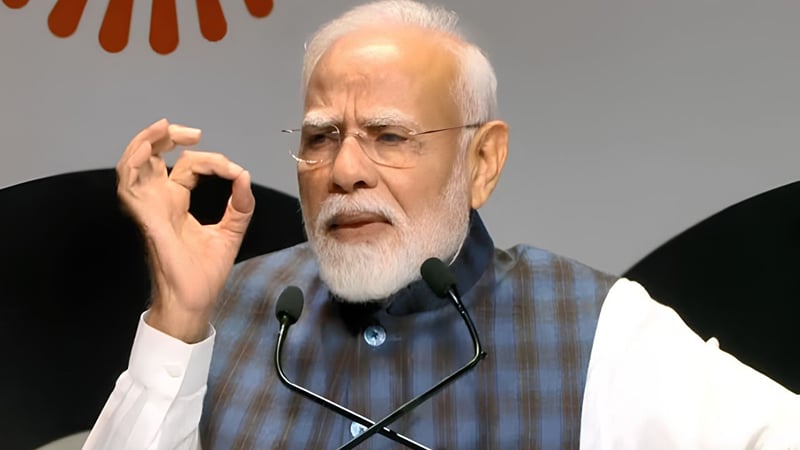
Modi questioned whether companies had used the benefits of these reforms to expand their workforce and increase employee salaries.
Prime Minister Narendra Modi on Thursday questioned whether Indian companies had increased employee headcounts and salaries despite benefiting from corporate tax reductions and other government reforms.
He urged businesses to assess whether these policy benefits had translated into greater employment opportunities and higher incomes for workers.
Addressing the FICCI Annual General Meeting and Annual Convention at Bharat Mandapam in New Delhi on November 19, Modi called on India Inc to take greater responsibility for job creation and wage growth, as reported by CNBC-TV18 and Business Standard.
"Corporate tax has been reduced from 30% to 22%. Up to ₹12 lakh, there is no income tax. But has the industry increased hiring or increased salaries of employees?" Modi asked.
"For that, you say, 'Modiji, woh aap karo'," he added, questioning industry's expectations of government intervention.
Corporate tax relief puts hiring and salaries in focus
The Prime Minister's remarks drew attention to whether corporate tax concessions had delivered tangible benefits for employees. He urged businesses to assess how government reforms had translated into employment opportunities and improved compensation.
Key measures highlighted by Modi included:
Corporate tax reduction: The base corporate tax rate for existing domestic companies was reduced from 30% to 22% in September 2019.
Manufacturing incentives: A lower base tax rate of 15% was introduced for eligible new domestic manufacturing companies.
Individual tax relief: Annual earnings of up to ₹12 lakh are exempt from income tax under the current tax regime.
Simplified tax processes: Measures have been introduced to make tax return filing and refunds easier for taxpayers.
Against this backdrop, Modi questioned whether companies had used the benefits of these reforms to expand their workforce and increase employee salaries.
PM urges businesses to look beyond domestic markets
Beyond employment and wages, Modi called on Indian companies to improve product quality and strengthen their competitiveness in international markets.
He cautioned businesses against relying solely on India's large consumer base, arguing that domestic demand should not discourage companies from pursuing higher standards.
"Our domestic market should not become our comfort zone. We need to get out of the mentality that 'yeh maal toh bik jaayega'," he said.
The Prime Minister urged businesses to focus on manufacturing products that could compete globally while expanding India's presence in international markets.
Government seeks industry feedback on further reforms
Modi also invited industry leaders to identify policy changes needed to support investment and economic growth.
"Send me in writing, without any hesitation or reluctance, which more reforms are necessary. The mind and doors of the government are both completely open," he said.
He encouraged companies to adopt an 'India First' approach to long-term investment decisions and increase domestic production to reduce dependence on imports.
The Prime Minister also called for greater investment in agriculture and allied sectors, highlighting opportunities to strengthen India's export competitiveness.
Economic growth must translate into wider opportunities
Modi said India remained the world's fastest-growing major economy, with leading global institutions projecting growth of around 7%.
He also highlighted the country's progress in reducing poverty and improving economic opportunities over the past decade.
However, his questions on recruitment and salaries placed renewed emphasis on the role of private businesses in ensuring that economic growth delivers benefits to employees.
"To move forward, it is essential we engage in introspection from time to time. This applies to individuals, industry and country," Modi said.
The remarks underscored his call for Indian companies to look beyond the benefits of government reforms and assess their own contribution to job creation, wage growth and the country's long-term economic development.
Author
Loading...