








Now, more than ever, we need organizations that are resilient, daring, and inspiring. Unfortunately, the typical organization, overburdened by bureaucracy, is inertial, timid, and dispiriting. We can and must do better. Resilient organizations, great jobs, and zero bureaucracy – that’s the promise of humanocracy, but more than a promise, it’s a reality we can start building today.
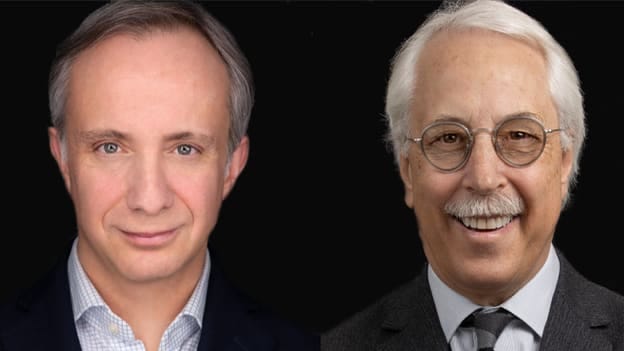
In HUMANOCRACY: Creating Organizations as Amazing as the People Inside Them, Professor Gary Hamel and management expert Michele Zanini make a passionate, data-driven argument for excising bureaucracy and replacing it with something better.
Drawing on more than a decade of research, and packed with practical examples, Hamel and Zanini lay out a detailed blueprint for creating organizations that are as inspired and ingenious as the human beings inside them.
Gary Hamel is a longtime faculty member of the London Business School. He has authored 20 articles for the Harvard Business Review and published five books with Harvard Business Review Press, including The Future of Management (2007), which was named Amazon’s business book of the year. The Wall Street Journal ranked Hamel as the world’s most influential business thinker, while the Financial Times labeled him a “management innovator without peer”.
Michele Zanini is the co-founder of the Management Lab. Together with Gary Hamel, Zanini helps forward-thinking organizations become more resilient, innovative, and engaging places to work. Zanini was previously an Associate Partner at McKinsey and Company and a leader in the firm’s organization, strategy, and financial services practices. Zanini’s work has been featured in the Harvard Business Review, the Financial Times, and the Wall Street Journal.
In this Big Interview with People Matters, Gary and Michele, acclaimed business thinkers detail how to bust bureaucracy and harness the everyday genius of workers. Read on to learn more about how to flatten the organizational hierarchy, distribute power, and unleash the “everyday genius” of every human being at work; and how struggling organizations can stay resilient in difficult times.
The COVID-19 pandemic has changed the world like never before with more than 38.9Mn confirmed cases, as of October 16, 2020, globally, and more than 1.1Mn people known to have died. On the other hand, the crisis has also impacted businesses like never before. How do you see the larger picture of this crisis?
Gary: For sure, COVID-19 is the most demanding test for individual and organizational resilience in our lifetimes. And not surprisingly, a lot of large bureaucratic organizations have struggled to respond to the crisis. An Italian health care leader said about the crisis, that the virus moves faster than our bureaucracy and that’s a fact. What we saw was a typical response to a large crisis. In a small crisis, power tends to move towards the center, but in a large crisis, power moves towards the periphery and this is what we have seen with this pandemic. It is important to note that COVID-19 is not the only unprecedented challenge we faced as a species; we are also facing climate change, income inequality, social injustice, declining productivity growth, geopolitical threats, and the job displacing impact of automation. And so, against those challenges, we need to mobilize qualities of human initiative and imagination and unfortunately, that is almost impossible in bureaucratic structures. Bureaucracies turned human beings into semi-programmable robots, they demand compliance, they are innovation phobic and they are very slow to change.
We have seen through the crisis how human beings at all levels of society are doing what bureaucracies can’t – forming these spontaneous horizontal networks, experimenting locally, combining their knowledge, and trying to deal with the problem. Now, you might hope that as we come out of the crisis, CEOs and other leaders would recognize all of this and want to harness that and support that. But, history says otherwise. Typically, as a crisis wanes, power moves back to the center as bureaucrats, ever jealous of their power, seek to reassert their authority. That’s what happened after the financial crisis of 2008-09. So, I think that will happen again this time and unfortunately, COVID-19 has been lethal for hundreds of thousands of human beings but will not be lethal for bureaucracy.
If you want to build organizations that can succeed in a world of hyper-connected change and unprecedented challenges, we will have to be quite intentional in dismantling bureaucracy or building something better in its place. And, COVID-19 will not do that work for us.
Michele: The COVID-19 crisis is testing the adaptability of the world's organizations as never before – and most are coming up short. This is hardly surprising. Authoritarian power-structures and rule-choked processes are an untenable liability in a world of accelerating change and global mega-threats.
COVID-19 provides an opportunity for a real reset, provided smart CEOs and government leaders commit themselves to dismantling bureaucracy and building something better in its place – something that maximizes contribution, not conformance.
What does Humanocracy stand for? And how can leadership be re-envisioned in a Humanocracy?
Gary: The word bureaucracy which is a French word means the rule of desks – which essentially means the rule to form a hierarchy where your authority is correlated with your rank. So, the core architecture of bureaucracy is that the traditional pyramid where the authority trickles down and the power and compensation is correlated with rank.
In a humanocracy, by contrast, authority comes from competence, from value add, when you are a leader only if other people say you are a leader and not by virtue of a formal title or by virtue of whether others are willing to follow you. So, in a humanocracy, what you find is that rather than a single dominant formal hierarchy, we have multiple hierarchies that are based on the particular issue at hand. The hierarchy depends on what is the problem that we are trying to solve and in that instance, who is competent is most relevant.
Administrative competence is not very rare in the current times and they add very little value to most organizations. It is necessary work but it does not add distinctive value. So, despite all of these changes, despite the fact that today everyone can have a full picture of an organization and its performance, despite the fact that now administrative competence is almost a commodity, our organizations are still structured as these administrative aristocracies. And I think that has to change; that is the essence of bureaucracy. It is administrative aristocracy, it is a caste system that separates the thinkers and the doers, the executives and the ordinary employees, the clever and the compliant.
In humanocracy, we assume that we have basically an almost flat organization where the work of managing is the work of everyone every day, that individuals and teams are self-managing and that administrative skills are one competence amongst many rather than one competence to rule them all. In bureaucracy, the goal and the problem we were trying to solve was compliance. In humanocracy, the problem we are trying to solve is maximizing human contribution and if you start with those goals, you adapt and then you work to build an organization that helps you achieve that goal, whether it is maximizing compliance or maximizing contribution. Depending on the goal you start with, you end up with radically different organizations.
Michele: The main premise in our book is that we need to put human beings, not structures or processes, at the center of our organizations. Instead of a management model that seeks to maximize control for the sake of efficiency, we need one that seeks to maximize contribution for the sake of impact. We need to replace bureaucracy with humanocracy.
In a bureaucracy, human beings are instruments – they are the “resources” employed by an organization to create products and services. In a humanocracy, the organization is the instrument – it’s the vehicle human beings use to better their lives and the lives of those they serve. So, the question at the core of bureaucracy, the operating system powering most large organizations across the globe, is, “How do we get human beings to better serve the organization?” The question at the heart of humanocracy is, “What sort of organization elicits and merits the best that human beings can give?”
We think the implications of this shift in perspective are profound, not least in terms of how we think of leadership. If the definition of a leader is someone who catalyzes positive change, then every organization needs all the leaders it can get. Unfortunately, the idea of leadership that predominates in most organizations has been hopelessly compromised by bureaucratic thinking. We have a long way to go in disentangling leadership from hierarchy.
So, we think it’s time for a radical rethink of leadership and leadership development. As much energy as your organization spends teaching up-and-comers to be better administrators, it needs to invest even more in identifying and equipping those who are naturally inclined to be internal activists.
How can organizations flatten the organizational hierarchy, distribute power, and unleash the 'everyday genius' of every human being at work?
Michele: Uninstalling bureaucracy and building something better means rebuilding our management structures and processes around new, human-centric principles. We need to inject new DNA into the management genome.
The goal of humanocracy is to maximize contribution. So, what sort of principles would you start with if you wanted to build an organization that inspired people to give their very best? Our research suggests that seven principles are key:
- The first principle is ownership. If given the chance, most of us would rather be owners than employees. While not everyone can work in a start-up, it’s possible to build organizations where every team member has the autonomy and financial upside that helps them feel and act like an entrepreneur.
- The second principle is meritocracy. All of us want the chance to develop our skills and be recognized for our contributions. We need organizations where influence and compensation are correlated with competence and value-added, and where decisions are untainted by politics and bias.
- The third principle is markets. In a market economy, consumers have lots of choices—and that’s a good thing. Markets are much better at aligning needs and resources than centrally planned economies. But most businesses operate like a command economy, where a small number of people at the top make most of the big decisions. This needs to change.
- The fourth principle is community. All of us crave genuine community—and the emotional strength and resilience that comes from being know and accepted for who we are. That’s why our organizations need to foster deep, trust-based relationships. When we feel safe and accepted, we do our best work.
- The fifth principle is openness. While tight-knit communities are emotionally vital, we also love being in environments that encourage curiosity, learning and candor. That means building an organization that is open to brilliant ideas wherever they come from.
- The sixth principle is experimentation. There’s something deeply satisfying about using your ingenuity to solve a new problem; to come up with a new idea, test it, perfect it, and then put it to work. Experimentation is also fundamental to business success—it’s the way an organization reinvents itself.
- The seventh and last principle is paradox. The companies we profile in the book like Haier, Nucor, and Buurtzorg have learned how to reconcile conflicting goals—like scale and agility, innovation and efficiency, and freedom and discipline. Getting better at paradox means localizing key trade-offs—giving front line team members the information and skills needed to make smart, real-time trade-offs as the situation demands.
Dismantling bureaucracy requires taking these principles to heart and embedding them into each organization’s management systems and processes.
With Google and many other companies announcing remote work plans through 2021, reports lauding employee productivity and efficiency have dominated headlines. But is there a downside to the new virtual workplace? What are some of those?
Gary: I think there are some upsides but there are also a couple of downsides. The upside is that of course people don’t spend a good portion of their day commuting and wasting time getting from point A to point B. The downside for employees is that you may save that time commuting, but now your home is your work environment and it becomes even harder to separate your personal life from your work life. Secondly, the fact is that a crappy job done at home is still a crappy job, that working remotely does that make that work any better.
I would also argue that remote working does not change things that employees dislike about work. It doesn’t change the fact that you have a tyrant for a boss, it doesn’t change the fact that you still have someone looking over your shoulder and second-guessing your work. They can’t do that virtually but they can still do that. Working from home doesn’t decrease the oversight. It doesn’t give you a bigger share of voice, it doesn’t allow you to be part of the strategy conversation. So, the reality is that everywhere around the world, only 15% of employees are engaged at work and I don’t think remote work changes that.
Again, it doesn’t improve the quality of the job, it doesn’t remove bureaucracy, it doesn’t remove oversight, doesn’t give you a bigger share of voice, it doesn’t raise your pay, and it doesn’t give you a financial upside. So again, what we have seen over the last 10-20 years is that we keep fiddling at the margins. We keep changing marginal things like we will have a cafeteria at work, we will put a gym into the work facility or we allow people to have flex time or maybe to work from home. All of these things are good, but these changes are not going to turn bureaucracies into empowering meritocracies.
How can struggling organizations use your principles to stay resilient in crises?
Michele: To become truly resilient, organizations will need to commit themselves to four “Ms”:
- Motivation: Being honest and transparent about the costs of bureaucracy, for employees, firms and the economy as a whole. Gary and I started calculating how much an excess of bureaucracy was costing the U.S. economy. We said that if companies could reduce the size of the bureaucratic class by half and redeploy all that energy into value-creating roles, we could add just under US$3.5 trillion to the U.S. economic output. No one does this kind of accounting at the organizational level. Most of the costs are invisible. Apathy doesn’t show up on a P&L. All their emotional energy that goes into winning zero-sum battles for promotion instead of creating more value for customers isn’t visible.
- Mindsets: Ridding ourselves of the outdated “managerialist” beliefs that keep us trapped in the bureaucratic status quo. To change our organizations, we must first change ourselves. We must own our part in perpetuating bureaucracy and take corrective action. This means actively committing ourselves to the ideals of human agency, dignity, and growth. This is more than a philosophical orientation; it’s a heartfelt conviction that inspires personal transformation.
- Models: Learning lessons from organizations that have broken the bureaucratic mold – like Haier, Buurtzorg, Nucor, Gore, Vinci, Handelsbanken, and many others. These organizations that are, on average, substantially more profitable, creative and resilient than their peers.
- Migration: Syndicating the work of “hacking” management to the entire organization in a way that elicits new thinking, mitigates risk, and routes around old power structures.
Our view is that the responsibility for change must be broadly syndicated. Everyone must see themselves as a potential change leader. The task of rewriting the management “codebase”, needs to be disaggregated, and small teams should be empowered to work on individual components, much like Amazon or Google organize their software development.
We think that distributed, cellular approach to building humanocracy is similarly sensible. One can easily imagine a large organization supporting dozens of parallel management experiments, like those we detail in the book. That’s the way to bring down bureaucracy—not with a giant reorg, but with a swarm of hacks.
The idea of “change management” like “jumbo shrimp” is an oxymoron. There’s no way radical, systemic change can be successfully designed and deployed top down. In the future, the most effective change efforts will be socially constructed. They won’t cascade, they won’t roll out. Instead, they’ll roll up. To escape the curse of bureaucracy, we must change the way we change.